Grinding Wheel Glazing: Causes, Signs, and How to Fix It

Grinding Wheel Knowledge Base

Grinding Wheel Glazing: Causes, Signs, and How to Fix It

A glazed grinding wheel has dull, flattened abrasive grains that remain held at the wheel surface instead of breaking away and exposing fresh cutting edges. The wheel may look smooth or reflective, while grinding force, heat, or surface-finish variation increases. Dressing can restore the surface temporarily, but glazing that returns quickly usually means the wheel specification, dressing condition, coolant delivery, contact conditions, or grinding parameters need to be reviewed together.

Glazing is a dull-grain condition; loading is material packed into the wheel pores
A shiny wheel face, rising force, and rubbing behavior are useful signs, but they should be checked together
Review the complete application before changing wheel grade, grit, dressing, coolant, or grinding parameters

Overview

What grinding wheel glazing means

Grinding wheel glazing develops when abrasive grains become worn, rounded, or flattened but the bond continues to hold them at the cutting surface. The wheel then loses part of its self-sharpening action. Instead of fresh edges cutting freely, dull grains rub against the workpiece. This can increase friction, grinding force, and heat, and it may contribute to burn marks, finish drift, or dimensional instability.

Glazing is not the same as loading. A loaded wheel has workpiece material or chips occupying its pores. A glazed wheel has dull abrasive grains at the surface. Both conditions can make a wheel look shiny and both can reduce cutting ability, so the wheel face should be inspected before choosing a corrective action.

Key takeaways

  • Glazing means the abrasive grains are dull but remain held at the wheel surface.
  • Wheel grade is one cause direction, but dressing, grit, contact area, coolant, and grinding conditions can also contribute.
  • Dressing removes the current glazed layer; repeated glazing calls for a broader application review.
  • Collect wheel-surface photos and application details before changing the wheel specification.
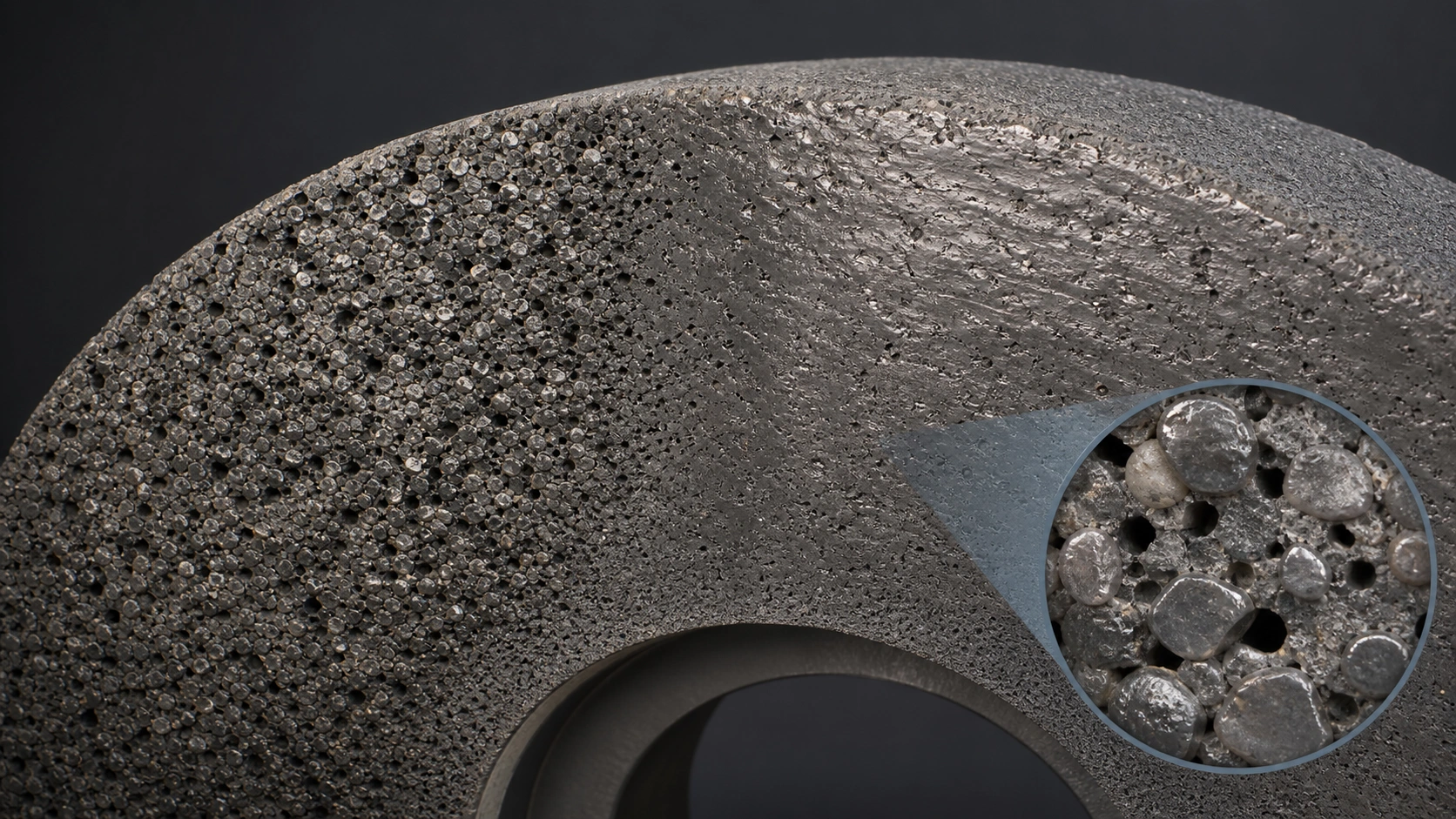
Close-up comparison of an open grinding wheel surface and a smooth glazed area with dull flattened abrasive grains
A glazed grinding wheel can develop smooth, reflective zones where dull abrasive grains remain held at the surface. Inspect grain condition and visible pores together before distinguishing glazing from loading.

What Is Grinding Wheel Glazing?

A grinding wheel is self-sharpening only when worn grains fracture or release at an appropriate rate. Glazing appears when dull grains remain at the surface and form a smooth cutting face.

The wheel rubs more than it cuts

As cutting edges become rounded, penetration becomes less effective. The contact zone may require more force and generate more frictional heat even when the programmed cycle has not changed.

The visible surface is only one clue

A reflective or polished-looking wheel face supports a glazing diagnosis, but coolant residue or loaded workpiece material can look similar. Inspect the grain condition and pores before deciding which problem is present.
Common Signs of a Glazed Grinding Wheel

Use several signs together. One symptom alone does not prove that glazing is the root cause.

Smooth or shiny areas on the wheel face

Dull grains can create reflective patches. Check whether the pores remain visible and whether material is packed between the grains; packed material points toward loading instead.

Grinding force or spindle load rises

A dull wheel face may require more force to remove the same material. Compare conditions at equivalent points in the cycle and avoid changing several variables at once.

Heat, burn risk, or finish drift appears

Rubbing can raise contact-zone heat and affect the workpiece surface. These symptoms can also come from coolant, machine, or parameter issues, so inspect the full process.

Performance improves immediately after dressing

A clear improvement after dressing indicates that wheel-surface condition matters. If the improvement is short-lived, review why the glazed layer is returning.

Applications

Where glazing may appear in grinding

Glazing can occur in different processes. The relevant wheel specification and corrective direction depend on the workpiece, contact area, machine, and operating conditions.

Surface grinding

Watch for shiny wheel areas, rising force, and heat after a stable period following dressing.

Review contact area, wheel grade and structure, dressing condition, coolant delivery, and feed conditions together.

Cylindrical and centerless grinding

Separate wheel-surface deterioration from setup, support, or machine-condition effects.

Compare wheel appearance and process behavior before and after dressing under the same setup.

Internal grinding

Confirm that coolant reaches the grinding zone and that dressing produces an open, sharp surface.

Review wheel size, speed relationship, dressing method, coolant access, and the current wheel specification.

Workpiece Materials

Suitable workpiece materials

Below are the most common workpiece materials matched with these grinding wheel applications.

Hardened steels

Wheel grade, abrasive type, dressing, and contact conditions should be reviewed when dull grains remain at the surface.

Tool steels

Material grade and hardness can change grinding behavior; avoid applying one correction across different tool-steel conditions without review.

Carbide and ceramics

Use a suitable diamond grinding wheel specification and confirm dressing or conditioning practice for the bond system.

General ferrous workpieces

Confirm whether the surface condition is true glazing or material loading before changing the grinding wheel.

Advantages

Key Technical Points

A simple visual comparison helps distinguish a normal cutting surface from loading and glazing, so corrective actions target the actual failure mode.

The following cause directions help organize checks. They are not fixed prescriptions; the correct adjustment depends on the complete grinding application.

Wheel holds dull grains

Surface or process sign: Smooth or polished grain tips
Cause direction: Wheel grade or bond behavior may hold worn grains too long
What to check: Current wheel specification, workpiece material, hardness, and contact area
Review direction: Review whether a freer-cutting specification is appropriate

Dressing leaves a closed surface

Surface or process sign: Wheel is not sharp or open after dressing
Cause direction: Dressing method or condition may not expose effective cutting edges
What to check: Dresser condition, method, frequency, and resulting wheel face
Review direction: Correct the dressing process before changing multiple wheel variables

Coolant is not effective at the zone

Surface or process sign: Heat rises while the wheel face becomes less free-cutting
Cause direction: Coolant delivery, concentration, cleanliness, or access may be unsuitable
What to check: Nozzle position, flow path, coolant condition, and contact zone
Review direction: Restore stable coolant delivery and reassess wheel behavior

Grinding conditions promote rubbing

Surface or process sign: Low cutting action with rising force or heat
Cause direction: The combination of speed, feed, depth, and contact may not promote effective cutting
What to check: Basic grinding parameters and machine limits
Review direction: Review one controlled parameter direction at a time
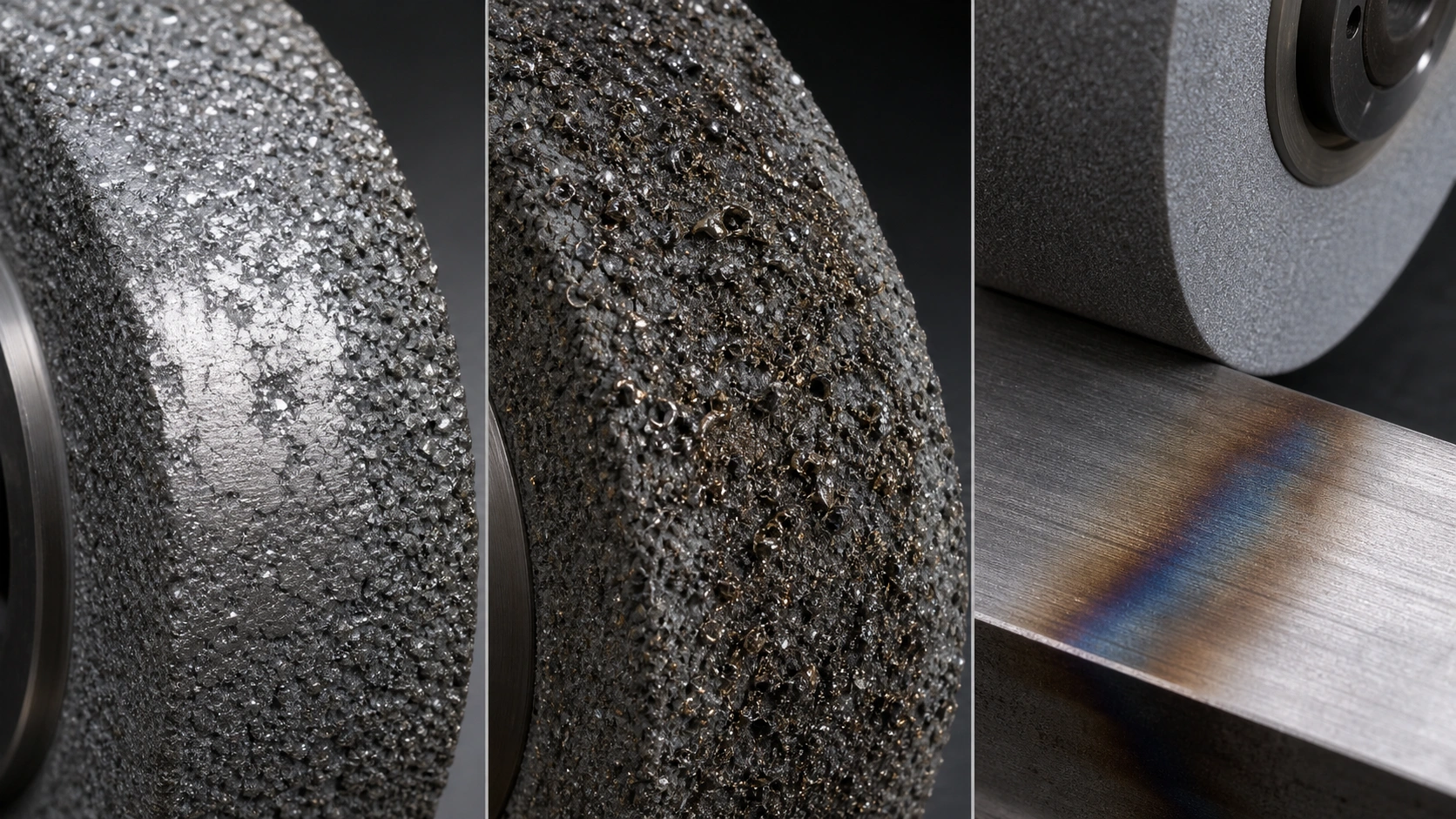
Visual comparison of a glazed grinding wheel, a loaded grinding wheel, and grinding burn on a steel workpiece
Glazing leaves dull, polished grains on the wheel surface; loading packs workpiece material into the pores; grinding burn appears as thermal discoloration on the workpiece. More than one condition may occur at the same time.
FeatureLoadingGlazing
Surface conditionWorkpiece material occupies or covers the poresAbrasive grains are dull, flat, or polished
Typical appearancePacked, smeared, or cloggedSmooth, shiny, or reflective
Primary reviewChip clearance, structure, abrasive, material, and coolantWheel grade, dressing, grit, contact, and grinding conditions
After dressingPacked material is removedDull surface grains are removed or exposed
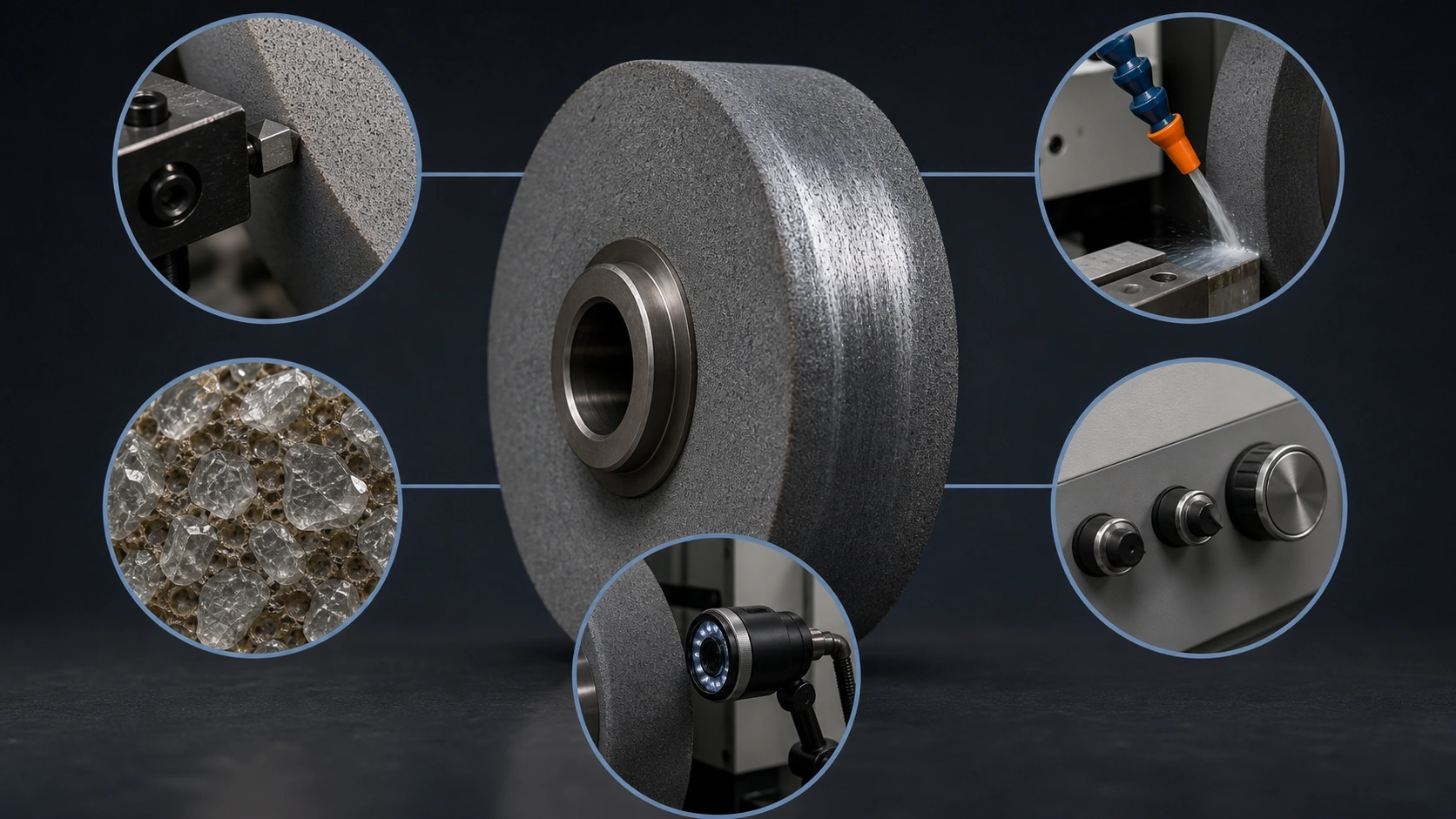
Grinding wheel glazing diagnostic visual showing dressing, coolant delivery, abrasive structure, grinding settings, and surface inspection
When glazing returns after dressing, review the resulting wheel face, coolant delivery, wheel specification and structure, basic grinding parameters, and wheel-surface evidence as one application system.

Wheel grade and bond behavior

A wheel that retains worn grains too strongly for the application may glaze. Grade cannot be reviewed separately from material, contact area, bond, and machine conditions.

Dressing condition

A worn dresser or an unsuitable dressing approach may leave a closed, dull surface or fail to restore the required wheel profile and sharpness.

Grit and structure

Grit size and wheel structure influence cutting-edge density, chip space, finish, and the tendency to rub under the required stock-removal condition.

Coolant delivery

Coolant must reach the grinding zone consistently. Delivery and coolant condition should be checked before attributing heat only to the grinding wheel.

Grinding and machine conditions

Speed relationships, feed, depth, contact stability, runout, and machine condition can change how the wheel cuts and self-sharpens.

Selection Guide

Step-by-step glazing diagnostic workflow

Use these practical tips to narrow down the right wheel specification for your grinding application.

1

Stop and inspect the grinding wheel face before dressing; take clear photos of shiny areas, grain condition, and visible pores.

2

Confirm whether the surface has dull grains (glazing), packed workpiece material (loading), or both.

3

Record when the symptom appears and compare force, heat, finish, or size behavior before and after dressing.

4

Check the dressing tool and resulting wheel face, then review coolant delivery and basic grinding parameters.

5

Review the complete wheel specification against workpiece material, hardness, contact area, process type, and machine conditions.

6

Change one controlled factor at a time and document the result; request application review when the cause remains uncertain.

Before You Inquire

Information needed for quotation

Providing the details below helps us recommend the right wheel specification and prepare an accurate factory quotation faster.

Workpiece photos and clear grinding wheel surface photos taken before dressing
Workpiece material, grade, hardness, and the grinding operation
Grinding wheel size: outside diameter, bore, and thickness
Current wheel specification, including abrasive, bond, grit, grade, and structure if known
Dressing tool, dressing method, condition, and when glazing returns after dressing
Coolant type, condition, delivery direction, and whether it reaches the grinding zone
Basic grinding parameters, machine model, wheel speed, work speed, feed, and depth if available
Observed symptoms such as force increase, heat, burn marks, finish drift, or dimensional variation

Send these details through the inquiry form, or contact us on WhatsApp for a preliminary recommendation.

Send Grinding Details

Industries

Industries served

Grinding Wheel Glazing: Causes, Signs, and How to Fix It are used across these manufacturing sectors. We provide grinding wheel solutions for industrial grinding applications. We do not supply the customer workpieces themselves, such as bearings, hydraulic components, molds, or mechanical parts.

Bearing grinding applications
Tool and mold grinding applications
Automotive component grinding applications
Precision component grinding applications

FAQ

Common questions about grinding wheel glazing: causes, signs, and how to fix it

Quick answers to common buyer questions before sending an inquiry.

What does grinding wheel glazing look like?

A glazed grinding wheel often has smooth, shiny, or reflective areas where abrasive grains have become dull and flattened. Because loaded material or coolant residue may also look shiny, inspect both the grains and the wheel pores before confirming glazing.

What is the difference between grinding wheel glazing and loading?

Glazing is a dull-grain condition: worn abrasive grains remain at the cutting surface. Loading is a chip-clearance condition: workpiece material fills or covers the pores. The two problems can occur together, but their main review directions are different.

Can dressing remove a glazed grinding wheel surface?

Dressing can remove or open the current glazed layer and expose fresh cutting edges. If glazing returns quickly, dressing alone may not address the cause; review the wheel specification, dressing result, coolant, contact conditions, and grinding parameters.

Why does glazing return soon after dressing?

Repeated glazing can indicate that the wheel retains dull grains too long, dressing does not create the required cutting surface, coolant is ineffective at the contact zone, or the grinding conditions promote rubbing. The complete application should be reviewed before choosing a specification change.

What should I share for a grinding wheel glazing review?

Share workpiece and wheel-surface photos, material and hardness, grinding wheel size and specification, dressing condition, coolant condition, machine information, basic grinding parameters, and a description of when the symptom appears.

Explore More

Related grinding wheel pages

Continue browsing related products, applications, and technical information.

Grinding Wheel Loading vs GlazingDress or Replace a Grinding WheelGrinding Burn Marks on the Workpiece SurfaceRequest an Application Review
WhatsApp Inquiry