Grinding Wheels for Mold and Tooling Applications

Industries We Serve

Grinding Wheels for Mold and Tooling Applications

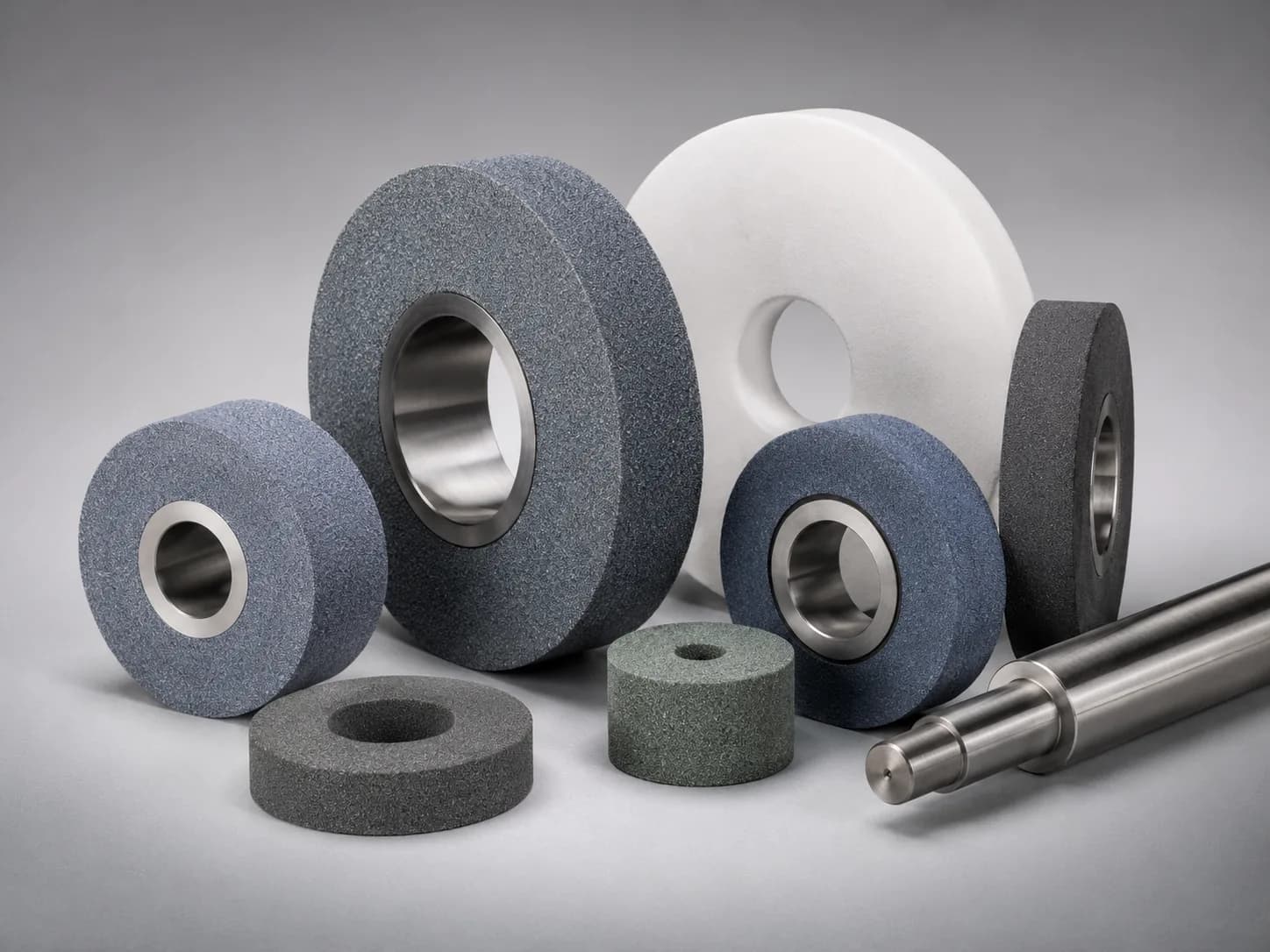
Mold and tooling manufacturing demands precision grinding across a diverse range of workpiece materials — from hardened mold steels (P20, 718, H13, S136) to cemented carbide, tungsten steel, and technical ceramics. Mold cavities, cores, inserts, and tooling components require tight dimensional control, specific surface finishes, and accurate profiles to produce plastic injection molded parts, die-cast components, stampings, and precision tools. The grinding wheel is a critical factor in achieving the surface quality, dimensional accuracy, and profile precision these applications demand. Our factory supplies CBN grinding wheels, diamond grinding wheels, white aluminum oxide wheels, and silicon carbide wheels configured for mold and tooling grinding applications across the full range of mold and tooling workpiece materials. We are a grinding wheel and abrasive tool manufacturer — we focus on grinding wheel solutions for industrial grinding applications. We do not manufacture or supply molds, tooling components, or machine parts.

Diamond wheels for carbide, tungsten steel, and ceramic mold component grinding
CBN wheels for hardened mold steel, tool steel, and precision form grinding
White aluminum oxide wheels for general mold steel and pre-hardened mold plate grinding
Custom wheel profiles and specifications for mold cavity, core, and insert grinding
Vitrified, resin, and metal bond options for different mold material and finish requirements

Overview

About Grinding Wheels for Mold and Tooling Applications

Mold and tooling manufacturing encompasses a wide range of applications — plastic injection molds, die-casting dies, stamping dies, forging dies, extrusion tooling, and precision workpiece grinding. Each application type involves different workpiece materials, hardness levels, profile complexities, and surface finish requirements. Plastic injection molds require polished cavity surfaces to produce optical-quality plastic parts — the grinding stage must deliver a surface ready for final polishing. Die-casting dies must withstand thermal cycling and molten metal erosion — the grinding process must produce surfaces free from grinding burn and micro-cracks that could initiate thermal fatigue. Precision carbide and hardened steel workpieces require clean, accurate surface edges — the grinding wheel must cut cleanly without edge deterioration. Our factory supplies grinding wheels configured for each mold and tooling material and application: diamond wheels for carbide, ceramic, and tungsten steel components; CBN wheels for hardened mold and tool steels; white aluminum oxide wheels for pre-hardened mold steel and general mold plate grinding; and silicon carbide wheels for specific non-ferrous mold material applications.

Applications

Common grinding applications

Grinding Wheels for Mold and Tooling Applications are selected for these industrial grinding applications.

Mold Cavity and Core Grinding

Plastic injection mold cavities and cores require grinding wheels that deliver the surface finish and dimensional accuracy needed for molded part quality. Depending on the mold steel type and hardness — P20 (pre-hardened), 718 (HRC 34–38), H13 (HRC 48–52), or S136 stainless mold steel (HRC 50–54) — the appropriate abrasive type and wheel specification are selected.

Carbide Mold Component Grinding

Carbide mold inserts, punches, and wear-resistant mold components require diamond grinding wheels for efficient material removal and precise surface finish. Diamond wheel specifications — bond type, grit size, and concentration — are configured according to the carbide grade, component geometry, and surface finish requirements.

Precision Form and Profile Grinding

Mold components with complex profiles, radii, and form details require grinding wheels that maintain profile accuracy through the grinding cycle. CBN and diamond profile wheels in vitrified or metal bond are supplied for precision form grinding of hardened mold steels, carbide, and tungsten steel components.

Tooling Component Grinding

Die components, punch tooling, and stamping tool inserts made from hardened tool steels and carbide require grinding wheels matched to the specific material and wear requirements. CBN wheels for hardened tool steels, diamond wheels for carbide tooling components.

Surface Finishing and Polish Preparation

Mold surfaces destined for polishing — particularly optical and high-gloss plastic part molds — require grinding wheels that produce a fine, consistent surface finish free from deep grinding marks, chatter, or directional lay. Fine-grit CBN, diamond, or white aluminum oxide wheels are selected according to the mold material.

Cutting Edge Grinding for Tool Production

Carbide and hardened high-speed steel workpiece grinding require wheels that produce clean, accurate edges. Diamond wheels for carbide workpiece grinding, CBN wheels for hardened tool steel grinding. Note: we supply grinding wheels for precision workpiece grinding — we do not manufacture or supply the workpieces themselves.

Workpiece Materials

Suitable workpiece materials

Below are the most common workpiece materials matched with these grinding wheel applications.

Hardened Mold Steel — H13, S136, 718 (HRC 34–54)

CBN grinding wheels are recommended for hardened mold steels above HRC 50. White aluminum oxide (WA) and pink aluminum oxide (PA) wheels provide cost-effective alternatives for pre-hardened mold steels in the HRC 34–48 range. The specific abrasive choice depends on the mold steel hardness, production volume, and surface finish target.

Pre-Hardened Mold Steel — P20, 718H, 2311 (HRC 28–38)

White aluminum oxide and pink aluminum oxide grinding wheels are well-suited for pre-hardened mold steels. Vitrified bond wheels provide good material removal and surface finish for general mold plate and cavity grinding at moderate production volumes.

Cemented Carbide — WC-Co Grades for Mold Inserts and Tooling

Carbide mold inserts, wear components, and tooling require diamond grinding wheels. Resin bond diamond wheels for surface finish and edge quality, metal bond diamond wheels for maximum wheel life and profile retention. Diamond is the only abrasive hard enough to grind carbide efficiently in production environments.

Tungsten Steel and Tungsten Alloys

Tungsten steel tooling components and wear parts are ground with diamond grinding wheels for efficient material removal and consistent surface quality. Green silicon carbide wheels provide a lower-cost alternative for moderate-volume tungsten steel grinding applications.

Technical Ceramics for Mold Applications

Ceramic mold components and tooling inserts — alumina, zirconia, silicon nitride — require diamond grinding wheels for precision machining without micro-cracking or surface damage. Diamond is the only abrasive type suitable for precision ceramic grinding.

Advantages

Why choose grinding wheels for mold and tooling applications

Key benefits and performance characteristics for industrial grinding applications.

Multi-Material Grinding Wheel Capability

Mold and tooling manufacturing involves multiple workpiece materials — hardened mold steel, carbide, tungsten steel, and ceramics — each requiring a different abrasive type. We supply the complete range: diamond wheels for carbide and ceramics, CBN wheels for hardened mold steels, and conventional wheels for pre-hardened mold steels.

Form and Profile Grinding Precision

Mold components with complex profiles, intricate radii, and tight form tolerances benefit from formed CBN and diamond wheels that maintain profile accuracy across production runs. Vitrified and metal bond wheels provide the profile retention needed for precision mold form grinding.

Surface Finish for Polish-Ready Mold Surfaces

Plastic injection molds — particularly for optical, medical, and high-gloss consumer product applications — require grinding wheel specifications that deliver fine, consistent surface finishes ready for final polishing. Fine-grit wheels in resin or vitrified bond are configured for the specific mold material and finish target.

Thermal Control for Sensitive Mold Steels

Hardened mold steels — particularly stainless mold steels like S136 and high-alloy grades — are sensitive to grinding heat which can cause surface discoloration, residual stress, and dimensional distortion. CBN wheels with appropriate bond and grit specifications help manage grinding temperatures and reduce the risk of thermal damage.

Edge Quality for Precision Workpiece Grinding

Carbide and hardened steel workpieces require clean, accurate surface edges. Diamond wheels for carbide workpieces and CBN wheels for hardened tool steel are configured — typically in resin bond with appropriate grit size — to deliver the surface quality needed. We supply the grinding wheels; we do not manufacture or supply the workpieces themselves.

Customized to Mold Grinding Machines

Mold grinding involves various machine types — surface grinders, jig grinders, cylindrical grinders, optical profile grinders, and CNC tool grinders — each with specific wheel requirements. We configure wheel dimensions, mounting specifications, and operating parameters to the specific mold grinding machine.

Selection Guide

How to select grinding wheels for mold and tooling applications

Use these practical tips to narrow down the right wheel specification for your grinding application.

1

Match abrasive type to the mold workpiece material — diamond grinding wheels for carbide, ceramic, and tungsten steel mold components. CBN grinding wheels for hardened mold steels (≥ HRC 50). White aluminum oxide (WA) or pink aluminum oxide (PA) wheels for pre-hardened mold steels (HRC 28–48). Silicon carbide wheels for specific non-ferrous mold material applications.

2

Select bond type by mold grinding operation — vitrified bond for most mold surface and profile grinding where free cutting and dressability are important. Resin bond for finishing operations requiring improved surface finish and reduced edge chipping. Metal bond for maximum profile retention on carbide and ceramic mold components.

3

Specify grit size by finish requirement — fine grits (120–240) for mold surfaces requiring polish-ready finish. Medium grits (80–120) for general mold cavity and core grinding. Coarse grits (60–80) for mold plate rough grinding and stock removal.

4

For mold form and profile grinding, provide a dimensioned drawing of the required wheel profile — including radii, angles, and tolerances. The wheel profile must match the mold cavity or core geometry being ground.

5

Provide the grinding machine model — jig grinders, surface grinders, optical profile grinders, and CNC tool grinders each have specific wheel mounting, speed, and dimensional requirements. Machine model verification helps ensure safe and correct wheel configuration.

6

For mold polishing preparation, specify the target surface finish before polishing begins. The grinding wheel grit size and bond type should be selected to minimize the polishing time and effort needed after grinding.

Before You Inquire

Information needed for quotation

Providing the details below helps us recommend the right wheel specification and prepare an accurate factory quotation faster.

Mold or tooling component type and material — e.g., H13 die-casting mold cavity HRC 50, carbide stamping punch, S136 injection mold core
Grinding operation — surface, jig, cylindrical, profile, form, or tool grinding
Wheel dimensions — outer diameter, inner diameter/bore, thickness; for profile wheels, a dimensioned drawing
Grinding machine model, spindle speed, and coolant type
Target surface finish (Ra) and dimensional tolerance
Current grinding problem — burning, short wheel life, poor finish, profile inaccuracy, edge chipping
Estimated monthly or annual quantity; drawing or photo of the mold component or current wheel, if available

Send these details through the inquiry form, or contact us on WhatsApp for a preliminary recommendation.

Send Grinding Details

Industries

Industries served

Grinding Wheels for Mold and Tooling Applications are used across these manufacturing sectors. We provide grinding wheel solutions for industrial grinding applications. We do not supply the customer workpieces themselves, such as bearings, hydraulic components, molds, or mechanical parts.

Plastic injection mold manufacturing — cavity, core, insert, and mold plate grinding
Die-casting die manufacturing — cavity, core, and slide component grinding
Stamping and press tool manufacturing — die, punch, and die component grinding
Precision workpiece grinding — carbide and hardened steel component grinding (wheels only, we do not supply workpieces)
Forging die manufacturing — die cavity and impression grinding
Precision mold component manufacturing — connector mold, medical mold, optical mold, and micro-mold grinding

FAQ

Common questions about grinding wheels for mold and tooling applications

Quick answers to common buyer questions before sending an inquiry.

Which grinding wheel should I use for hardened mold steel?

For hardened mold steels above approximately HRC 50 — such as H13, S136, and hardened 718 — CBN grinding wheels deliver the best combination of wheel life, surface finish, and thermal control. For pre-hardened mold steels in the HRC 28–48 range — such as P20, 718H, and 2311 — white aluminum oxide (WA) or pink aluminum oxide (PA) wheels in vitrified bond provide cost-effective grinding performance. The specific recommendation depends on the mold steel grade, hardness, grinding operation, and finish target.

Can you supply wheels for carbide mold component grinding?

Yes. Diamond grinding wheels are the standard choice for carbide mold inserts, punches, and wear-resistant mold components. We supply resin bond diamond wheels for surface finish and edge quality, and metal bond diamond wheels for maximum wheel life and profile retention on carbide. Green silicon carbide wheels are a lower-cost alternative for moderate-volume carbide grinding where diamond wheel investment is not justified.

Do you manufacture molds or tooling components?

No. We are a grinding wheel and abrasive tool manufacturer. We supply grinding wheels used in mold and tooling manufacturing processes — for grinding mold cavities, cores, and inserts. We do not manufacture or supply molds, mold components, or any tooling products. The mold and tooling references on our website are application industry references only.

Can you provide formed wheels for mold profile grinding?

Yes. We supply formed CBN and diamond grinding wheels for mold profile and form grinding applications. Provide a dimensioned drawing of the required wheel profile — including all radii, angles, and tolerances — along with the mold material, grinding machine model, and surface finish target. We will configure the abrasive type, bond, grit, and concentration according to the profile geometry and grinding conditions.

What is the best wheel for mold surface finishing before polishing?

For mold surfaces that will be polished after grinding — particularly for optical, medical, and high-gloss plastic part molds — fine-grit wheels (120–240 or finer) in resin bond typically produce the most polish-ready surface finish. Resin bond wheels provide smoother cutting action with reduced grinding mark depth compared to vitrified bond, reducing the polishing time needed. The specific wheel specification depends on the mold steel type, hardness, and final surface finish target.

What information do you need to recommend a mold grinding wheel?

To recommend the right grinding wheel for a mold or tooling application, we typically need: mold component type and material (grade and hardness), grinding operation (surface, jig, profile, cylindrical, or tool grinding), wheel dimensions, grinding machine model and spindle speed, target surface finish (Ra), any current grinding problems, and production volume. A drawing or photo of the mold component or current wheel profile helps us respond with a more precise recommendation.
WhatsApp Inquiry