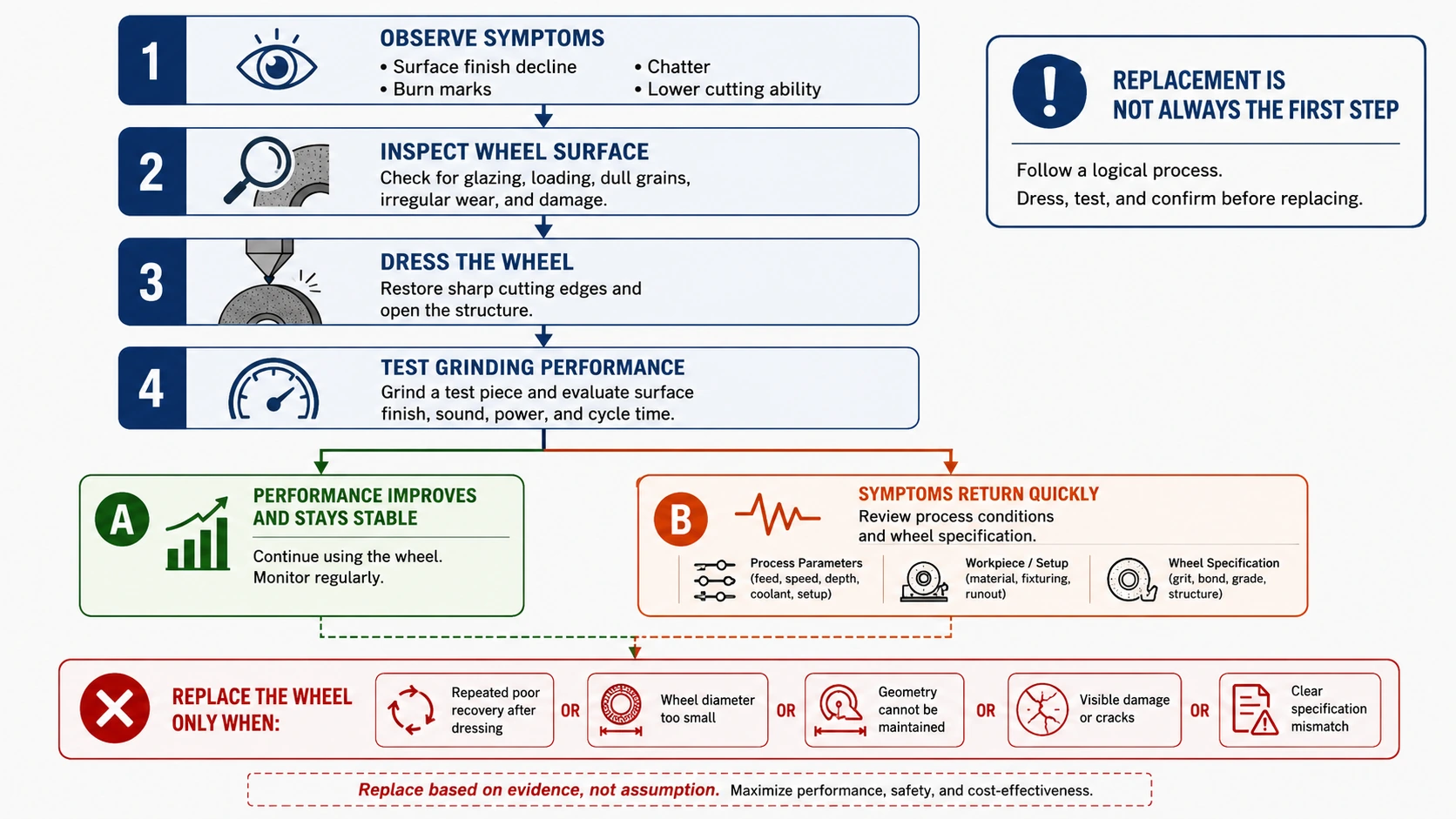
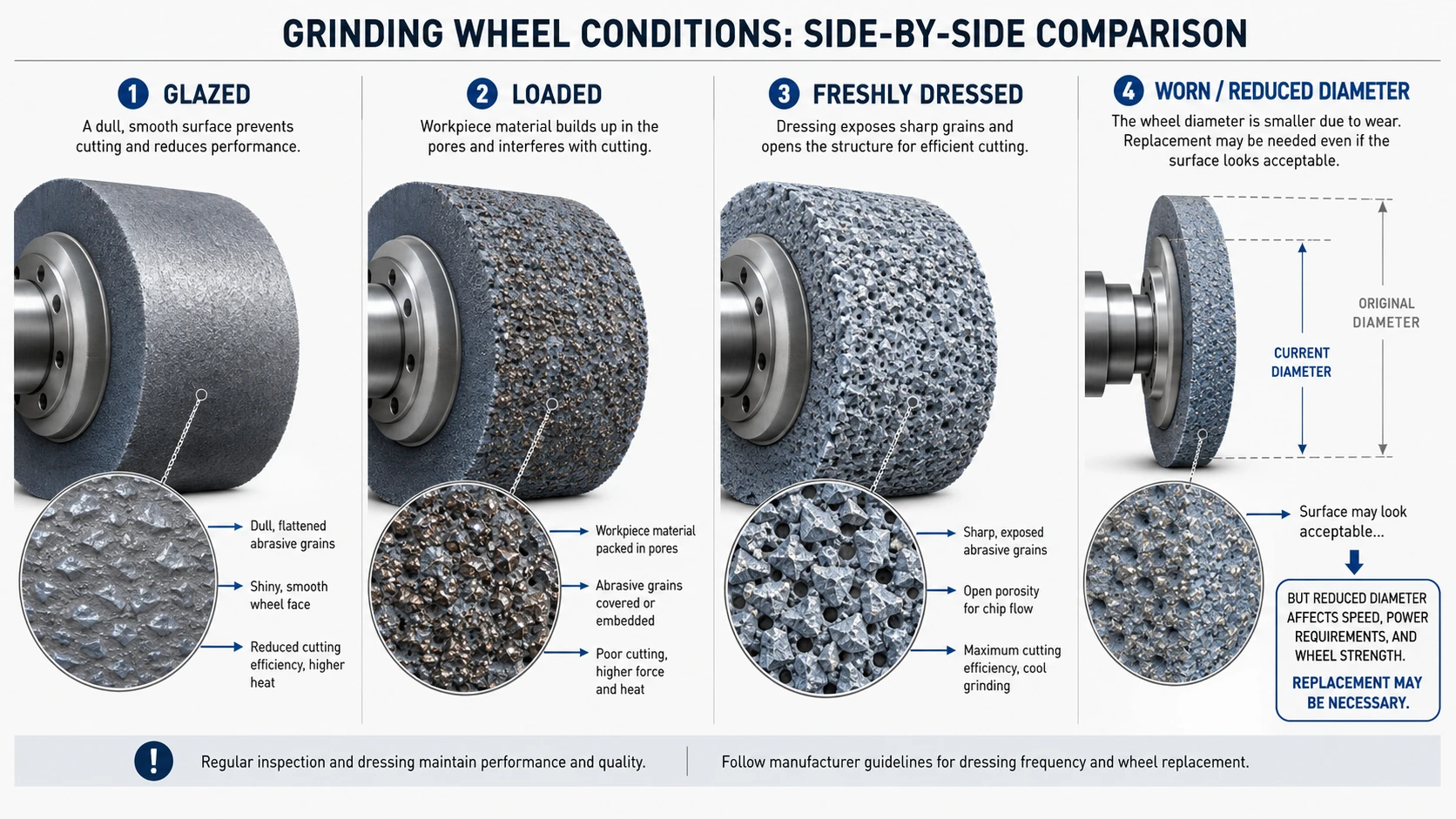
Wheel surface is shiny or glazed
What to observe: The wheel face looks polished or reflective. Individual abrasive grains appear flattened rather than sharp under magnification. The wheel may produce a high-pitched sound during grinding and generate more heat than usual. What dressing may help restore: A dressing pass with adequate depth can remove the glazed surface layer, expose fresh sharp abrasive grains, and restore open porosity — often returning cutting ability and reducing grinding temperatures. What to review if glazing returns quickly: If the wheel glazes again after only a few parts, the wheel hardness grade may be too high for the application, the dressing depth or lead rate may be too light, or the abrasive type may not be well-suited to the workpiece material.
Wheel surface is loaded with workpiece material
What to observe: Workpiece material — chips, swarf, or smeared metal — is visible on the wheel face or embedded in the pores between abrasive grains. The wheel may stop cutting freely and begin rubbing, producing a different sound and increasing grinding force. What dressing may help restore: Dressing clears loaded material from the pores and exposes fresh abrasive grains with restored chip clearance. Cutting ability and surface finish often return after a proper dressing pass. What to review if loading returns quickly: Repeated loading may indicate that the wheel structure is too dense (insufficient porosity), the abrasive type is not suitable for the workpiece material, or coolant delivery is insufficient to flush chips from the grinding zone.
Surface finish improves after dressing
What to observe: The workpiece surface finish (Ra) degrades over a production run — becoming rougher or less consistent. After dressing, the finish returns to the target Ra value. This is one of the clearest indicators that the wheel surface condition was the primary cause. What dressing may help restore: Dressing restores the wheel surface texture — sharp grains and open porosity — which directly affects the finish transferred to the workpiece. A consistent dressing schedule based on part count or finish drift helps maintain predictable surface quality. What to review if finish degrades quickly: If the finish deteriorates rapidly after dressing, check whether the wheel grit size and bond type are appropriate for the required Ra, and whether the dressing parameters produce a surface that is too smooth (which dulls quickly) or too rough (which may not meet finish targets).
Cutting ability returns after dressing
What to observe: Before dressing, the wheel requires more passes, slower feed rates, or higher grinding pressure to achieve the same material removal. Cycle times increase. After dressing, the wheel cuts freely again, removing material at the expected rate with normal grinding force. What dressing may help restore: A sharp, open wheel surface cuts material efficiently rather than rubbing it. Dressing restores this cutting condition by exposing fresh abrasive grains with sharp cutting edges. What to review if cutting ability fades quickly: If the wheel loses its cutting edge after a short run, the abrasive type may not be hard or tough enough for the workpiece material, the grit size may be too fine for the stock removal rate, or the wheel hardness grade may not allow proper self-sharpening.
Wheel shape or edge profile needs restoration
What to observe: The wheel profile — corner radius, edge, or formed shape — has worn unevenly or rounded. Dimensional accuracy of the ground part begins to drift, or the required profile is no longer transferred correctly to the workpiece. What dressing may help restore: Dressing can re-establish the correct wheel profile, edge geometry, and concentricity. For form grinding and profile-critical applications, dressing is a routine part of maintaining wheel geometry — not a sign of wheel failure. What to review if profile is lost quickly: If the wheel profile wears out of tolerance rapidly after dressing, the wheel hardness grade may be too soft for the application, the bond type may not provide adequate profile retention, or the dressing parameters may not be producing a stable edge.
Chatter or vibration pattern changes after dressing
What to observe: Regular waviness or chatter marks appear on the workpiece surface. After dressing — particularly with a different lead rate — the pattern changes, reduces, or disappears. This suggests the wheel surface pattern was contributing to the chatter. What dressing may help restore: Dressing can alter the wheel surface texture and remove uneven wear patterns that can excite vibration. A different dressing lead rate may produce a less regular wheel surface pattern that does not imprint on the workpiece. What to review if chatter persists: If chatter does not change with dressing, the cause may be in machine vibration, spindle bearing condition, wheel unbalance, or workpiece fixturing — not the wheel surface.