Grinding Wheels for Bearing Manufacturing

Industries We Serve

Grinding Wheels for Bearing Manufacturing

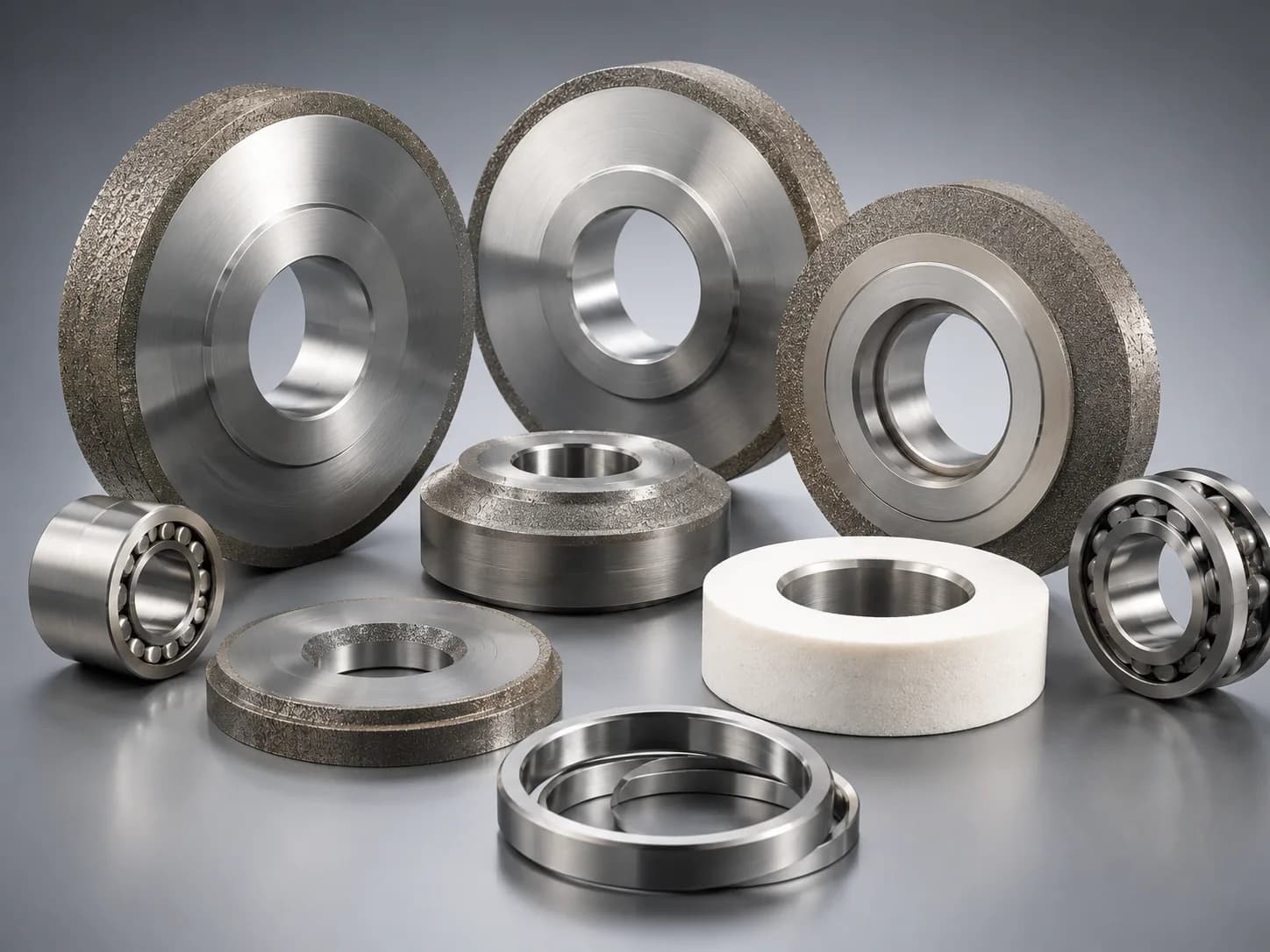
Bearing manufacturing is one of the most demanding precision grinding industries. Bearing rings, raceways, and rolling elements require sub-micron roundness, consistent surface finish, and exact dimensional control to meet international bearing standards (P0 through P4 and above). The grinding wheel is a critical factor in achieving these requirements — the correct abrasive type, bond system, grit size, and hardness specification directly affect grinding cycle time, surface quality, wheel life, and ultimately bearing performance grade. Our factory supplies CBN grinding wheels, white aluminum oxide grinding wheels, and conventional abrasive wheels configured for each stage of bearing manufacturing: inner ring grinding, outer ring grinding, raceway profile grinding, roller grinding, and precision finishing. We are a grinding wheel and abrasive tool manufacturer — we do not manufacture or supply bearings, bearing rings, or bearing components.

CBN and white aluminum oxide grinding wheels configured for bearing steel (GCr15, 100Cr6, SUJ2)
Inner ring bore grinding, outer ring OD grinding, and raceway profile grinding support
Stable wheel performance for high-volume bearing production environments
Custom wheel specifications matched to bearing grinding machine parameters
Vitrified and resin bond options for rough, semi-finish, finish, and superfinishing stages

Overview

About Grinding Wheels for Bearing Manufacturing

The bearing industry spans a wide range of precision grades — from commodity P0 bearings to ultra-precision P4 and above spindle bearings — and each grade level places different demands on the grinding process. Higher-grade bearings require tighter roundness, finer surface finishes, and more consistent dimensional control, which in turn requires grinding wheels with tighter specifications for grit size distribution, hardness uniformity, balance, and profile stability. Our factory produces grinding wheels for every bearing grinding stage: rough grinding for stock removal, semi-finish grinding for geometry control, finish grinding for surface quality and dimensional accuracy, and superfinishing for the final surface refinement. Wheel specifications — abrasive type, bond, grit, hardness, concentration — are configured according to the specific bearing type, ring dimensions, material grade, hardness, machine parameters, and production volume.

Applications

Common grinding applications

Grinding Wheels for Bearing Manufacturing are selected for these industrial grinding applications.

Bearing Inner Ring Grinding

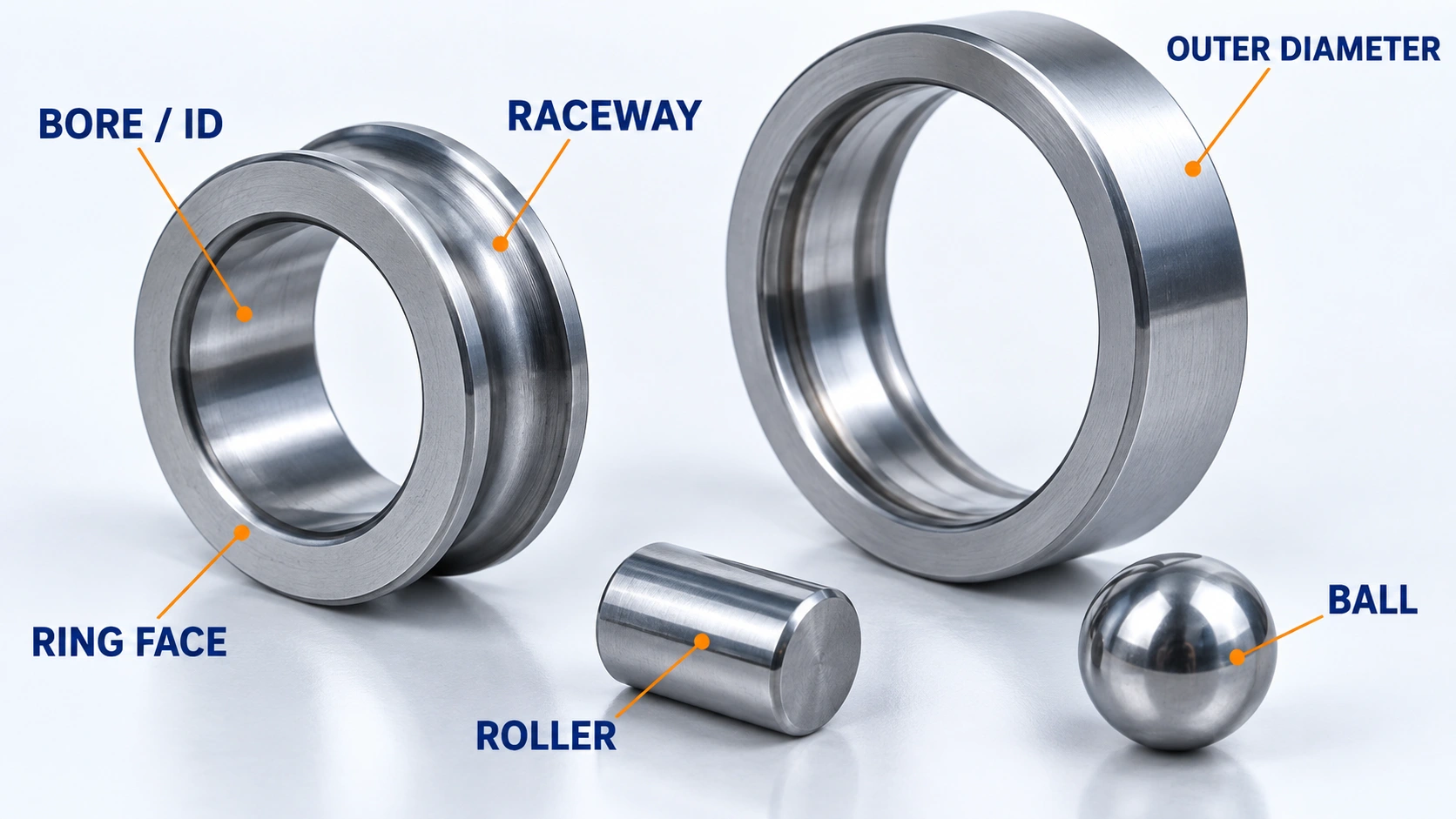
Inner ring bore grinding and inner raceway grinding require wheels with excellent profile stability and consistent cutting action through the bore length. CBN grinding wheels are widely used for high-volume inner ring production lines grinding bearing steel above HRC 58. White aluminum oxide wheels provide a practical alternative for moderate production volumes or softer bearing steels. Wheel specifications are matched to bore diameter, raceway curvature, and required surface finish.

Bearing Outer Ring Grinding

Outer ring OD grinding and outer raceway grinding demand wheels that maintain form accuracy across long production runs. CBN grinding wheels deliver the profile retention and thermal stability needed for tight roundness tolerances on outer ring raceways. Vitrified bond CBN wheels provide free-cutting performance with good dressability for production environments.

Raceway Profile Grinding

Deep groove ball bearing raceways, tapered roller bearing raceways, and spherical roller bearing raceways each have specific profile geometry requirements. CBN wheels with formed profiles or conventional wheels with profile dressing are supplied according to the raceway geometry, bearing type, material hardness, and required profile accuracy.

Bearing Roller and Ball Grinding

Cylindrical rollers, tapered rollers, and bearing balls require centerless grinding wheels with specific hardness and grit combinations matched to the rolling element diameter, material, and required spherical or cylindrical geometry. Consistent wheel performance is essential for maintaining rolling element roundness and surface finish across high-volume production.

Bearing Ring Face Grinding

Face grinding of bearing rings requires wheels with good flatness retention and minimal edge breakdown during grinding. Both CBN and aluminum oxide wheels are configured according to ring material, hardness, face width, production volume, and surface finish specification.

Precision Bearing Finishing

Superfinishing and fine grinding operations for high-precision bearings (P5, P4, and above) use fine-grit CBN or white aluminum oxide wheels with carefully controlled hardness grades and structure. These wheels deliver the sub-micron surface finishes required for low-noise, long-service-life precision bearings used in machine tool spindles and aerospace applications.

Workpiece Materials

Suitable workpiece materials

Below are the most common workpiece materials matched with these grinding wheel applications.

Bearing Steel — GCr15, 100Cr6, SUJ2, 52100

The most common bearing steel grades worldwide. CBN grinding wheels are the preferred choice for high-volume GCr15/100Cr6 bearing steel grinding above HRC 58, delivering long wheel life and consistent surface quality. White aluminum oxide wheels are a practical alternative for lower-volume or softer bearing steel applications.

Hardened Bearing Steel — HRC 58–64

Through-hardened bearing rings and rollers at HRC 58–64 are well-suited to CBN grinding. The superabrasive grain maintains cutting efficiency against the hardened surface, reducing grinding burn risk and extending dressing intervals compared to conventional abrasives.

Case-Hardened Bearing Steel

Carburized bearing steels with hard surface layers (typically HRC 58–62) and tougher cores benefit from CBN wheel grinding. The wheel must handle the hard case layer consistently while avoiding thermal damage to the heat-treated surface.

Stainless Bearing Steel — 440C, ACD34, X65Cr13

Stainless steel bearings for corrosive and food-grade environments require grinding wheels that cut cleanly without loading. CBN wheels are effective on hardened stainless bearing steel, providing the surface finish and precision required for specialized bearing applications.

Induction-Hardened Bearing Steel

Selectively hardened bearing components with induction-hardened raceways benefit from grinding wheels matched to the hardened layer depth, hardness profile, and grinding stock removal requirements.

Advantages

Why choose grinding wheels for bearing manufacturing

Key benefits and performance characteristics for industrial grinding applications.

CBN Wheels for High-Volume Bearing Steel Grinding

CBN grinding wheels are chemically stable when grinding bearing steels at production speeds. They maintain cutting efficiency and profile stability through extended production runs, reducing wheel change frequency and improving part-to-part consistency in high-volume bearing factories.

White Aluminum Oxide for Cost-Effective Bearing Grinding

For bearing applications where superabrasive CBN wheel cost is not justified — lower production volumes, softer bearing steels, or operations where frequent dressing is acceptable — white aluminum oxide (WA) wheels in vitrified or resin bond provide a practical, cost-effective grinding solution.

Matched to Each Bearing Grinding Stage

Different bearing grinding stages — rough, semi-finish, finish, and superfinishing — require different wheel specifications. We configure grit size, hardness, bond type, and abrasive grade according to the specific grinding stage and its requirements for stock removal rate, surface finish, and geometric accuracy.

Thermal Stability for Hardened Bearing Steel

CBN's high thermal conductivity helps carry grinding heat away from the bearing steel surface. This reduces the risk of grinding burn, residual tensile stress, and metallurgical changes that can compromise bearing fatigue life and performance.

Customized to Bearing Grinding Machines

Bearing grinding machines — internal grinders, raceway grinders, centerless grinders, and surface grinders — each have specific wheel dimension, speed, and mounting requirements. We configure wheel specifications to match the specific machine model and operating parameters.

Consistent Quality for Production Environments

For bearing factories producing thousands of rings per day, wheel-to-wheel consistency in grit distribution, hardness, balance, and dimensions is essential. Our production processes are designed to deliver the repeatable wheel quality that high-volume bearing manufacturing requires.

Selection Guide

How to select grinding wheels for bearing manufacturing

Use these practical tips to narrow down the right wheel specification for your grinding application.

1

Match abrasive type to production volume — CBN grinding wheels are recommended for high-volume bearing production grinding hardened bearing steel above HRC 58. White aluminum oxide wheels are more cost-effective for lower volumes, softer bearing steels, or where frequent dressing is acceptable.

2

Select bond type by grinding stage — vitrified bond CBN wheels for rough and semi-finish grinding where free cutting and easy dressing are valued. Resin bond wheels for finish grinding and superfinishing where reduced chatter and improved surface finish on raceways are critical.

3

Specify grit size by finish requirement — coarse grits (60–80) for rough stock removal on bearing rings, medium grits (80–120) for semi-finish raceway grinding, fine grits (120–240) for finish grinding and superfinishing of precision bearing surfaces.

4

Provide the bearing grinding machine model — wheel dimensions, mounting specifications, spindle speed, and coolant type vary by machine. Supplying the machine model helps verify safe wheel dimensions and optimal grinding parameters.

5

Identify the target bearing precision grade — P0/P6 bearings have different surface finish and roundness requirements than P5/P4 precision bearings. Higher-grade bearings require finer grit, tighter wheel balance, and more precise hardness control.

6

For new bearing production lines, share the bearing type, ring dimensions, material grade, hardness, grinding stock removal, cycle time target, and surface finish specification. This allows a complete wheel specification recommendation matched to the application.

Before You Inquire

Information needed for quotation

Providing the details below helps us recommend the right wheel specification and prepare an accurate factory quotation faster.

Bearing type and component — e.g., deep groove ball bearing inner ring, tapered roller bearing outer raceway, cylindrical roller
Workpiece material and hardness — e.g., GCr15 bearing steel, HRC 60–62
Grinding operation — bore grinding, raceway grinding, OD grinding, face grinding, centerless grinding, or superfinishing
Wheel dimensions — outer diameter, inner diameter/bore, and thickness
Grinding machine model, spindle speed, and coolant type
Target surface finish (Ra) and roundness tolerance
Production volume — pieces per day or month
Drawing or photo of the bearing ring or current wheel, if available

Send these details through the inquiry form, or contact us on WhatsApp for a preliminary recommendation.

Send Grinding Details

Industries

Industries served

Grinding Wheels for Bearing Manufacturing are used across these manufacturing sectors. We provide grinding wheel solutions for industrial grinding applications. We do not supply the customer workpieces themselves, such as bearings, hydraulic components, molds, or mechanical parts.

Deep groove ball bearing manufacturing — inner ring, outer ring, and raceway grinding
Tapered roller bearing manufacturing — cup, cone, and roller grinding
Spherical roller bearing manufacturing — inner ring, outer ring, and spherical roller grinding
Cylindrical roller bearing manufacturing — ring and roller grinding
Needle roller bearing manufacturing — raceway and needle roller grinding
Precision instrument bearing manufacturing — aerospace, medical, and machine tool spindle bearing grinding

FAQ

Common questions about grinding wheels for bearing manufacturing

Quick answers to common buyer questions before sending an inquiry.

Which grinding wheel should I use for bearing steel?

For high-volume bearing steel (GCr15/100Cr6/SUJ2) grinding above HRC 58, CBN grinding wheels are generally the preferred choice due to their long wheel life, stable cutting performance, and reduced dressing frequency. For lower production volumes, softer bearing steels, or operations where CBN wheel investment is not justified, white aluminum oxide (WA) wheels in vitrified or resin bond provide a practical and cost-effective alternative. The specific wheel specification depends on bearing type, ring dimensions, production volume, machine, and finish target.

Can you supply grinding wheels for all bearing types?

We supply grinding wheels for deep groove ball bearings, tapered roller bearings, spherical roller bearings, cylindrical roller bearings, needle roller bearings, and thrust bearings. Our wheels are used for grinding inner rings, outer rings, raceways, and rolling elements across these bearing types. We configure the wheel specification — abrasive, bond, grit, hardness, and dimensions — according to the specific bearing component and grinding operation. We are a grinding wheel manufacturer; we do not manufacture or supply bearings or bearing components.

Do you manufacture or supply bearings?

No. We are a grinding wheel and abrasive tool manufacturer only. We supply grinding wheels used in bearing manufacturing processes. We do not manufacture, supply, or sell bearings, bearing rings, rolling elements, or any other bearing components. The bearing industry references on our website are application industry references only, describing the grinding applications our wheels support.

What wheel specification is needed for precision bearing grinding (P5, P4 and above)?

For high-precision bearings (P5, P4, and above), wheels require finer grit sizes (typically 120–240 or finer), tighter balance specifications, and carefully controlled hardness grades. CBN wheels in vitrified or resin bond are commonly used for precision bearing grinding due to their superior profile retention, thermal stability, and ability to deliver the sub-micron surface finishes and roundness tolerances that precision bearings demand.

Can you provide wheels for all bearing grinding stages?

Yes. We supply grinding wheels for the complete bearing grinding process: rough grinding (stock removal), semi-finish grinding (geometry control), finish grinding (surface quality and dimensional accuracy), and superfinishing (final surface refinement). Each stage requires a different wheel specification — abrasive type, grit size, hardness, and bond — which we configure according to your specific bearing type, material, machine, and production target.

What information do you need to recommend a bearing grinding wheel?

To recommend the right bearing grinding wheel, we typically need: bearing type and component being ground, workpiece material and hardness, grinding operation type, wheel dimensions, machine model and spindle speed, target surface finish (Ra) and roundness tolerance, production volume, and any current grinding problems. A drawing or photo of the bearing component and current wheel helps us respond with a more precise recommendation.

WhatsApp Inquiry