Why Is Your Grinding Surface Finish Unstable? What to Check Before Replacing the Wheel

Grinding Wheel Knowledge Base

Why Is Your Grinding Surface Finish Unstable? What to Check Before Replacing the Wheel

When grinding surface finish becomes inconsistent — roughness varies from part to part, burn marks appear, or chatter patterns emerge — the first instinct is often to replace the grinding wheel. But dressing condition, wheel surface condition, coolant delivery, wheel specification, and machine vibration may all contribute to the same symptom. Replacing the wheel without narrowing down which factor has changed can waste production time without solving the problem. This guide walks through a practical diagnostic sequence: what to observe on the wheel surface, when dressing may help, how coolant and machine condition can be involved, and what information to prepare before requesting a grinding wheel review.

Inconsistent surface finish, burn marks, and chatter patterns are symptoms — not a diagnosis of the wheel itself
Wheel glazing, loading, dressing inconsistency, coolant delivery, and machine vibration are the most common contributing factors
A step-by-step diagnostic check helps avoid replacing a grinding wheel that is not the root cause
Providing wheel condition photos, dressing details, workpiece data, and machine information leads to a more accurate recommendation

Overview

About Why Is Your Grinding Surface Finish Unstable? What to Check Before Replacing the Wheel

Surface finish instability can look like several different problems at once: roughness drifting between parts, thermal discoloration on the workpiece, regular or irregular chatter marks, or dimensional variation across a batch. Each pattern points toward a different set of possible causes. Finish that degrades during the grinding cycle often suggests wheel glazing — dull abrasive grains rubbing instead of cutting. Finish that varies unpredictably between parts may indicate wheel loading — workpiece material packing into the pores. Finish that recovers after dressing but returns quickly suggests a wheel specification or dressing mismatch. Patterns of waviness or chatter often point to machine vibration, wheel imbalance, or mounting issues. Based on 20+ years of grinding wheel manufacturing experience, we review all of these factors together — wheel specification, dressing condition, workpiece material, coolant setup, and machine condition — before recommending a wheel change.

Key Takeaways

  • Surface finish instability is a symptom, not a diagnosis: check loading, glazing, dressing condition, coolant delivery, wheel match, and machine condition.
  • Start with the wheel surface: shiny areas suggest glazing, packed material suggests loading, and uneven wear may point to dressing or machine issues.
  • If finish recovers after dressing but degrades quickly, review the wheel specification and grinding condition instead of only increasing dressing frequency.
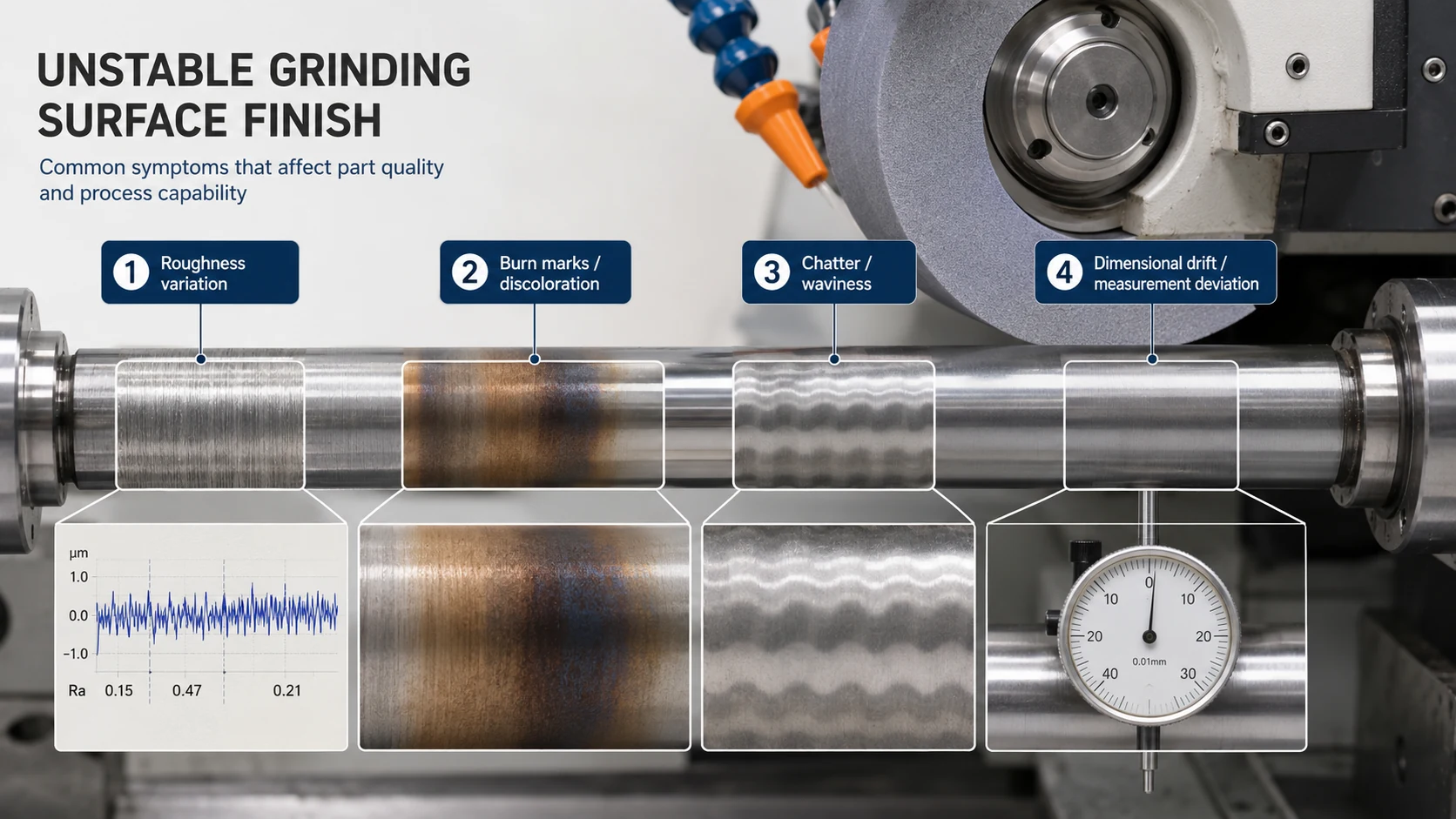
Precision grinding scene with workpiece surface inspection — grinding wheel or machine in background, finished workpiece in foreground with dial gauge, micrometer, or inspection tool emphasizing surface quality and dimensional stability
Surface finish instability can appear as roughness variation, burn marks, chatter patterns, or dimensional drift.

Applications

Where This Problem Commonly Appears

Why Is Your Grinding Surface Finish Unstable? What to Check Before Replacing the Wheel are selected for these industrial grinding applications.

Hardened bearing steel grinding

Glazing tendency, fine-finish sensitivity at high hardness

Check wheel hardness grade, CBN suitability, and dressing condition before changing the wheel

Hydraulic precision component grinding

Finish affects sealing; large contact area heat buildup

Check coolant delivery, wheel structure, and wheel grade match to the workpiece

Carbide workpiece grinding

Diamond wheel required; finish sensitivity to grain dulling

Check abrasive type match, dressing quality, and bond condition before changing specification

Non-ferrous material grinding

Loading tendency from ductile chip adhesion

Check wheel porosity, abrasive type compatibility, and coolant flushing

Diagnostic Guide

Quick Diagnostic Table

Start with observable grinding signals before changing wheel specification or dressing frequency.

Use this quick diagnostic table to narrow down the likely direction. Match the symptom to the most probable cause and the first thing to check.

Step 1

Finish degrades during the cycle

What you may see

Wheel surface looks shiny or polished. Sparks are weak or reddish.

Most likely direction

Wheel glazing — abrasive grains are dull and not self-sharpening.

First thing to check

Check the wheel surface for a smooth, reflective appearance. Note how soon after dressing the finish starts to degrade.

Step 2

Finish varies unpredictably between parts

What you may see

Dark or shiny packed areas on the wheel surface. Wheel stops cutting freely.

Most likely direction

Wheel loading — workpiece material is packing into wheel pores and blocking chip clearance.

First thing to check

Inspect wheel surface for embedded material. Check whether coolant is reaching the grinding zone effectively.

Step 3

Finish recovers after dressing but degrades quickly

What you may see

Wheel surface looks clean after dressing but problems return after a few parts.

Most likely direction

Dressing practice, wheel specification mismatch, or grinding conditions not supporting stable wheel performance.

First thing to check

Record how many parts are ground before finish degrades. Compare dressing lead, depth, and tool condition.

Step 4

Finish shows chatter marks, waviness, or uneven texture

What you may see

Regular or irregular patterns on the workpiece surface. May be accompanied by noise or vibration.

Most likely direction

Machine vibration, wheel imbalance, spindle condition, or wheel mounting issues.

First thing to check

Check for vibration in the machine, spindle, or wheel mounting. Verify wheel balance and truing condition.

Still unsure which factor is affecting the finish? Share photos of the wheel surface, workpiece material, current wheel size, and basic grinding conditions so we can review the application direction.

Send application details for review →
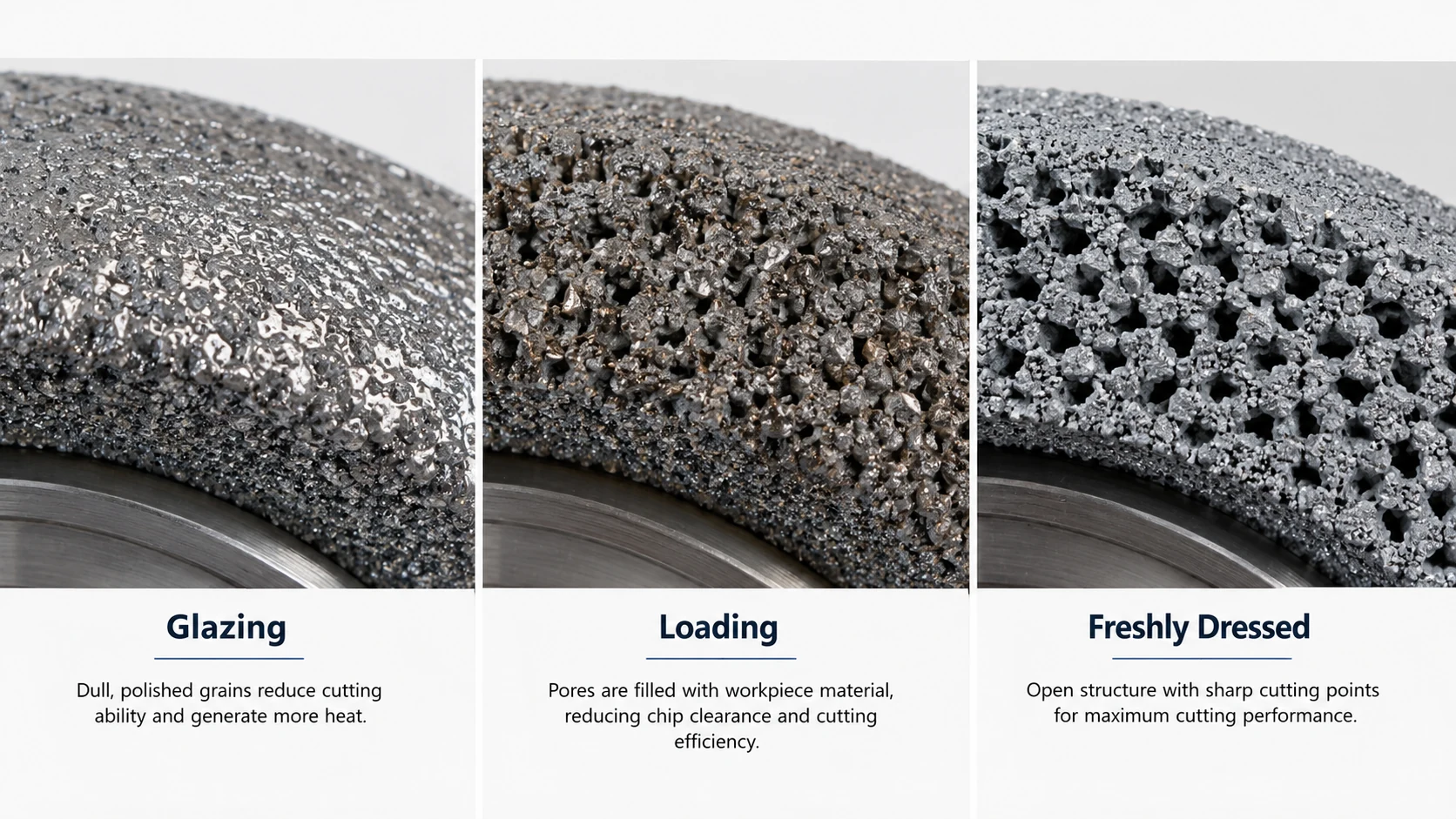
Three-panel technical comparison showing glazed wheel surface (shiny, smooth, dull abrasive), loaded wheel surface (pores blocked by workpiece material), and freshly dressed wheel surface (open structure with active cutting points)
Wheel surface condition helps distinguish glazing, loading, and a freshly dressed cutting surface.

Factor map

Five common causes of unstable grinding surface finish

Each cause below lists what to check first and what may be worth reviewing next, depending on the grinding application and workpiece material.

1

1. Wheel Glazing — Dull Abrasive Grains

A shiny or polished wheel surface may indicate that abrasive grains have become dull and flattened, causing the wheel to rub instead of cut. What to check first: the wheel surface appearance and how soon after dressing the finish degrades. What may be worth reviewing next: wheel hardness grade, grit size, and dressing parameters, depending on the workpiece material and grinding conditions.

2

2. Wheel Loading — Blocked Chip Clearance

Dark or shiny packed areas on the wheel surface may indicate that workpiece material is filling the pores and blocking chip clearance, leading to irregular cutting. What to check first: the wheel surface for embedded material and whether coolant reaches the grinding zone. What may be worth reviewing next: wheel structure (porosity), abrasive type, and coolant delivery effectiveness.

3

3. Inconsistent Dressing Practice

If dressing depth, lead rate, or frequency varies between cycles, the wheel surface condition may also vary — directly producing inconsistent finish. What to check first: dressing parameter consistency, dressing tool condition, and whether the dressing frequency matches the wheel specification. What may be worth reviewing next: whether the dressing practice is appropriate for the bond type and abrasive type in use.

4

4. Coolant Delivery Problems

Insufficient coolant flow, incorrect nozzle position, or dirty coolant may cause thermal expansion, inconsistent lubrication, and chip accumulation — all of which can affect surface finish and be mistaken for a wheel problem. What to check first: whether the coolant stream is directed at the grinding zone. What may be worth reviewing next: flow rate, nozzle condition, and coolant concentration.

5

5. Machine Condition and Vibration

Spindle bearing wear, wheel imbalance, inadequate machine rigidity, or inconsistent feed may cause vibration or intermittent contact between the wheel and workpiece, producing chatter marks or waviness. What to check first: machine vibration, spindle condition, wheel balance, and mounting. What may be worth reviewing next: whether the wheel performs differently on another machine, which can help separate machine issues from wheel specification issues.

Selection Guide

When dressing may help — and when it may not be enough

Use these practical tips to narrow down the right wheel specification for your grinding application.

1

If surface finish recovers fully after dressing and remains stable through a normal production interval, the dressing practice and wheel specification are likely adequate — maintain the current approach.

2

If finish recovers after dressing but degrades quickly (after fewer parts than expected), dressing alone is not solving the root cause. The wheel specification — hardness grade, grit size, structure, or bond — may need adjustment to match the grinding conditions.

3

If finish improves partially after dressing but still does not meet the target, check whether the dressing tool is worn, the dressing parameters are too light, or the wheel surface is not being fully opened.

4

If dressing does not improve finish at all, the problem is likely not wheel-surface-related. Check coolant delivery, machine condition, workpiece material consistency, or whether the wheel specification is fundamentally mismatched to the application.

5

For CBN and diamond grinding wheels, dressing requirements differ from conventional wheels. The dressing method, tool type, and parameters must be appropriate for the bond system and abrasive type.

6

When dressing cannot maintain stable finish through a production shift, providing complete application data — wheel specification, dressing method, grinding parameters, coolant setup, and surface finish target — helps the wheel manufacturer recommend whether a specification adjustment or process change is the better direction.

Before You Inquire

Information needed for quotation

Providing the details below helps us recommend the right wheel specification and prepare an accurate factory quotation faster.

Workpiece material, grade, and hardness (e.g., GCr15 HRC 60+/−2; 40Cr HRC 50+/−5; aluminum 6061)
Grinding process — surface, cylindrical (external or internal), centerless, internal bore, or form grinding
Current grinding wheel specification — abrasive type, bond, grit size, hardness grade, structure, and dimensions
Description of the surface finish problem — when it started, whether it affects all parts or is intermittent, and what the finish target (Ra) is vs. current results
Dressing method, tool type, dressing lead, depth, and frequency — and whether finish improves after dressing
Coolant type, concentration, flow rate, and nozzle position — and whether coolant visibly reaches the grinding zone
Machine model, spindle speed (RPM), spindle power, and any recent maintenance or changes
Photos of the wheel surface before and after dressing, and of the workpiece surface finish, if available
Estimated monthly or annual wheel consumption quantity for production planning

Send these details through the inquiry form, or contact us on WhatsApp for a preliminary recommendation.

Send Grinding Details

FAQ

Common questions about why is your grinding surface finish unstable? what to check before replacing the wheel

Quick answers to common buyer questions before sending an inquiry.

What is the most common cause of unstable grinding surface finish?

There is no single most common cause — unstable finish can come from wheel glazing, wheel loading, inconsistent dressing, coolant delivery problems, machine vibration, or a wheel specification mismatch. The most effective approach is to check the wheel surface condition first (shiny = glazing, packed material = loading), then review dressing consistency, then verify coolant delivery, before deciding whether the wheel specification needs adjustment.

How can I tell if the problem is wheel glazing or wheel loading?

Check the wheel surface visually. A glazed wheel looks shiny, smooth, or polished — the abrasive grains are dull and flattened. A loaded wheel has dark or shiny packed areas where workpiece material has filled the pores or smeared across the surface. Glazing is primarily a wheel hardness and self-sharpening issue. Loading is primarily a chip clearance and porosity issue. For a more detailed comparison, see our guide on grinding wheel loading vs glazing.

Should I change the grinding wheel if the surface finish is unstable?

Not necessarily — and changing the wheel without identifying the root cause may waste time and material. First, check the wheel surface condition, dressing practice, and coolant delivery. If dressing restores stable finish, the current wheel may still be suitable and the dressing practice may need adjustment. If finish degrades quickly after dressing, the wheel specification may need review. If finish does not improve after dressing, check coolant delivery and machine condition before concluding the wheel is the problem.

Can poor coolant delivery affect grinding surface finish?

Yes. Coolant that does not reach the grinding zone can cause thermal expansion of the workpiece, inconsistent lubrication, and chip accumulation on the wheel surface — all of which may produce surface finish variation that looks like a wheel problem. Check whether the coolant stream is directed at the grinding zone, not just wetting the wheel or workpiece surface. Flow rate, nozzle position, coolant concentration, and coolant cleanliness should all be reviewed before concluding the wheel specification needs to change.

Why does surface finish become unstable after dressing?

If finish improves briefly after dressing but then degrades, the dressing practice may be restoring the wheel surface temporarily without addressing the underlying mismatch. The wheel hardness grade, grit size, or bond type may not be well-matched to the grinding conditions, or the dressing parameters (lead, depth, tool condition) may not be appropriate for the wheel specification. For a deeper look at dressing intervals and practices, see our grinding wheel dressing frequency guide.

What causes chatter marks during grinding?

Chatter marks — regular or irregular waviness on the workpiece surface — are most often related to machine vibration, wheel imbalance, spindle bearing condition, or wheel mounting issues rather than the wheel specification itself. Check machine rigidity, spindle condition, wheel balance, and mounting before adjusting wheel parameters. In some cases, a wheel that performs without chatter on one machine may produce chatter on another, which helps identify whether the issue is machine-related or wheel-related.

When should I consider changing the grinding wheel?

A grinding wheel change should be considered after dressing, coolant delivery, machine condition, and wheel specification match have been reviewed and the wheel surface condition cannot be restored to stable cutting performance. If the wheel is structurally worn, has lost profile beyond what dressing can recover, or if the specification review indicates a different abrasive type, bond, grit size, or hardness grade would better match the application, then a wheel change is appropriate. Providing the current wheel specification, workpiece details, and grinding conditions helps the manufacturer recommend a suitable replacement direction.

Can dressing solve unstable surface finish?

Dressing can often restore surface finish by removing loaded or glazed material, exposing fresh abrasive grains, and restoring wheel porosity. If the finish recovers and remains stable after dressing, the dressing practice or frequency may be the main factor. If the finish degrades quickly after dressing, the root cause is likely the wheel specification, grinding conditions, or coolant delivery — and dressing alone will not provide a lasting solution. See our guide on grinding wheel dressing frequency for more information.

When should coolant delivery be checked for surface finish problems?

Check coolant delivery when: (1) finish instability is accompanied by grinding burn or discoloration, (2) finish is worse on specific areas of the workpiece (e.g., edges or deep profiles where coolant access is limited), (3) finish problems started after a coolant change (new type, different concentration, or nozzle adjustment), (4) the wheel surface shows signs of loading that could be related to poor chip flushing. Verify the coolant stream reaches the grinding zone — not just the wheel or workpiece surface.

What information should I provide for a grinding wheel review?

Provide the workpiece material and hardness, grinding process, current wheel specification (abrasive, bond, grit, hardness, dimensions), description of the finish problem and when it started, dressing method and frequency, coolant type and delivery, machine model and spindle speed, target surface finish (Ra), and photos of the wheel surface and workpiece finish if available. Complete application data helps the wheel manufacturer recommend whether a specification adjustment, process change, or both is the better direction.

WhatsApp Inquiry