CBN Grinding Wheels

Grinding Wheel Products

CBN Grinding Wheels

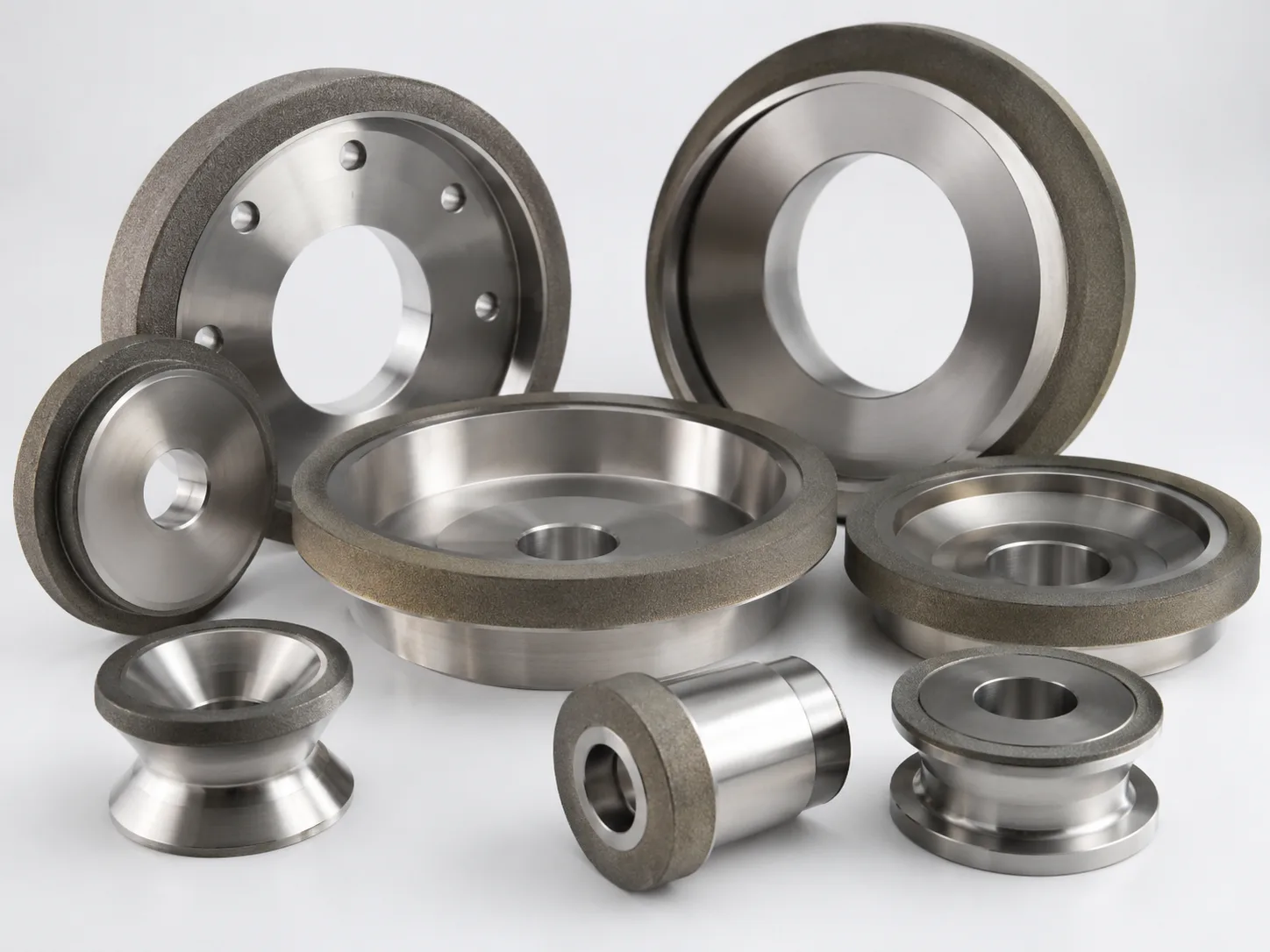
CBN (Cubic Boron Nitride) grinding wheels are superabrasive wheels designed for high-precision grinding of hardened ferrous materials. With hardness second only to diamond, CBN wheels deliver exceptional wheel life, stable grinding performance, and consistent surface finish across bearing steel, hardened steel, high-speed steel, and other demanding industrial applications.

Hardness second only to diamond — ideal for hardened ferrous materials
Excellent thermal stability — resists wheel wear at high grinding speeds
Consistent profile retention across long production runs
Available in vitrified, resin, and metal bond options
Custom sizes, grit specifications, and concentrations available

Overview

About CBN Grinding Wheels

CBN grinding wheels are manufactured by bonding cubic boron nitride abrasive grains with vitrified, resin, or metal bonds onto a precision-machined core. Unlike conventional aluminum oxide or silicon carbide wheels, CBN wheels maintain their cutting edges far longer when grinding hardened steels above HRC 50, making them the preferred choice for high-volume precision production environments. Our factory produces CBN wheels across a wide range of diameters, thicknesses, grit sizes, and concentrations to match specific workpiece materials, machine parameters, and surface finish targets.

Applications

Common grinding applications

CBN Grinding Wheels are selected for these industrial grinding applications.

Bearing Steel Grinding

CBN wheels are the industry standard for grinding bearing rings, raceways, and rollers made from bearing steel such as GCr15 and 100Cr6. The superabrasive grain maintains a sharp cutting edge through high-volume bearing production runs.

Hardened Steel Grinding

For hardened alloy steels, tool steels, and quenched steels above HRC 50, CBN wheels provide stable material removal with minimal thermal damage, reducing the risk of grinding burn on sensitive hardened surfaces.

High-Speed Steel Grinding

CBN wheels are well-suited for grinding hardened high-speed steel (HSS) workpieces, precision punches, and dies where conventional abrasives dull quickly and require frequent dressing.

Hydraulic Component Grinding

Hydraulic rods, cylinders, pistons, and valve components require precise surface finish and dimensional control. CBN wheels deliver the consistency needed for hydraulic system sealing surfaces and sliding fits.

Mold & Die Grinding

Mold steel and die steel grinding benefits from CBN wheel profile stability, especially in form grinding and slot grinding applications where wheel shape retention directly affects part accuracy.

Precision Production Grinding

For any high-volume production environment grinding hardened ferrous materials, CBN wheels reduce cycle times, extend dressing intervals, and improve part-to-part consistency compared to conventional abrasive wheels.

Workpiece Materials

Suitable workpiece materials

Below are the most common workpiece materials matched with these grinding wheel applications.

Bearing Steel (GCr15, 100Cr6, SUJ2)

The most common application for CBN wheels. Bearing steel responds well to CBN's hardness and thermal conductivity, delivering excellent raceway and ring surface finishes.

Hardened Alloy Steel (≥ HRC 50)

Quenched and tempered alloy steels including 40Cr, 42CrMo, and similar grades benefit from CBN's ability to cut hardened surfaces without excessive wheel wear.

High-Speed Steel (M2, M42, T1)

CBN wheels cut HSS cleanly with less loading and glazing than aluminum oxide wheels, making them suitable for tool and cutter grinding applications.

Mold Steel (P20, H13, S136)

Mold and die steels, particularly in hardened condition, are well-matched to CBN grinding for form accuracy and surface finish requirements.

Case-Hardened Steel

Carburized and nitrided steels with hard surface layers are efficiently ground with CBN wheels which resist the abrasive wear that dulls conventional grains.

Advantages

Why choose cbn grinding wheels

Key benefits and performance characteristics for industrial grinding applications.

Exceptional Hardness

CBN is the second-hardest known abrasive material after diamond. This hardness translates directly into longer wheel life and fewer wheel changes in production environments.

Thermal Stability

Unlike diamond, CBN is chemically stable when grinding ferrous materials at high temperatures. It does not react with iron, making it the only superabrasive suitable for steel grinding.

Consistent Profile Retention

CBN wheels maintain their form and cutting profile through extended grinding runs, reducing dressing frequency and improving part-to-part dimensional consistency.

Reduced Grinding Burn Risk

CBN's high thermal conductivity carries heat away from the grinding zone, reducing the risk of surface burning and metallurgical damage on heat-sensitive hardened steels.

Lower Total Cost Per Part

Although CBN wheels have a higher initial cost than conventional wheels, the extended wheel life, reduced downtime, and improved part quality typically result in lower total cost per ground part.

Multiple Bond Options

CBN wheels are available in vitrified, resin, and metal bonds, allowing optimization for specific grinding conditions — from aggressive stock removal to fine surface finishing.

Selection Guide

How to select cbn grinding wheels

Use these practical tips to narrow down the right wheel specification for your grinding application.

1

Identify workpiece material and hardness first — CBN is specifically for hardened ferrous metals (≥ HRC 45). For carbide, ceramics, or non-ferrous materials, diamond wheels are more suitable.

2

Match the bond type to the grinding operation — vitrified bond for profile stability and free cutting, resin bond for surface finish and reduced chipping, metal bond for maximum wheel life in high-volume production.

3

Specify grit size according to surface finish requirements — finer grits (120–240) for finish grinding, coarser grits (60–100) for stock removal and rough grinding.

4

Confirm wheel dimensions (OD × ID × thickness) and match to your machine spindle speed and power capability.

5

Consider CBN concentration — higher concentration for heavy stock removal, lower concentration for finish operations where surface quality is the priority.

6

For custom profiles or formed wheels, provide a detailed drawing with all dimensions, tolerances, and the intended grinding machine model.

Before You Inquire

Information needed for quotation

Providing the details below helps us recommend the right wheel specification and prepare an accurate factory quotation faster.

Workpiece material and hardness (e.g., GCr15 bearing steel, HRC 60–62)
Grinding process (surface, cylindrical, internal, centerless, or form grinding)
Wheel dimensions — outer diameter, inner diameter/bore, and thickness
Machine model, spindle speed, and power
Target surface finish (Ra) and dimensional tolerance
Current grinding problem or improvement goal
Estimated monthly or annual quantity
Drawing or photo of the part or current wheel, if available

Send these details through the inquiry form, or contact us on WhatsApp for a preliminary recommendation.

Send Grinding Details

Industries

Industries served

CBN Grinding Wheels are used across these manufacturing sectors. We provide grinding wheel solutions for industrial grinding applications. We do not supply the customer workpieces themselves, such as bearings, hydraulic components, molds, or mechanical parts.

Bearing manufacturing — raceway, ring, and roller grinding
Hydraulic machinery — rod, cylinder, piston, and valve component grinding
Automotive component production — transmission and engine part grinding
Precision mold and die manufacturing — form and profile grinding
Aerospace component grinding — high-precision hardened alloy parts
General precision manufacturing — any hardened ferrous workpiece grinding

FAQ

Common questions about cbn grinding wheels

Quick answers to common buyer questions before sending an inquiry.

What is the difference between CBN and diamond grinding wheels?

CBN (Cubic Boron Nitride) wheels are designed for grinding ferrous materials — hardened steel, bearing steel, high-speed steel, and cast iron. Diamond wheels are for non-ferrous hard materials — carbide, ceramics, glass, and stone. The key difference is chemical: diamond reacts with iron at high grinding temperatures, causing rapid wear, while CBN remains chemically stable. For steel grinding, CBN is the correct superabrasive choice.

Which bond type is best for CBN grinding wheels?

It depends on the application. Vitrified bond CBN wheels offer excellent profile retention and free cutting, making them suitable for precision form grinding and bearing steel applications. Resin bond CBN wheels provide better surface finish and are more forgiving in interrupted cuts or when reduced chipping is important. Metal bond CBN wheels deliver maximum abrasive holding force and wheel life, ideal for high-volume production where long dressing intervals are required.

Can CBN grinding wheels be customized to our specifications?

Yes. We produce CBN wheels to customer specifications including wheel dimensions, grit size, concentration, bond type, profile shape, and core material. Send your drawing, current wheel specification, or workpiece details and we will recommend the appropriate CBN wheel configuration for your grinding application.

What materials should NOT be ground with CBN wheels?

CBN wheels are not suitable for carbide, ceramics, glass, stone, non-ferrous metals (aluminum, copper, brass), or soft steels below approximately HRC 45. For carbide and ceramics, diamond grinding wheels are recommended. For soft steels and non-ferrous metals, conventional aluminum oxide or silicon carbide wheels are more appropriate and cost-effective.

What information do you need to provide a CBN wheel quotation?

To recommend and quote a suitable CBN grinding wheel, we typically need: workpiece material and hardness, grinding process type, wheel dimensions (OD × ID × thickness), machine model and spindle speed, target surface finish, current grinding problem if any, and estimated quantity. A drawing, photo, or existing wheel specification helps us respond faster.
WhatsApp Inquiry