Bearing Inner Ring Bore Grinding
CBN wheels for inner ring bore grinding require excellent profile stability and consistent cutting action through the bore length.
Grinding Wheel Knowledge Base
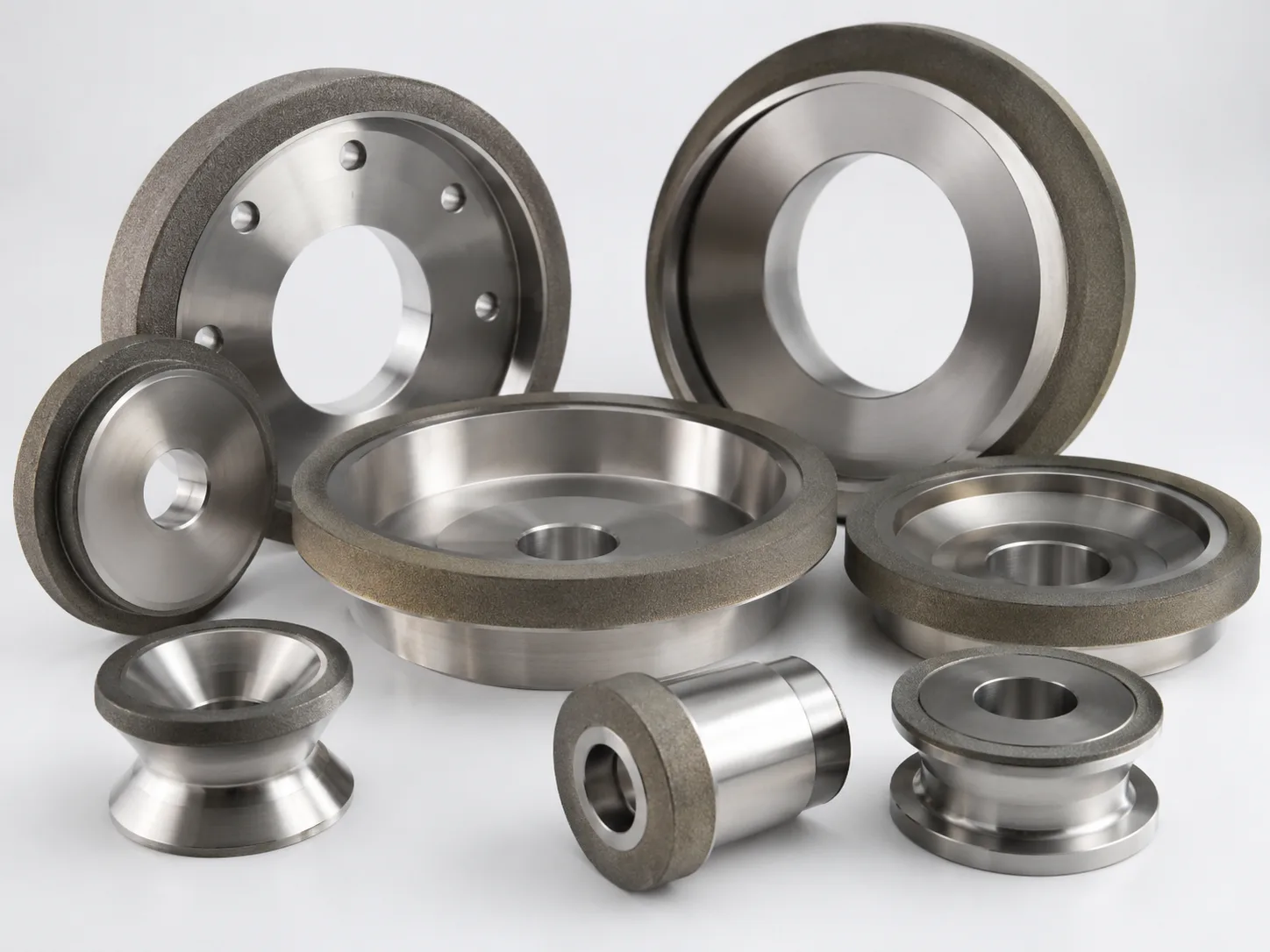
CBN (Cubic Boron Nitride) grinding wheels are widely used in bearing manufacturing for grinding bearing rings, raceways, and rolling elements. Choosing the right CBN wheel specification directly affects grinding efficiency, surface finish quality, wheel life, and the final performance grade of the bearing. This guide explains the key factors to consider when selecting CBN grinding wheels for bearing grinding applications.
Overview
Bearing grinding is one of the most demanding precision grinding applications. CBN grinding wheels are the industry standard for bearing steel grinding because CBN remains chemically stable against iron at grinding temperatures, provides high thermal conductivity that reduces burn risk, and maintains profile stability through extended production runs. Selecting the right CBN wheel specification involves balancing multiple interdependent factors: abrasive concentration, bond type, grit size, hardness grade, structure number, and wheel dimensions.
Applications
CBN grinding wheels are selected for these bearing grinding operations where wheel life, profile stability, and surface finish consistency are critical. Each operation requires specific wheel specifications tailored to the grinding zone geometry and precision requirements.
CBN wheels for inner ring bore grinding require excellent profile stability and consistent cutting action through the bore length.
Outer ring raceway grinding demands CBN wheels that maintain form accuracy and roundness tolerances across long production runs. Vitrified bond CBN wheels are commonly used.
Centerless grinding of cylindrical rollers, tapered rollers, and bearing balls uses CBN wheels with specific hardness and grit combinations for consistent rolling element roundness.
Face grinding of bearing rings requires CBN wheels with good flatness retention and minimal edge breakdown.
Superfinishing for P5, P4 and higher-grade precision bearings uses fine-grit CBN wheels to deliver sub-micron surface finishes.
Workpiece Materials
Below are the most common workpiece materials matched with these grinding wheel applications.
The most common bearing steel grades. CBN wheels deliver long wheel life, consistent surface quality, and stable profile retention.
Carburized bearing steels benefit from CBN wheel grinding. The wheel must handle the hard case without excessive wear.
Stainless steel bearings for corrosive environments require CBN wheels that cut cleanly without loading.
Advantages
Key benefits and performance characteristics for industrial grinding applications.
CBN does not react chemically with iron at grinding temperatures, making it the only superabrasive suitable for bearing steel grinding.
CBN high thermal conductivity carries heat away from the grinding zone, reducing the risk of grinding burn.
CBN wheels maintain their form through extended runs, essential for raceway grinding where profile accuracy affects bearing noise and service life.
Available in vitrified, resin, and metal bonds for different grinding stages from rough to superfinishing.
Selection Guide
Use these practical tips to narrow down the right wheel specification for your grinding application.
Identify the bearing type and steel grade first — different bearing types have different grinding requirements.
Match CBN bond type to grinding stage — vitrified for rough/semi-finish, resin for finish, metal for maximum wheel life.
Select grit size by finish requirement — coarse (60-80) for rough, medium (80-120) for semi-finish, fine (120-240) for finish.
Provide the bearing grinding machine model and spindle speed for correct wheel configuration.
Specify target bearing precision grade — P0/P6 vs P5/P4 for appropriate grit and balance requirements.
Before You Inquire
Providing the details below helps us recommend the right wheel specification and prepare an accurate factory quotation faster.
Send these details through the inquiry form, or contact us on WhatsApp for a preliminary recommendation.
Send Grinding Details →Industries
Bearing grinding applications span these manufacturing sectors. We provide CBN grinding wheel solutions for bearing grinding processes and grinding machine setups. We do not supply bearings, bearing components, hydraulic parts, molds, or mechanical parts.
FAQ
Quick answers to common buyer questions before sending an inquiry.
CBN is chemically stable against iron at grinding temperatures, provides high thermal conductivity that reduces burn risk, and maintains profile stability through extended production runs. On hardened bearing steel these properties give CBN a strong combination of wheel life, surface quality, and part consistency, though hardness alone does not select the wheel - machine and spindle, coolant, dressing system, contact and stock removal all take part in the decision.
Coarse (60-80) for rough grinding, medium (80-120) for semi-finish raceway grinding, fine (120-240) for finish grinding. For P5/P4 precision bearings, finer grits and tighter specifications are needed.
Provide bearing type, workpiece material and hardness, grinding operation, wheel dimensions or machine model, target surface finish and roundness tolerance, current grinding problem, and production volume.
Explore More
Continue browsing related products, applications, and technical information.
Technical visuals showing CBN wheel structure, bearing grinding applications, and bond type options.
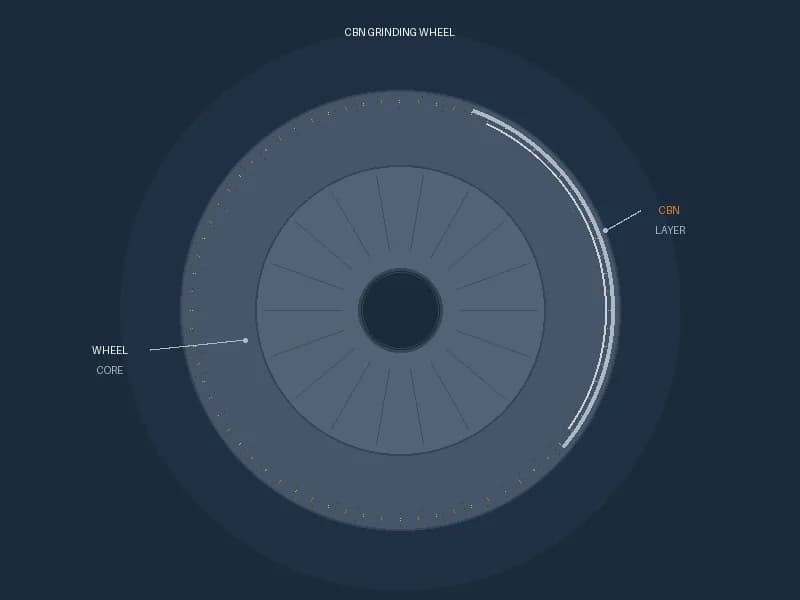
CBN grinding wheel structure with CBN layer, wheel core, and mounting bore.
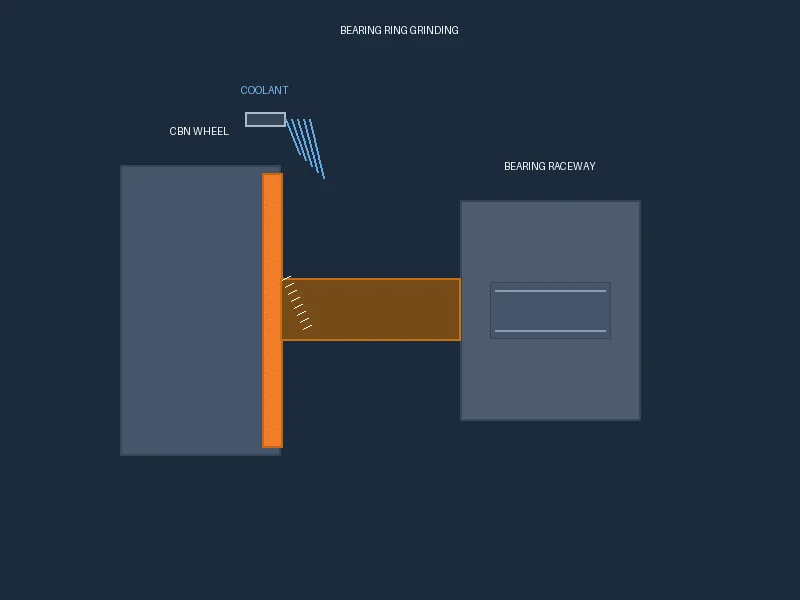
Bearing ring grinding application with CBN wheel, raceway contact, and coolant delivery.
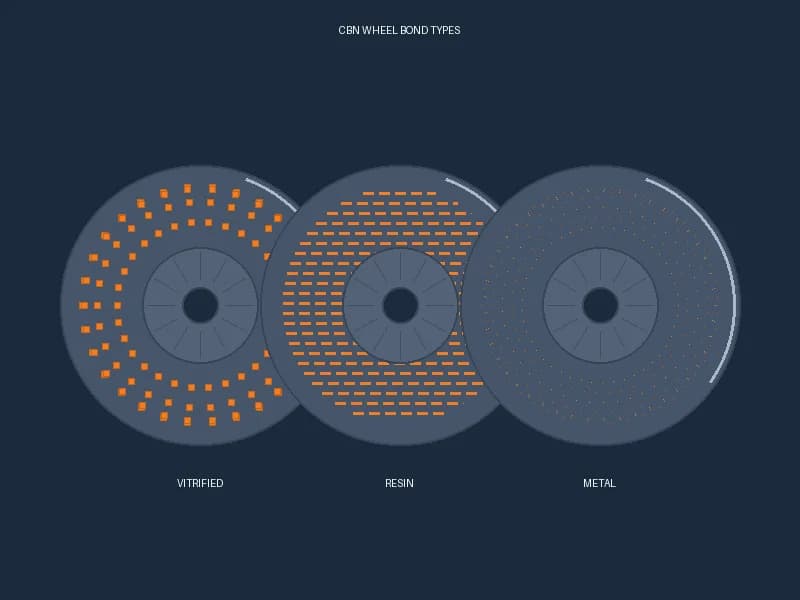
CBN wheel bond type comparison: vitrified, resin, and metal bond options.
When a grinding problem occurs, the root cause often involves multiple wheel specification factors. Use this reference table to identify which wheel parameters to check first.
| Grinding Problem | Wheel Factor to Check | Possible Adjustment |
|---|---|---|
| Grinding burn | Hardness grade, grit size, bond type, structure | Use softer grade, coarser grit, or more open structure. Check coolant delivery and dressing condition. |
| Wheel loading | Grit size, porosity, bond type, abrasive type | Use coarser grit, more open structure (higher structure number), or sharper abrasive. Improve coolant filtration. |
| Unstable surface finish | Grit size, hardness grade, dressing interval | Use finer grit, harder grade, or adjust dressing frequency and depth. Check machine vibration and spindle condition. |
| Short wheel life | Bond type, hardness grade, abrasive concentration | Use harder grade, metal or vitrified bond with higher abrasive concentration. Verify wheel speed matches machine specification. |
For raceway-specific review — including inner versus outer raceways, dressing, profile retention, coolant and current grinding problems — see the bearing raceway grinding guide.
Share your bearing grinding requirements — bearing type, ring dimensions, material grade, machine model, and grinding target. We'll recommend a CBN wheel specification based on your application data.