Diamond Grinding Wheels

Grinding Wheel Products

Diamond Grinding Wheels

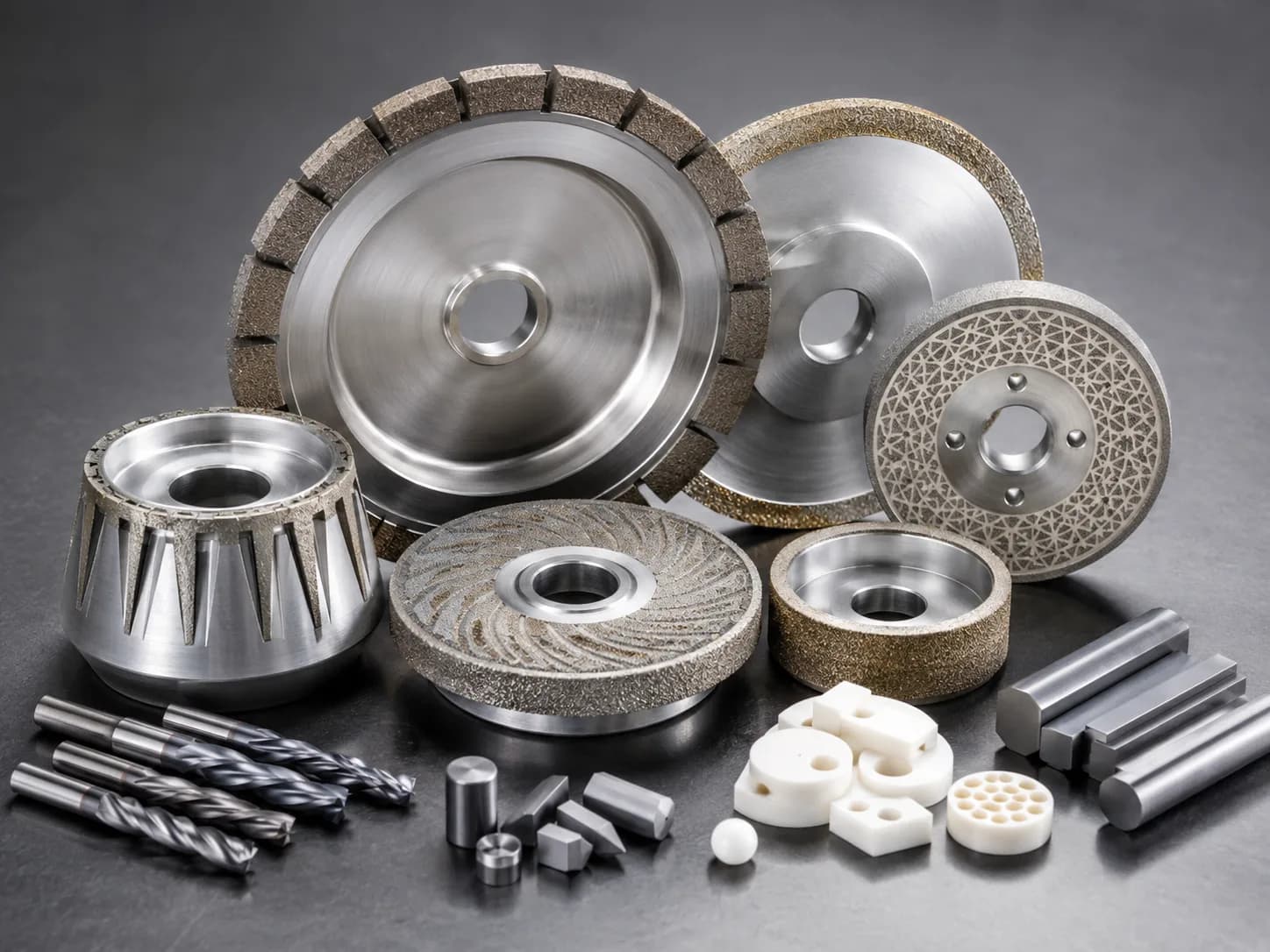
Diamond grinding wheels are superabrasive wheels manufactured with synthetic diamond abrasive grains for grinding hard, brittle, and non-ferrous materials. As the hardest known abrasive material, diamond delivers unmatched cutting efficiency, wheel life, and dimensional precision when grinding carbide, ceramics, tungsten steel, glass, stone, and other difficult-to-machine materials. Our factory produces diamond wheels in resin, metal, and vitrified bonds across a wide range of sizes and specifications.

Hardest abrasive material available — very high cutting efficiency
Ideal for carbide, ceramics, tungsten steel, glass, and stone
Excellent thermal conductivity — reduces grinding heat and thermal damage
Long wheel life with minimal dressing in production environments
Available in resin, metal, vitrified, and electroplated bond options
Custom grit sizes, concentrations, and wheel profiles available

Overview

About Diamond Grinding Wheels

Diamond grinding wheels are manufactured by bonding synthetic diamond abrasive grains onto a precision-machined core using resin, metal, vitrified, or electroplated bond systems. Diamond's extreme hardness makes it the abrasive of choice for non-ferrous hard materials where conventional aluminum oxide and silicon carbide wheels wear too quickly to be economical. Diamond wheels maintain sharp cutting edges through extended grinding runs, delivering consistent surface finish, tight dimensional tolerances, and reduced cycle times in carbide tool grinding, ceramic component processing, glass edging, stone fabrication, and precision forming applications.

Applications

Common grinding applications

Diamond Grinding Wheels are selected for these industrial grinding applications.

Carbide Tool Grinding

Diamond wheels are the industry standard for grinding carbide workpieces, hardened tool steel components, and precision wear parts. The diamond abrasive maintains sharp cutting edges and resists the rapid wear that conventional abrasives experience against carbide and hard non-ferrous materials.

Ceramic Component Grinding

Technical ceramics such as alumina, zirconia, and silicon nitride require diamond grinding wheels for precision machining. Diamond's hardness allows efficient material removal without causing micro-cracks or surface damage to brittle ceramic workpieces.

Tungsten Steel Grinding

Tungsten steel and tungsten carbide alloys used in tooling, dies, and wear-resistant components are efficiently ground with diamond wheels, which maintain profile accuracy and surface quality through high-volume production.

Glass Edging and Processing

Diamond grinding wheels are the standard for glass edge grinding, beveling, and surface processing in architectural glass, automotive glass, and display glass manufacturing. Diamond delivers smooth edges and consistent finish quality.

Stone and Quartz Fabrication

Natural stone, engineered quartz, and composite stone materials are shaped and finished with diamond grinding wheels. Diamond's extreme hardness handles the abrasive nature of stone materials with long service life.

Precision Form Grinding

For applications requiring precise profile accuracy on hard non-ferrous materials, diamond wheels in resin or metal bonds maintain form through extended grinding cycles, making them suitable for optical, semiconductor, and precision engineering applications.

Workpiece Materials

Suitable workpiece materials

Below are the most common workpiece materials matched with these grinding wheel applications.

Cemented Carbide (WC-Co Grades)

The most common diamond wheel application. Tungsten carbide with cobalt binder responds well to diamond grinding, delivering excellent surface finish and edge quality on carbide workpieces and precision wear parts.

Technical Ceramics (Al₂O₃, ZrO₂, Si₃N₄)

Advanced ceramics used in medical, aerospace, and electronics applications require diamond grinding wheels for precision machining without surface damage or micro-cracking.

Tungsten Steel and Tungsten Alloys

High-density tungsten alloys and tungsten steel grades used in tooling, radiation shielding, and high-temperature applications are efficiently ground with diamond abrasive wheels.

Glass (Soda-Lime, Borosilicate, Quartz Glass)

Diamond wheels deliver clean, chip-free edges and smooth surfaces on all glass types. Resin bond diamond wheels are commonly used for edge grinding and beveling applications.

Stone and Engineered Materials

Natural granite, marble, engineered quartz, and composite stone products are shaped, calibrated, and polished using diamond grinding wheels with metal or resin bonds.

Advantages

Why choose diamond grinding wheels

Key benefits and performance characteristics for industrial grinding applications.

Highest Hardness Available

Diamond is the hardest known material, providing very high hardness and wear resistance when grinding carbide, ceramics, and other hard non-ferrous materials. This translates directly into faster material removal and longer wheel life compared to other abrasive types.

Excellent Thermal Conductivity

Diamond's high thermal conductivity efficiently carries heat away from the grinding zone, reducing the risk of thermal damage to heat-sensitive workpieces such as carbide cutting edges and ceramic components.

Superior Edge Retention

Diamond abrasive grains maintain sharp cutting edges far longer than conventional abrasives, resulting in consistent grinding performance, reduced dressing frequency, and predictable surface finish across production runs.

Reduced Cycle Times

Diamond's aggressive cutting action and resistance to dulling enable higher material removal rates and shorter cycle times in production grinding, improving overall manufacturing productivity.

Versatile Bond Options

Diamond wheels are available in resin bond (for surface finish and reduced chipping), metal bond (for maximum wheel life and profile stability), vitrified bond (for free cutting), and electroplated bond (for complex profiles and formed wheels).

High Precision and Consistency

Diamond wheels maintain dimensional accuracy and profile stability through extended grinding runs, delivering tight tolerances and part-to-part consistency in high-precision manufacturing environments.

Selection Guide

How to select diamond grinding wheels

Use these practical tips to narrow down the right wheel specification for your grinding application.

1

Identify the workpiece material first — diamond is specifically for non-ferrous hard materials (carbide, ceramics, glass, stone). For hardened steel and other ferrous materials, CBN wheels are the correct choice.

2

Choose the right bond for the application — resin bond for fine surface finish and reduced edge chipping, metal bond for maximum wheel life and profile retention, vitrified bond for free-cutting performance in precision grinding.

3

Select grit size based on finish requirements — finer diamond grits (D46–D126 / 325/400–120/140 mesh) for finish grinding and sharp edges, coarser grits (D151–D301 / 80/100–50/60 mesh) for stock removal and rough grinding.

4

Match diamond concentration to the operation — higher concentration (75–125) for heavy material removal and profile grinding, lower concentration (50–75) for finish operations and applications where surface quality is the priority.

5

Confirm wheel dimensions (OD × ID × thickness × diamond layer depth) and verify compatibility with your machine spindle speed, power, and coolant system.

6

For custom profiles, formed wheels, or special applications, provide a detailed drawing with all dimensions, tolerances, diamond layer specification, and the intended grinding machine model.

Before You Inquire

Information needed for quotation

Providing the details below helps us recommend the right wheel specification and prepare an accurate factory quotation faster.

Workpiece material and type (e.g., cemented carbide grade, ceramic type, glass type)
Grinding process (surface, cylindrical, centerless, tool grinding, edge grinding, or form grinding)
Wheel dimensions — outer diameter, inner diameter/bore, thickness, and diamond layer depth
Machine model, spindle speed, and coolant type if applicable
Target surface finish (Ra) and dimensional tolerance
Current grinding problem or improvement goal
Estimated monthly or annual quantity
Drawing or photo of the part, current wheel, or required profile, if available

Send these details through the inquiry form, or contact us on WhatsApp for a preliminary recommendation.

Send Grinding Details

Industries

Industries served

Diamond Grinding Wheels are used across these manufacturing sectors. We provide grinding wheel solutions for industrial grinding applications. We do not supply the customer workpieces themselves, such as bearings, hydraulic components, molds, or mechanical parts.

Carbide and hardened steel workpiece grinding — precision component manufacturing
Precision engineering — ceramic and tungsten steel component grinding
Glass processing — architectural, automotive, and display glass fabrication
Stone and quartz fabrication — countertop and architectural stone processing
Electronics and semiconductor — precision ceramic and substrate grinding
Medical device manufacturing — ceramic implant and instrument grinding

FAQ

Common questions about diamond grinding wheels

Quick answers to common buyer questions before sending an inquiry.

What is the difference between diamond and CBN grinding wheels?

Diamond grinding wheels are designed for non-ferrous hard materials — cemented carbide, technical ceramics, glass, stone, and tungsten steel. CBN grinding wheels are for ferrous materials — hardened steel, bearing steel, high-speed steel, and cast iron. The key difference is chemical: diamond reacts with iron at high grinding temperatures, causing rapid abrasive wear, while CBN remains chemically stable when grinding steel. For carbide and ceramics, diamond is the correct superabrasive choice.

Which bond type is best for diamond grinding wheels?

It depends on the application. Resin bond diamond wheels provide the best surface finish and are preferred for carbide tool grinding where sharp edges and low chipping are critical. Metal bond diamond wheels offer maximum abrasive holding force and wheel life, ideal for ceramic grinding, glass edging, and stone fabrication. Vitrified bond diamond wheels provide free-cutting performance with good profile stability. Electroplated diamond wheels are suitable for complex profiles and formed wheel applications.

Can diamond grinding wheels be used on steel?

Diamond grinding wheels should NOT be used on steel or other ferrous materials. At high grinding temperatures, diamond chemically reacts with iron, causing rapid abrasive wear and poor grinding performance. For steel grinding — including hardened steel, bearing steel, and high-speed steel — CBN (Cubic Boron Nitride) grinding wheels are the correct superabrasive choice. Using diamond on steel will result in excessive wheel wear and uneconomical grinding costs.

Can diamond wheels be customized to our specifications?

Yes. We produce diamond grinding wheels to customer specifications including wheel dimensions, diamond grit size, concentration, bond type, diamond layer depth, core material, and profile shape. Send your drawing, current wheel specification, or workpiece details and we will recommend the appropriate diamond wheel configuration for your grinding application.

What materials are best suited for diamond grinding wheels?

Diamond grinding wheels are ideally suited for cemented carbide (tungsten carbide), technical ceramics (alumina, zirconia, silicon nitride), tungsten steel and tungsten alloys, glass (soda-lime, borosilicate, quartz), natural and engineered stone, composite materials, and other hard non-ferrous materials. For any hard non-metallic or non-ferrous material where conventional abrasives wear too quickly, diamond is typically the recommended abrasive.

What information do you need to provide a diamond wheel quotation?

To recommend and quote a suitable diamond grinding wheel, we typically need: workpiece material and type, grinding process, wheel dimensions (OD × ID × thickness × diamond layer depth), machine model and spindle speed, target surface finish, current grinding problem if any, coolant type, and estimated quantity. A drawing, photo, or existing wheel specification helps us respond faster.
WhatsApp Inquiry