Silicon Carbide Grinding Wheels

Grinding Wheel Products

Silicon Carbide Grinding Wheels

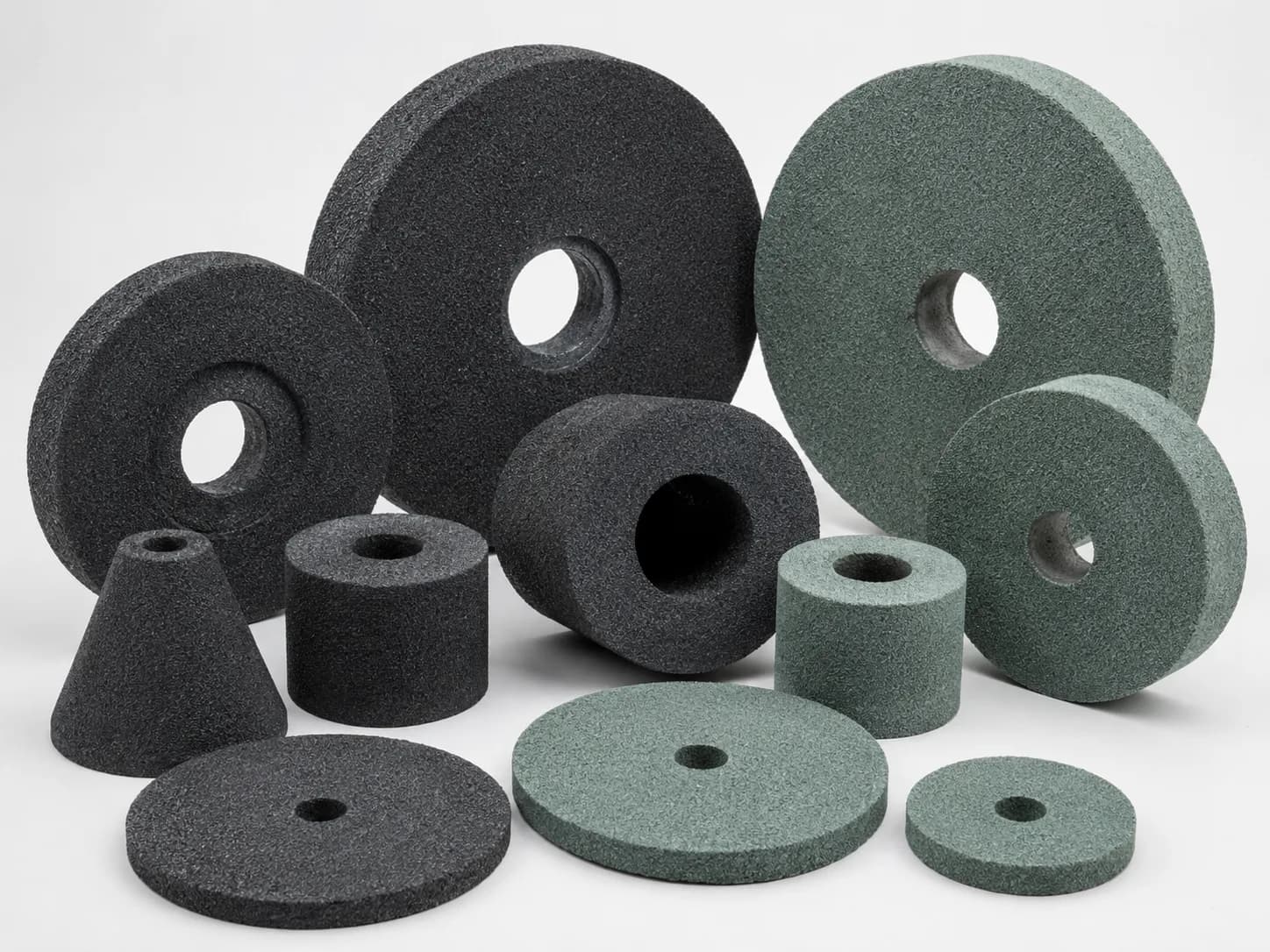
Silicon carbide grinding wheels are harder and sharper than aluminum oxide wheels, making them the preferred conventional abrasive for grinding cast iron, non-ferrous metals, non-metal materials, carbide, and tungsten steel. Available in black silicon carbide (C) and green silicon carbide (GC) grades, these wheels deliver sharp cutting action, reduced loading when grinding ductile materials, and efficient grinding of hard, brittle workpieces. Our factory produces silicon carbide wheels in vitrified and resin bonds for a wide range of industrial grinding applications.

Sharper and harder than aluminum oxide — efficient cutting on hard, brittle materials
Two grades — black silicon carbide (C) for general use, green (GC) for carbide and precision work
Excellent for cast iron, non-ferrous metals, and non-metal materials
Resists wheel loading when grinding aluminum, copper, and ductile metals
Suitable for carbide, tungsten steel, and tool sharpening applications
Available in vitrified and resin bond, custom sizes and specifications

Overview

About Silicon Carbide Grinding Wheels

Silicon carbide abrasive is produced by fusing high-purity silica sand and carbon in electric resistance furnaces at temperatures above 2000°C. The resulting crystalline material is harder and sharper than aluminum oxide but more brittle, giving it distinct advantages for specific material types. Black silicon carbide (C) is the general-purpose grade containing approximately 97–98% SiC, suitable for cast iron, non-ferrous metals, non-metal materials, and general grinding. Green silicon carbide (GC) is over 99% pure SiC with even sharper grain structure, making it the choice for cemented carbide, tungsten steel, and precision tool sharpening where cutting efficiency and minimal heat generation are critical.

Applications

Common grinding applications

Silicon Carbide Grinding Wheels are selected for these industrial grinding applications.

Cast Iron Grinding

Silicon carbide wheels are the preferred choice for grinding cast iron components including cylinder blocks, machine tool beds, brake discs, pump housings, and general cast iron parts. The sharp, hard abrasive grains resist loading from the free graphite in cast iron.

Non-Ferrous Metal Grinding

Aluminum, copper, brass, bronze, and other non-ferrous metals are best ground with silicon carbide wheels. The sharp abrasive grains cut cleanly through ductile metals without loading or smearing the wheel surface, a common problem when grinding these materials with aluminum oxide.

Carbide and Tungsten Steel Grinding

Green silicon carbide (GC) wheels are used for grinding cemented carbide tool tips, tungsten steel wear parts, and other hard materials where aluminum oxide would dull too quickly. Diamond wheels offer longer life for high-volume carbide production, but silicon carbide provides a lower-cost option.

Non-Metal Material Grinding

Silicon carbide wheels are effective on non-metal materials including rubber, plastics, fiber-reinforced composites, leather, and stone. The sharp abrasive grains cut these materials cleanly where aluminum oxide would tend to load and glaze.

Tool Sharpening

Green silicon carbide wheels are commonly used for grinding carbide workpieces and hardened steel components that require cool cutting action to avoid thermal damage. Note: we supply grinding wheels for precision workpiece grinding — we focus on abrasive solutions, not the workpieces themselves.

Small Mold Part Grinding

For small mold components, inserts, and precision parts made from carbide or tungsten steel, green silicon carbide wheels provide sharp, controlled material removal for detail grinding and finishing work.

Workpiece Materials

Suitable workpiece materials

Below are the most common workpiece materials matched with these grinding wheel applications.

Cast Iron (Gray, Ductile, Nodular)

Black silicon carbide wheels are the standard choice for cast iron grinding. The sharp abrasive grains resist the loading effect of free graphite, maintaining cutting efficiency through the grinding operation.

Aluminum, Copper, Brass, and Bronze

Non-ferrous ductile metals are best ground with silicon carbide wheels. The sharp grains produce clean chip formation without the loading, smearing, and glazing that aluminum oxide wheels experience on these materials.

Cemented Carbide and Tungsten Steel

Green silicon carbide (GC) wheels can grind carbide and tungsten steel. The high-purity, sharp abrasive grains cut these hard materials efficiently. For high-volume carbide production, diamond grinding wheels offer longer wheel life.

Non-Metal Materials (Rubber, Plastics, Composites)

Silicon carbide wheels grind non-metal materials cleanly. The sharp, friable grains maintain cutting action through rubber, plastics, fiber-reinforced composites, leather, and similar materials.

Stone, Ceramics, and Glass (Light Grinding)

Silicon carbide wheels can handle light grinding of stone, lower-grade ceramics, and glass where superabrasive diamond wheels may not be cost-justified. For precision ceramic or glass grinding, diamond wheels are recommended.

Advantages

Why choose silicon carbide grinding wheels

Key benefits and performance characteristics for industrial grinding applications.

Sharper and Harder Than Aluminum Oxide

Silicon carbide grains are inherently sharper and harder than aluminum oxide, providing more aggressive cutting action on hard, brittle materials and cleaner chip formation on ductile non-ferrous metals.

Resists Loading on Non-Ferrous Metals

When grinding aluminum, copper, brass, and other ductile metals, silicon carbide wheels resist the loading and smearing that plagues aluminum oxide wheels on these materials, maintaining consistent cutting performance.

Preferred for Cast Iron

The sharp, friable silicon carbide grains cut through cast iron efficiently and resist the glazing effect of free graphite, making silicon carbide the abrasive of choice for cast iron grinding applications.

Two Purity Grades for Different Needs

Black silicon carbide (C, ~97–98% SiC) for general cast iron, non-ferrous, and non-metal grinding. Green silicon carbide (GC, >99% SiC) for carbide, tungsten steel, and precision applications requiring the sharpest cutting action.

Suitable for Non-Metal Materials

Silicon carbide is one of the few abrasive types that grinds rubber, plastics, composites, and other non-metal materials effectively without loading, making it essential for specialized industrial applications.

Lower Cost Than Superabrasives for Carbide

For moderate-volume carbide grinding and tool sharpening, green silicon carbide wheels provide acceptable performance at a significantly lower initial cost than diamond grinding wheels.

Selection Guide

How to select silicon carbide grinding wheels

Use these practical tips to narrow down the right wheel specification for your grinding application.

1

Match the silicon carbide grade to the workpiece — black silicon carbide (C) for cast iron, non-ferrous metals, non-metal materials, and general use. Green silicon carbide (GC) for cemented carbide, tungsten steel, and applications requiring the sharpest cutting action.

2

Use silicon carbide, not aluminum oxide, for non-ferrous metals — aluminum oxide wheels will load, smear, and glaze when grinding aluminum, copper, or brass. Silicon carbide's sharp, friable grains are essential for clean cutting on these materials.

3

Choose the right grit size — coarse grits (24–60) for rough grinding and heavy stock removal on cast iron, medium grits (60–100) for general-purpose grinding, fine grits (100–220) for carbide sharpening and precision finishing.

4

Use softer wheel hardness grades for carbide — silicon carbide wheels for carbide grinding should be softer (grades H–J) to allow the friable abrasive to break down and expose fresh cutting edges rather than glazing over the hard workpiece.

5

Consider diamond wheels for high-volume carbide production — green silicon carbide wheels are cost-effective for moderate carbide grinding and sharpening. For high-volume carbide production grinding, diamond wheels offer significantly longer wheel life and may provide lower total cost per part.

6

Confirm wheel dimensions (OD × ID × thickness) and verify machine compatibility including spindle speed, wheel guard, and coolant system.

Before You Inquire

Information needed for quotation

Providing the details below helps us recommend the right wheel specification and prepare an accurate factory quotation faster.

Workpiece material and type (e.g., gray cast iron, aluminum 6061, carbide grade, rubber type)
Grinding process (surface, cylindrical, tool sharpening, or general workshop grinding)
Wheel dimensions — outer diameter, inner diameter/bore, and thickness
Machine model, spindle speed, and power
Target surface finish (Ra) or grinding objective
Current grinding problem (e.g., loading, glazing, burning, poor finish)
Estimated monthly or annual quantity
Drawing or photo of the part or current wheel, if available

Send these details through the inquiry form, or contact us on WhatsApp for a preliminary recommendation.

Send Grinding Details

Industries

Industries served

Silicon Carbide Grinding Wheels are used across these manufacturing sectors. We provide grinding wheel solutions for industrial grinding applications. We do not supply the customer workpieces themselves, such as bearings, hydraulic components, molds, or mechanical parts.

Foundry and cast iron component manufacturing — cylinder block, brake disc, and machine bed grinding
Non-ferrous metal fabrication — aluminum, copper, and brass component grinding
Precision carbide and hardened steel component grinding — (grinding wheels only, we do not supply workpieces)
Rubber and plastics processing — non-metal component grinding and finishing
General engineering — mixed-material workshop and maintenance grinding
Mold and die — carbide and tungsten steel insert grinding for mold components

FAQ

Common questions about silicon carbide grinding wheels

Quick answers to common buyer questions before sending an inquiry.

What is the difference between black and green silicon carbide wheels?

Black silicon carbide (C) contains approximately 97–98% SiC and is the general-purpose grade for cast iron, non-ferrous metals, non-metal materials, and general grinding. Green silicon carbide (GC) is over 99% pure SiC with a sharper, more friable grain structure, making it the preferred grade for cemented carbide, tungsten steel, and precision tool sharpening where the sharpest cutting action and lowest heat generation are required.

When should I use silicon carbide instead of aluminum oxide?

Use silicon carbide wheels for cast iron, aluminum, copper, brass, non-metal materials (rubber, plastics, composites), carbide, and tungsten steel. Use aluminum oxide wheels for carbon steel, alloy steel, hardened steel, and mold steel. The general rule: silicon carbide for non-ferrous and non-metal materials, aluminum oxide for ferrous steel materials. Using the wrong abrasive type causes rapid wheel wear or poor grinding performance.

Can silicon carbide wheels grind steel?

Silicon carbide wheels should NOT be used for grinding steel. The chemical reaction between silicon carbide and iron at grinding temperatures causes rapid abrasive wear, making the wheel uneconomical. For steel grinding — carbon steel, alloy steel, hardened steel, and mold steel — aluminum oxide wheels are the correct conventional abrasive choice, and CBN wheels are the correct superabrasive choice for hardened steel.

Are silicon carbide wheels suitable for carbide grinding?

Green silicon carbide (GC) wheels can grind cemented carbide and tungsten steel effectively, particularly for tool sharpening and moderate-volume applications. The sharp, high-purity abrasive cuts carbide cleanly. For high-volume carbide production grinding, diamond grinding wheels offer significantly longer wheel life and are typically more economical despite higher initial cost.

Can silicon carbide grinding wheels be customized?

Yes. We produce silicon carbide wheels to customer specifications including grade (C or GC), grit size, hardness grade, bond type (vitrified or resin), wheel dimensions, and profile shape. Send your workpiece details and grinding requirements, and we will recommend the appropriate silicon carbide wheel specification.

Do you supply carbide workpieces or tooling?

No. We are a grinding wheel manufacturer. We supply silicon carbide grinding wheels used for grinding carbide and tungsten steel workpieces. We do not manufacture or supply carbide workpieces or tooling products. We only supply the grinding wheels.
WhatsApp Inquiry