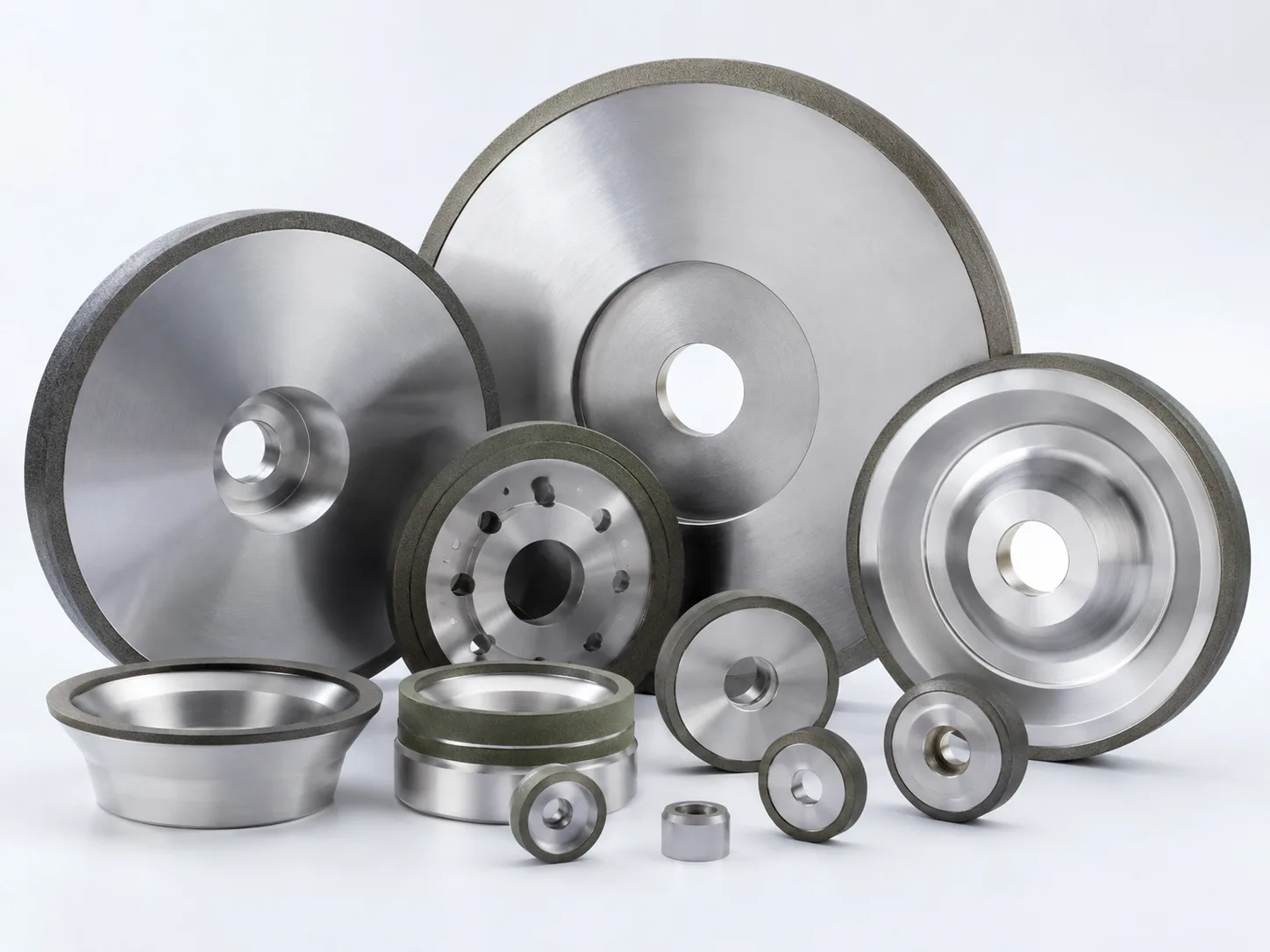
Diamond and CBN Grinding Wheels: Specification Guide for Industrial Buyers

Grinding Wheel Knowledge Base

Diamond and CBN Grinding Wheels: Specification Guide for Industrial Buyers

A useful diamond or CBN grinding wheel specification describes more than the abrasive name and wheel size. It connects wheel geometry, abrasive-layer dimensions, bond, grit size, concentration, profile and mounting with the workpiece material, grinding operation, machine, coolant, dressing or truing method, parameters, required result and current problem.

Confirm outside diameter, bore, thickness, profile and mounting before reviewing grinding behavior
Identify diamond or CBN explicitly instead of treating combined buyer wording as a complete specification
Review bond, grit and superabrasive concentration as related but different specification fields
Share the current wheel marking, drawing, photos and process conditions for an application review

Overview

Quick answer: specify the wheel and the grinding application together

Diamond and CBN grinding wheels should not be specified from outside diameter, bore and abrasive name alone. Dimensions establish fit, while the abrasive layer, bond system, grit size, superabrasive concentration, wheel form and mounting describe the wheel construction. Material, hardness, contact area, machine condition, coolant, dressing or truing, grinding parameters, finish requirement and the current grinding result explain how that construction must work.

The first review question is therefore not simply whether the request says diamond, CBN or grinding stone. It is whether the actual abrasive type, wheel form, complete dimensions and operating conditions are clear enough to identify a technically appropriate starting point. Availability and final construction remain subject to an application and manufacturability review.

Specification review principles

  • Wheel size confirms installation geometry, but it does not define abrasive type, bond, grit, concentration or abrasive-layer construction.
  • Concentration is a superabrasive specification field and should not be confused with the grade or structure terminology used for conventional grinding wheels.
  • A label or photograph is useful evidence, but profile dimensions, mounting details and process conditions still need confirmation.
  • When the abrasive choice itself is uncertain, review material compatibility separately instead of assuming that CBN or diamond is universally preferable.
Industrial diamond and CBN grinding wheel specification map separating geometry, abrasive system and grinding application information
A complete specification connects geometry, the abrasive system and the grinding application. Diamond or CBN, bond, grit and concentration should not be inferred from wheel size alone.

What information defines a diamond or CBN grinding wheel specification?

Treat the specification as three connected information groups: installation geometry, abrasive-wheel construction and grinding conditions. A missing group can make an otherwise detailed request ambiguous.

Installation geometry

Confirm outside diameter, bore, thickness, recesses, hub or body, profile, mounting faces and any machine-clearance dimensions. Identify tolerances and units on the drawing.

Abrasive-wheel construction

Record the actual abrasive type, bond system, grit designation, concentration where applicable, abrasive-layer width and depth, wheel shape and the position of the working layer.

Grinding conditions

Record workpiece material and hardness, operation, contact area, stock, finish or tolerance requirement, machine, coolant, dressing or truing, parameters and any current symptom.

Wheel dimensions: outside diameter, bore, thickness, profile and mounting

Write dimensions in a consistent order and show which surfaces locate the wheel. For formed, recessed or hubbed wheels, a dimensioned drawing is safer than a size written as three numbers.

Outside diameter, bore and thickness

Provide the complete nominal dimensions, units and tolerances when known. Separate the wheel body thickness from the abrasive-layer width if they are different.

Profile and working face

Mark the face that performs the grinding, together with angles, radii, grooves, reliefs, tapers and controlled profile dimensions. Show where abrasive is required and where it is not.

Bore, flange and mounting interface

Confirm bore fit, flange faces, bolt pattern, hub, keyway, adaptor or other mounting detail. Machine model can support the review, but it does not replace measured interface dimensions.

Abrasive type and bond system must be stated separately

Diamond and CBN identify abrasive families, while resin, vitrified, metal and electroplated describe different bond or construction approaches. The available combination and design must be confirmed for the defined application.

Diamond abrasive context

Diamond is commonly reviewed for carbide, technical ceramics, glass and other hard non-ferrous or non-metallic material contexts. Material grade, binder or coating and process conditions still need confirmation.

CBN abrasive context

CBN is commonly reviewed for hardened ferrous material grinding. Hardness, heat treatment, contact, stock, coolant, machine capability and required result affect the final specification.

Bond and construction context

Resin, vitrified, metal and electroplated constructions differ in layer design, dressing or truing behavior, form retention and operating requirements. Listing these options does not imply that every combination is available or suitable.

Grit size, concentration, wheel grade and structure are different fields

Do not merge several specification terms into one number. Confirm the marking system and manufacturer notation before translating an existing specification.

Grit size

Grit designation influences chip formation, finish potential and stock-removal behavior, but its effect depends on bond, layer design, contact, dressing, coolant, machine and parameters. One grit number cannot guarantee a surface finish.

Superabrasive concentration

Concentration describes the amount of diamond or CBN abrasive within a bonded superabrasive layer according to the applicable specification system. It is not a direct substitute for conventional wheel grade or structure.

Grade, structure and porosity context

Grade concerns grain retention by the bond, while structure concerns grain spacing or porosity in conventional wheel terminology. Superabrasive specifications may use different product-specific fields, so the original marking should be reviewed rather than translated mechanically.

Abrasive-layer dimensions and profile accuracy

For superabrasive wheels, wheel-body size and abrasive-layer geometry are not interchangeable. The drawing should distinguish the core or body from the working layer.

Layer width and depth

State the abrasive-layer width, radial or axial depth and location. For segments, rims or faces, show how the layer relates to the wheel body and working direction.

Controlled profile

Identify which radius, angle, land, edge or form dimension affects the ground result. State how the profile is inspected and whether it is supplied finished or prepared on the machine, when known.

Drawing revision and measured sample

Use the current drawing revision and distinguish nominal values from measurements taken from a worn wheel. Clear photos of the label, bore, side face and working layer help reconcile the evidence.

Machine, coolant, dressing and truing conditions

The same marked wheel can behave differently when mounting, speed, support, contact, coolant delivery or wheel-face preparation changes. Record the process conditions before treating the marking as a complete answer.

Machine and operating envelope

Provide machine model when available, spindle or mounting arrangement, available speed range, rigidity concerns and the grinding position. Operating conditions must remain within machine, wheel and safety limits.

Coolant and chip removal

State wet or dry grinding, coolant type and condition, filtration, flow, pressure and nozzle position when known. Note whether debris leaves the contact zone or returns to it.

Dressing, truing and parameters

Record the equipment, method, tool, frequency and trigger used to restore geometry or working condition. Include wheel speed, work speed, feed, infeed, stock and cycle stages rather than one isolated setting.

Why a photo or wheel size alone is not enough

A photograph can reveal shape, label and visible wheel condition, but perspective hides tolerances and internal interfaces. A size can confirm basic fit, but it cannot explain abrasive-layer construction or grinding demand.

What a photograph can confirm

A clear photo may confirm general form, label text, abrasive-layer location, mounting faces and visible damage or wear. Include a scale reference only when it does not obscure the wheel.

What a drawing should confirm

A drawing should define dimensions, tolerances, profile, mounting, layer geometry and revision. Mark uncertain or measured values rather than presenting them as approved dimensions.

What application evidence should confirm

Material, hardness, operation, contact, finish, stock, coolant, dressing, parameters and current symptoms explain the operating need that neither a photo nor dimensions can show.

Review Scenarios

When a complete specification review is useful

These are specification-review situations, not promises that every wheel construction is available. Each request remains subject to application, manufacturability and safety review.

Replacement specification review

Use the current label, drawing and measured wheel together, then record what is performing acceptably and what problem needs review. Avoid changing several construction fields without a controlled reason.

New machine or grinding position

Confirm the mounting interface, speed range, available space, guarding, coolant access and operation before transferring a wheel specification from another machine.

Profile or abrasive-layer change

Provide a controlled drawing for the working profile and layer geometry. Explain whether the change responds to clearance, form retention, stock distribution or another measured condition.

Unclear buyer terminology

Requests may combine terms such as diamond and CBN grinding wheels or dia/CBN grinding stones. Clarify whether the buyer means diamond, CBN, alternative abrasive options or an existing wheel marking before reviewing the specification.

Diagnostic Guide

Specification items and buyer terms to clarify

The buyer-term table separates common search wording from the technical fields that still need confirmation. The specification table below shows the information needed for a useful review.

Buyer vocabulary is a starting point, not a complete product definition. Clarify the intended industrial grinding wheel before reviewing construction or availability.

Buyer term

Diamond grinding wheel

What the term may mean

Usually a request for a wheel using diamond abrasive.

What remains unclear

The bond, grit, concentration, layer and shape may still be unspecified.

What to clarify

Confirm material, complete wheel drawing, bond system, grit, concentration, layer geometry and operating conditions.

Buyer term

CBN grinding wheel

What the term may mean

Usually a request for a wheel using cubic boron nitride abrasive.

What remains unclear

The phrase does not define construction, dimensions or application limits.

What to clarify

Confirm hardened ferrous material details, wheel form, bond, grit, concentration, mounting, coolant and dressing or truing.

Buyer term

Diamond and CBN grinding wheels

What the term may mean

May describe two product families or two alternatives under review.

What remains unclear

It should not be interpreted as one combined abrasive specification.

What to clarify

Ask which workpiece material and operation apply, then identify the required abrasive before completing the specification.

Buyer term

Dia/CBN grinding stones

What the term may mean

Buyer search terminology that may refer broadly to diamond or CBN grinding wheels.

What remains unclear

The wording can also refer to products outside the required wheel scope.

What to clarify

Confirm that the request is for an industrial grinding wheel, then verify wheel form, abrasive, bond, dimensions and application.

Buyer term

Electroplated grinding wheel

What the term may mean

Describes a plated abrasive construction rather than the abrasive alone.

What remains unclear

Abrasive type, grit, plating area, body geometry and mounting can still be missing.

What to clarify

Confirm diamond or CBN, grit, plated area, profile, body drawing, mounting and whether re-plating is part of the request.

Buyer term

Resin-bond wheel

What the term may mean

Identifies a bond family, not a complete wheel specification.

What remains unclear

Abrasive, grit, concentration, layer geometry, wheel form and application may be unclear.

What to clarify

Confirm every remaining specification field and process condition before reviewing a resin-bond construction.

Technical grinding wheel diagram labeling outside diameter, bore, body thickness, abrasive-layer width and depth, working profile and mounting face
Separate wheel-body dimensions from abrasive-layer geometry, and use the drawing to define the working face, profile, tolerances and mounting interface.

Wheel outside diameter

What to confirm
Nominal OD, tolerance and units
Why it matters
Affects fit, speed relationship and available wheel body
Risk if missing
Incorrect fit or an unsuitable operating envelope

Bore and mounting

What to confirm
Bore, tolerance, flange, hub, keyway or bolt pattern
Why it matters
Defines the machine interface and locating surfaces
Risk if missing
Mounting incompatibility or incomplete safety review

Wheel thickness

What to confirm
Overall thickness and working-face width
Why it matters
Affects clearance, contact and body geometry
Risk if missing
Confusion between body width and abrasive-layer width

Abrasive-layer width/depth

What to confirm
Layer position, width, depth and orientation
Why it matters
Defines the working superabrasive volume and geometry
Risk if missing
Wrong layer location or incomplete cost and wear review

Wheel profile/shape

What to confirm
Shape code, drawing, radii, angles, grooves and working face
Why it matters
Connects the wheel to the grinding position and required form
Risk if missing
Clearance, profile or application mismatch

Abrasive type

What to confirm
Diamond, CBN or another confirmed abrasive
Why it matters
Material compatibility is an initial selection boundary
Risk if missing
An unsuitable abrasive family may be assumed

Bond system

What to confirm
Resin, vitrified, metal, electroplated or current marking
Why it matters
Influences layer design and dressing or truing behavior
Risk if missing
A construction may be requested without confirming suitability

Grit size

What to confirm
Original designation and applicable grit system
Why it matters
Influences finish, chip formation and stock-removal behavior
Risk if missing
A grit number may be interpreted in the wrong system

Concentration

What to confirm
Superabrasive concentration notation when applicable
Why it matters
Describes abrasive content in a bonded superabrasive layer
Risk if missing
It may be confused with conventional wheel grade or structure

Wheel grade/structure

What to confirm
Original notation and wheel family
Why it matters
Describes retention or spacing in the applicable specification context
Risk if missing
Different terminology may be translated as equivalent when it is not

Dressing/truing method

What to confirm
Method, equipment, tool, settings, frequency and trigger
Why it matters
Controls geometry and working-face condition
Risk if missing
A wheel issue may be assigned without checking preparation

Coolant condition

What to confirm
Wet/dry, type, filtration, flow, pressure and nozzle
Why it matters
Affects heat, debris removal and contact behavior
Risk if missing
Process symptoms may be blamed on the wheel specification alone

Current grinding problem

What to confirm
Symptom, timing, location, photos and measured result
Why it matters
Defines the technical question and trial comparison
Risk if missing
Several specification fields may be changed without evidence
Specification itemWhat to confirmWhy it mattersRisk if missing
Wheel outside diameterNominal OD, tolerance and unitsAffects fit, speed relationship and available wheel bodyIncorrect fit or an unsuitable operating envelope
Bore and mountingBore, tolerance, flange, hub, keyway or bolt patternDefines the machine interface and locating surfacesMounting incompatibility or incomplete safety review
Wheel thicknessOverall thickness and working-face widthAffects clearance, contact and body geometryConfusion between body width and abrasive-layer width
Abrasive-layer width/depthLayer position, width, depth and orientationDefines the working superabrasive volume and geometryWrong layer location or incomplete cost and wear review
Wheel profile/shapeShape code, drawing, radii, angles, grooves and working faceConnects the wheel to the grinding position and required formClearance, profile or application mismatch
Abrasive typeDiamond, CBN or another confirmed abrasiveMaterial compatibility is an initial selection boundaryAn unsuitable abrasive family may be assumed
Bond systemResin, vitrified, metal, electroplated or current markingInfluences layer design and dressing or truing behaviorA construction may be requested without confirming suitability
Grit sizeOriginal designation and applicable grit systemInfluences finish, chip formation and stock-removal behaviorA grit number may be interpreted in the wrong system
ConcentrationSuperabrasive concentration notation when applicableDescribes abrasive content in a bonded superabrasive layerIt may be confused with conventional wheel grade or structure
Wheel grade/structureOriginal notation and wheel familyDescribes retention or spacing in the applicable specification contextDifferent terminology may be translated as equivalent when it is not
Dressing/truing methodMethod, equipment, tool, settings, frequency and triggerControls geometry and working-face conditionA wheel issue may be assigned without checking preparation
Coolant conditionWet/dry, type, filtration, flow, pressure and nozzleAffects heat, debris removal and contact behaviorProcess symptoms may be blamed on the wheel specification alone
Current grinding problemSymptom, timing, location, photos and measured resultDefines the technical question and trial comparisonSeveral specification fields may be changed without evidence
Seven-step industrial buyer inquiry workflow from confirming grinding wheel scope through material, drawing, abrasive system, machine, current result and application review
Turn a partial name or marking into a reviewable request by recording the product scope, material, geometry, abrasive system, process conditions and current result. Mark unknown fields instead of guessing.

Read the complete marking

Record manufacturer notation exactly before translating abrasive, bond, grit, concentration, grade or structure fields into another system.

Separate fit from grinding behavior

Dimensions and mounting confirm fit; abrasive construction and application conditions explain expected wheel behavior. Both must be reviewed.

Use one controlled specification question

Define the present limitation and the evidence used for comparison before changing abrasive, bond, grit, concentration, layer or profile.

Controlled Review

Buyer inquiry workflow for diamond and CBN grinding wheels

Use this sequence to turn a name, photo or partial marking into a reviewable industrial grinding wheel request.

1. Confirm that the requested product is an industrial grinding wheel and identify the grinding operation.

2. Record workpiece material, grade, hardness and any coating, binder or recent material change.

3. Capture the complete current wheel marking and provide a dimensioned drawing or verified measurements.

4. Separate wheel-body dimensions from abrasive-layer dimensions, working profile and mounting details.

5. Confirm the actual abrasive type, bond system, grit designation and concentration or other construction fields when applicable.

6. Record machine, contact area, coolant, dressing or truing, grinding parameters and the present result.

7. Define the finish, tolerance, stock, profile and trial criteria without assuming a guaranteed outcome.

Application Review Information

Information to provide before quotation or specification review

A complete information set helps separate installation geometry, wheel construction, process conditions and the result being reviewed. Missing items can be marked as unknown rather than guessed.

  • Workpiece material and hardness

    include grade, heat treatment, coating or binder when known

  • Grinding operation and contact area

    identify the working face, movement and concentrated profile or edge contact

  • Complete wheel dimensions

    provide outside diameter, bore, thickness, profile, tolerances and units

  • Drawing and clear photographs

    include the full wheel, label, bore, side faces, working layer and worn condition

  • Current wheel marking

    copy abrasive, bond, grit, concentration, grade, structure and other codes exactly

  • Abrasive-layer dimensions

    mark layer width, depth, position and working direction separately from the wheel body

  • Machine and mounting

    provide machine model when available, spindle or flange interface, speed range and grinding position

  • Coolant condition

    state wet or dry grinding, coolant type, filtration, flow, pressure and nozzle condition when known

  • Dressing and truing

    record method, equipment, tool, settings, frequency and the reason the operation is triggered

  • Grinding parameters

    include wheel speed, work speed, feed, infeed, stock and cycle stages when available

  • Current grinding problem

    describe where and when the symptom appears, supported by photos and measured results

  • Finish, tolerance and profile requirements

    state the measurement method and acceptance criteria when available

  • Trial or production context

    state expected trial quantity, production volume and how a controlled result will be compared

Share the wheel drawing or photos, material, hardness, grinding wheel size, current marking, abrasive-layer dimensions, mounting, dressing or truing condition, coolant condition and basic grinding parameters so we can review the grinding wheel condition and application details.

Send Grinding Details

Application Contexts

Industrial grinding contexts where specification detail matters

These entries describe industrial grinding contexts only. Youlin Abrasive supplies grinding wheels, abrasive tools and grinding wheel solutions; it does not supply the customer workpieces or machine components used in these contexts.

Hardened ferrous material grinding applications
Carbide grinding applications
Technical ceramic and glass grinding applications
Bearing and hydraulic component grinding contexts
Automotive and precision grinding contexts

FAQ

Questions about diamond and CBN grinding wheel specifications

These answers clarify specification fields and inquiry preparation. They do not replace an application, manufacturability or safety review.

Are diamond and CBN grinding wheels the same product?

No. Diamond and CBN are different superabrasive families. A buyer may mention them together when asking about alternatives, but the application review should identify the required abrasive before the full wheel specification is confirmed. Use the linked CBN vs diamond guide when material compatibility is the main question.

Is outside diameter, bore and thickness enough for a quotation?

Those dimensions confirm only part of the fit. Profile, mounting, abrasive-layer geometry, abrasive type, bond, grit, concentration where applicable, machine and process conditions are also needed for a useful specification review.

What does concentration mean in a diamond or CBN wheel specification?

Concentration is a specification field describing the amount of diamond or CBN abrasive in a bonded superabrasive layer according to the applicable system. It should not be treated as the same field as conventional grinding wheel grade or structure.

Can a wheel photograph replace a technical drawing?

A photograph helps identify the general shape, label, working layer and visible condition, but it does not reliably define tolerances, hidden mounting features or controlled profile dimensions. Use a drawing or verified measurements for those details.

Does the phrase dia/CBN grinding stones define a wheel specification?

No. It is broad buyer or search terminology. Confirm that the request concerns an industrial grinding wheel, then clarify diamond or CBN, wheel form, bond, grit, dimensions, abrasive layer, mounting and application conditions. It should not be assumed to mean unrelated hand stones.

Are resin, vitrified, metal and electroplated constructions all available for every wheel?

No. These are construction categories that may be reviewed, but availability and suitability depend on the wheel form, abrasive, dimensions, application, process requirements, manufacturability and safety review.

What should be provided when the current wheel marking is incomplete?

Provide every readable marking, a dimensioned drawing or verified measurements, clear photos of the wheel and working layer, material and hardness, machine and mounting, coolant, dressing or truing, parameters, required result and current problem. Mark unknown fields as unknown instead of estimating them.

WhatsApp Inquiry