What Information Should You Provide Before Ordering a Custom Grinding Wheel?

Grinding Wheel Knowledge Base

What Information Should You Provide Before Ordering a Custom Grinding Wheel?

A custom grinding wheel cannot be selected from wheel size alone. Dimensions establish the basic fit, but they do not explain the workpiece material, grinding contact, dressing method, coolant condition, operating demand, or the problem that needs review. A useful inquiry connects those details so the wheel specification and application conditions can be assessed together.

Start with workpiece material, hardness, grinding wheel size, and a drawing or clear photo
Add machine, grinding position, wet or dry condition, coolant, dressing, and basic grinding parameters
Include the current wheel specification and problem before considering a different specification

Overview

Why wheel size is only the starting point

Outside diameter, bore, thickness, and profile are essential because the grinding wheel must match the machine and mounting arrangement. Those dimensions do not show how the wheel contacts the workpiece, how heat and chips leave the grinding zone, how the wheel is dressed, or what surface and tolerance the process must achieve.

An application review therefore considers material and hardness together with contact area, grinding position, wet or dry operation, coolant delivery, dressing condition, the current wheel specification, and any observed problem. Photos, drawings, and basic operating information help separate a dimensional request from a grinding-process question. Trial quantity can also be stated, but it does not replace the technical information needed to review the application.

Key information to prepare

  • Wheel size confirms basic fit; material, hardness, contact, and grinding conditions explain working demand.
  • A wheel drawing or clear photo reduces ambiguity about bore, thickness, profile, abrasive layer, and mounting features.
  • Current wheel and dressing information can show whether the inquiry concerns specification, wheel-surface condition, or process setup.
  • Surface-finish and tolerance targets should be stated only when available; do not invent values to complete an inquiry.
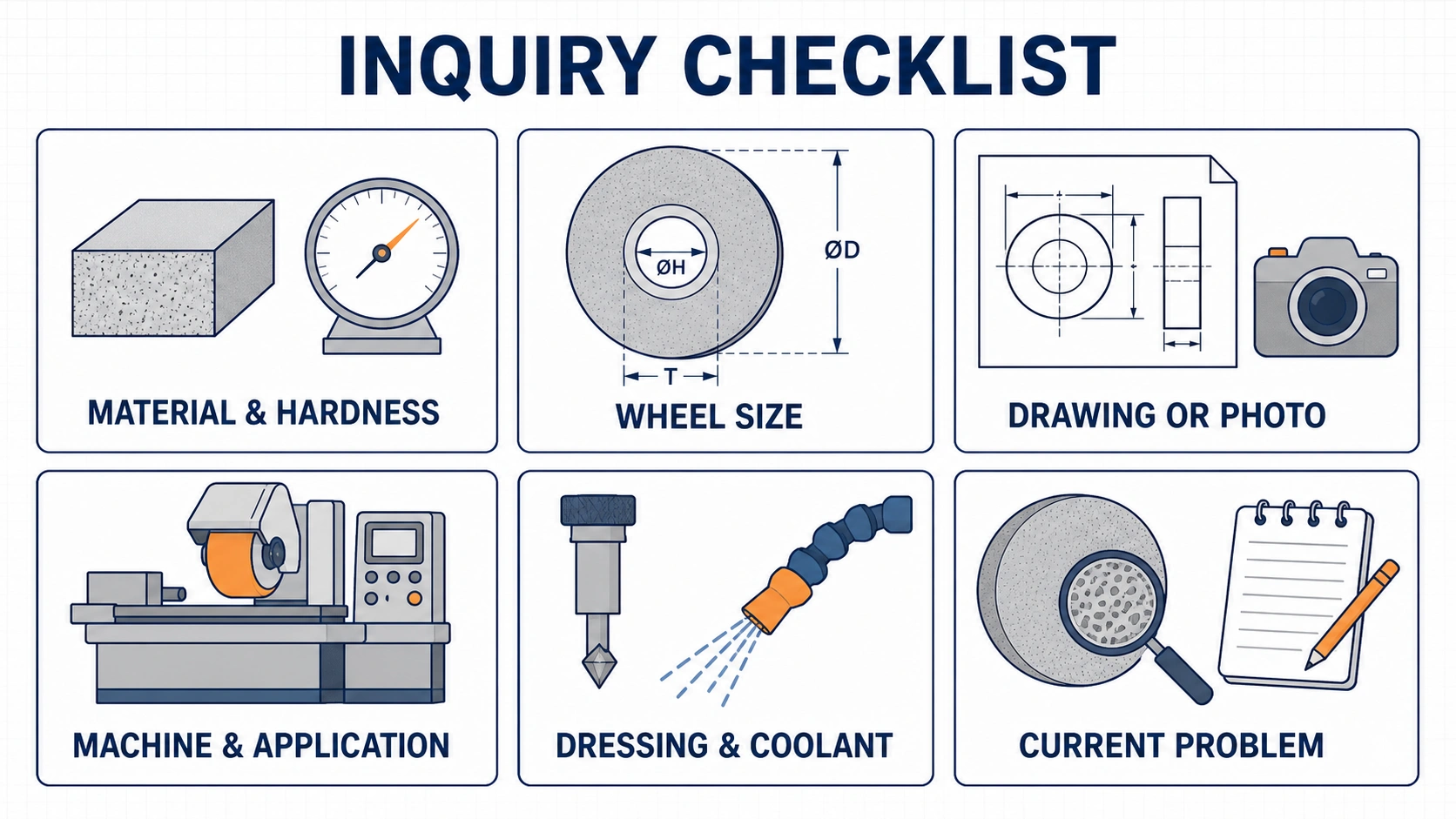
Technical checklist for a custom grinding wheel inquiry covering material and hardness, wheel size, drawing or photo, machine and application, dressing and coolant, and the current problem
Use these six categories as the starting set. Provide confirmed information and mark unknown items clearly rather than estimating technical details.

The information set to prepare before an application review

The most useful inquiry describes both the grinding wheel and the grinding process. Start with the information that can be confirmed, and mark unknown items instead of guessing.

Workpiece material, grade, and hardness

State the material name or grade, hardness when known, and relevant heat-treatment or surface condition. These details help define abrasive and bond directions and may explain a change in force, heat, loading, glazing, or wear.

Grinding wheel size, drawing, and photos

Provide outside diameter, bore, thickness, profile, and abrasive-layer dimensions when applicable. Add a dimensioned drawing or clear photos of the current grinding wheel, label, mounting area, and working surface.

Machine and grinding position

Share the machine model when available and identify the operation: surface, external cylindrical, internal, centerless, profile, double-disc, or another grinding position. Note the contact area or where the wheel works on the part.

Wet or dry grinding and coolant condition

State whether the process is wet or dry. For wet grinding, describe coolant type if known, delivery to the contact zone, filtration or cleanliness, and any change in flow, concentration, or chip removal.
Information that explains the current grinding result

If a wheel is already running, its condition and process history provide a practical reference. Photograph the wheel before dressing when the surface symptom matters.

Current wheel specification

Copy the complete marking when possible: abrasive, bond, grit, grade, structure, concentration or abrasive-layer information, dimensions, shape, and any manufacturer code. Do not infer missing elements from wheel color alone.

Current problem and when it appears

Describe the observable issue, such as rapid wear, loading, glazing, burn marks, finish drift, dimensional variation, profile loss, or frequent dressing. Note whether it began after a material, machine, coolant, dressing, or parameter change.

Dressing tool, method, and frequency

Identify the dressing tool and describe dressing method, frequency, trigger, depth, feed, passes, and tool condition when known. This helps distinguish wheel behavior during grinding from material removed during dressing.

Surface finish, tolerance, and trial quantity

Share the required surface finish or dimensional tolerance when available, together with how it is checked. State the expected trial quantity and the conditions that will be observed during the trial without treating the result as predetermined.

Applications

Inquiry situations that require different supporting information

A replacement wheel, a new process, a profile wheel, and a problem review do not begin with the same evidence. Identify the inquiry situation first.

Replacing a known grinding wheel

Record the full existing specification, wheel photos, dressing condition, coolant condition, and current result.

State what changed or what needs review without assuming that wheel size or grade is the only cause.

Starting a new grinding application

Provide material, hardness, grinding position, contact geometry, machine information, wet or dry condition, and required result.

Mark unknown operating details clearly so they can be reviewed before a specification direction is considered.

Ordering a profile or formed wheel

Provide a dimensioned wheel drawing, profile details, tolerances when available, mounting features, and photos of the application.

Keep wheel geometry separate from finish and process targets; both sets of information are needed.

Reviewing a recurring grinding problem

Photograph the wheel surface before dressing and record material, coolant, dressing, contact, parameters, and when the problem appears.

Check the process evidence before changing several wheel-specification factors at once.

Grinding Conditions

Process details that change the application review

Material is important, but the same material can behave differently as contact area, stock, coolant, chip formation, dressing, and required finish change.

Material identity and hardness

Record grade, hardness, heat-treatment condition, coating or scale, and whether the incoming material condition recently changed.

Grinding contact and stock

Describe the grinding position, contact width or area, interrupted contact, stock allowance, and whether the contact is concentrated at an edge or profile.

Coolant and chip removal

State wet or dry grinding and describe coolant access, condition, filtration, nozzle direction, and chip-removal observations.

Finish and dimensional requirement

Provide surface finish, tolerance, roundness, flatness, profile, or other acceptance requirements only when they are known and relevant.

Application Review Logic

Why wheel dimensions cannot be reviewed in isolation

Use wheel dimensions to confirm the physical request, then connect them with material, contact, dressing, coolant, operating conditions, and the current problem.

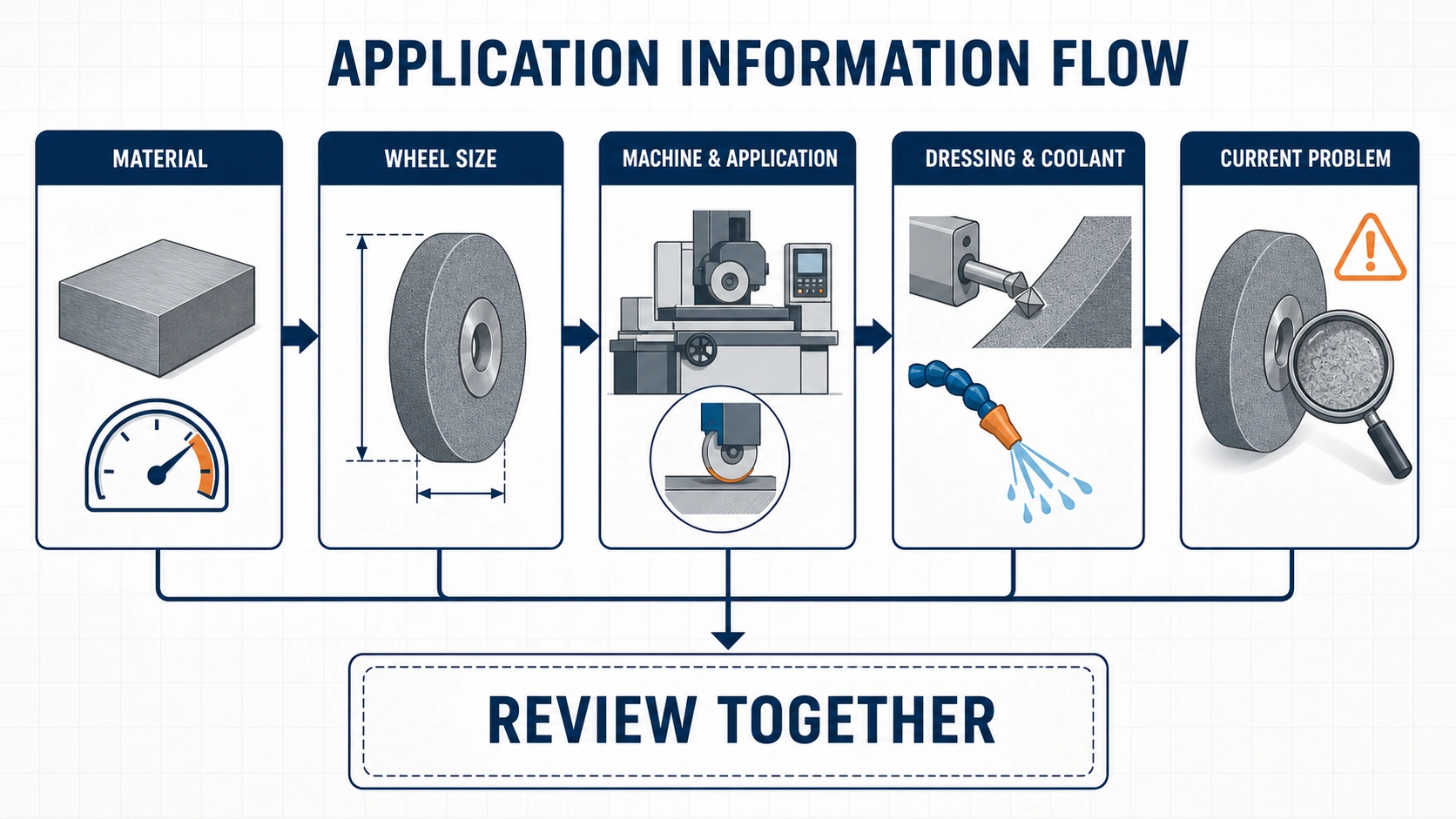
Information flow linking workpiece material, grinding wheel size, machine and application, dressing and coolant, and the current problem for application review
Material, wheel size, machine and application, dressing and coolant, and the current problem provide technical context for one another. Wheel size alone does not describe the grinding demand.
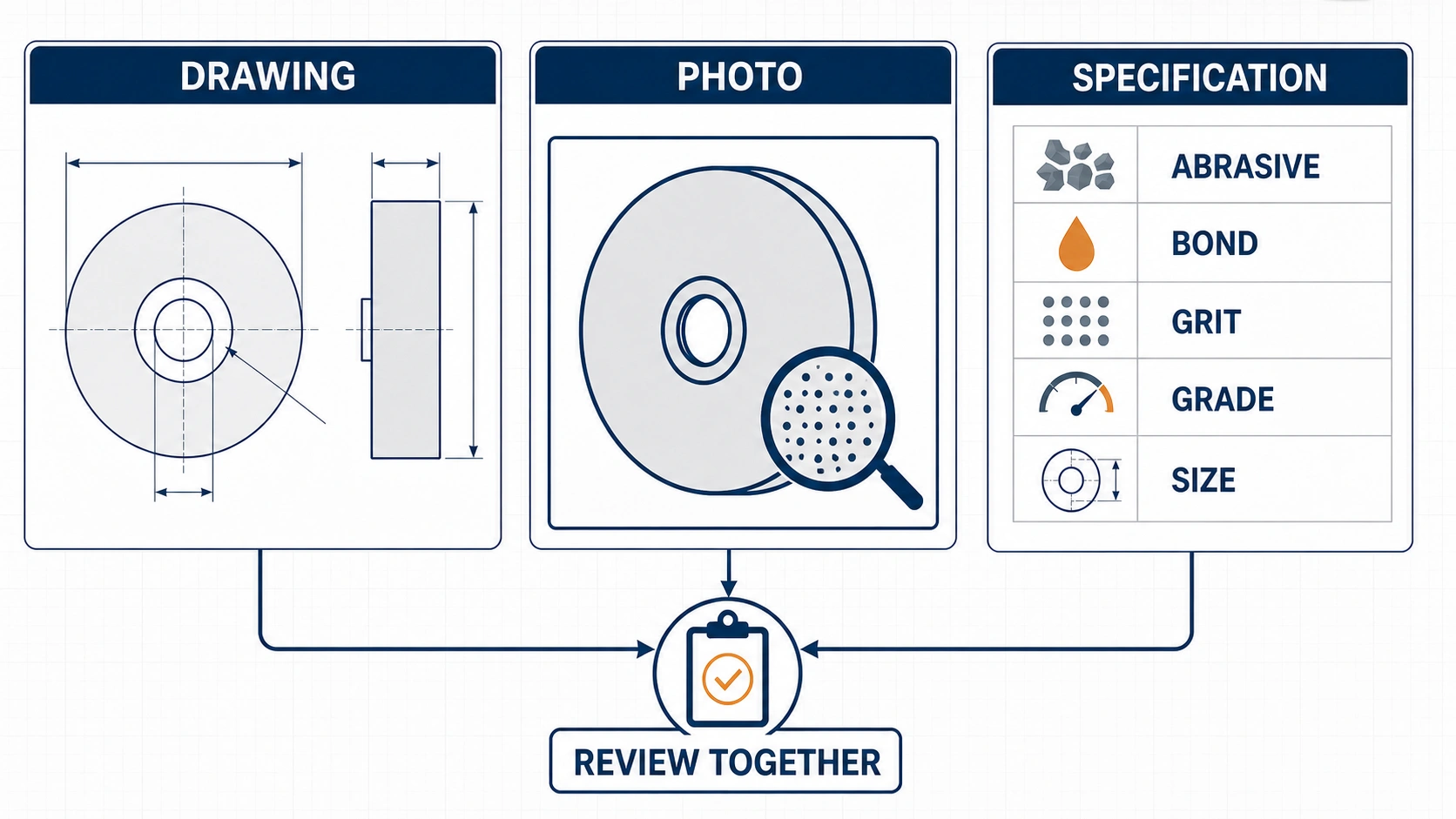
Technical visual showing a grinding wheel drawing, clear wheel photo, and current abrasive, bond, grit, grade, and size information reviewed together
A dimensioned drawing, clear wheel photos, and the copied current specification answer different questions. Share all three when they are available.

Review together

The factors that give wheel size its technical context

No single item selects a custom grinding wheel. The review depends on how these inputs interact in the actual grinding operation.

1

Dimensions describe fit and geometry

Outside diameter, bore, thickness, profile, and abrasive-layer dimensions define the physical request, but not the complete grinding behavior.

2

Material and contact describe grinding demand

Material type, hardness, stock, contact area, and grinding position influence force, heat, chip formation, and abrasive exposure.

3

Dressing and coolant affect the wheel surface

Dressing method and frequency, coolant access, filtration, and chip removal can change sharpness, loading, glazing, profile, and apparent wheel life.

4

The current problem defines the review question

Rapid wear, loading, glazing, burn marks, finish drift, or dimensional variation point to different checks and should not be treated as one generic wheel-selection problem.

5

Trial quantity supports a controlled evaluation

State the expected trial quantity and what will be observed so the trial can be discussed against the same material, machine, dressing, coolant, and parameter conditions.

Application Review Workflow

A practical sequence for preparing the inquiry

Use this order to collect the facts without guessing missing technical data or changing the wheel specification before the process context is understood.

1

Identify whether the request is a replacement, a new application, a profile wheel, or a review of an existing grinding problem.

2

Record the workpiece material, grade, hardness, heat-treatment condition, stock allowance, and any recent material change.

3

Measure the grinding wheel size and attach a drawing or clear photos of the wheel, label, mounting features, working surface, and profile.

4

Add the machine model when available, grinding position, contact area, wet or dry condition, and basic grinding parameters.

5

Describe the dressing tool, method, frequency, trigger, and tool condition together with coolant delivery and chip-removal observations.

6

Copy the current wheel specification and describe the current problem, required finish or tolerance when available, and expected trial quantity.

7

Review the information as one application set; do not alter several wheel or process factors before the first controlled comparison.

What to Prepare for an Application Review

Complete custom grinding wheel inquiry checklist

Provide confirmed information and mark unknown items clearly. The list is used to review the grinding wheel condition and application details, not to promise a fixed result.

Workpiece material, exact grade if known, hardness, heat-treatment condition, coating or scale, and stock allowance
Grinding wheel size: outside diameter × bore × thickness, plus profile and abrasive-layer dimensions where applicable
Dimensioned wheel drawing or clear photos of the wheel, label, mounting area, working surface, edge, and profile
Machine manufacturer and model when available, spindle or mounting information, and grinding position
Grinding process, contact area, stock, wheel speed, work speed, feed, infeed or depth, and cycle stages when known
Wet or dry grinding; coolant type, condition, filtration, nozzle position, delivery, and chip-removal observations
Current grinding wheel specification, shape, abrasive, bond, grit, grade, structure, and concentration or abrasive-layer details when known
Current problem, when it appears, and any related loading, glazing, burn marks, rapid wear, finish drift, profile loss, or dimensional variation
Dressing tool, dressing method, depth, feed, passes, frequency, trigger, and dresser condition when known
Required surface finish, tolerance, profile, roundness, flatness, or other acceptance requirement when available
Expected trial quantity and the process conditions or observations that will be used during the trial
Workpiece photos and grinding wheel surface photos taken before dressing when the surface condition is relevant
Preferred contact method if clarification is needed

Share the available photos, material, grinding wheel size, current wheel specification, dressing condition, coolant condition, and basic grinding parameters so we can review the grinding wheel condition and application details.

Send Grinding Details

Application Contexts

Industrial grinding contexts where complete inquiry data matters

These sectors are application contexts only. Youlin Abrasive supplies grinding wheels, abrasive tools, and grinding wheel solutions; it does not supply the bearings, hydraulic parts, molds, automotive parts, precision parts, machine components, or customer workpieces being ground.

Bearing grinding applications
Hydraulic component grinding applications
Mold and die grinding applications
Automotive component grinding applications
General precision component grinding applications

FAQ

Questions about preparing a custom grinding wheel inquiry

These answers explain which information is essential, what can remain unknown, and why process evidence matters before ordering.

Why is grinding wheel size not enough for a custom wheel review?

Size describes physical fit and geometry. It does not describe workpiece material, hardness, contact area, grinding position, dressing, coolant, chip removal, operating demand, finish target, or the current problem. Those details need to be reviewed together before a specification direction is considered.

What should I send if I do not have a wheel drawing?

Send outside diameter, bore, thickness, and any profile measurements you can confirm. Add clear photos of the wheel, label, mounting area, working face, edge, and profile with a scale reference where practical. Mark uncertain dimensions rather than estimating them as exact.

Can I send an inquiry without the machine model?

Yes. Provide the machine model when available, but also share the grinding position, mounting information, current wheel size, operating speed if known, and photos of the setup. Missing machine information should be identified so compatibility questions can be clarified before ordering.

Why should I include the current wheel specification and problem?

The current specification provides a reference for abrasive, bond, grit, grade, structure, shape, and dimensions. The observed problem defines what needs review. For example, loading, glazing, rapid wear, burn marks, finish drift, and profile loss require different checks.

Why are dressing and coolant details part of a wheel inquiry?

Dressing changes the grinding wheel surface and removes wheel material. Coolant delivery and chip removal affect heat, loading, wheel sharpness, and the visible grinding result. Without these details, a process symptom may be mistaken for a wheel-specification issue.

What should be stated for an initial trial quantity?

State the expected number of trial wheels and the material, machine, dressing, coolant, parameters, finish or tolerance checks, and observations that will remain controlled during the trial. Trial quantity alone does not define a suitable wheel specification or determine the result.

WhatsApp Inquiry