The surface, and the part that has to survive it
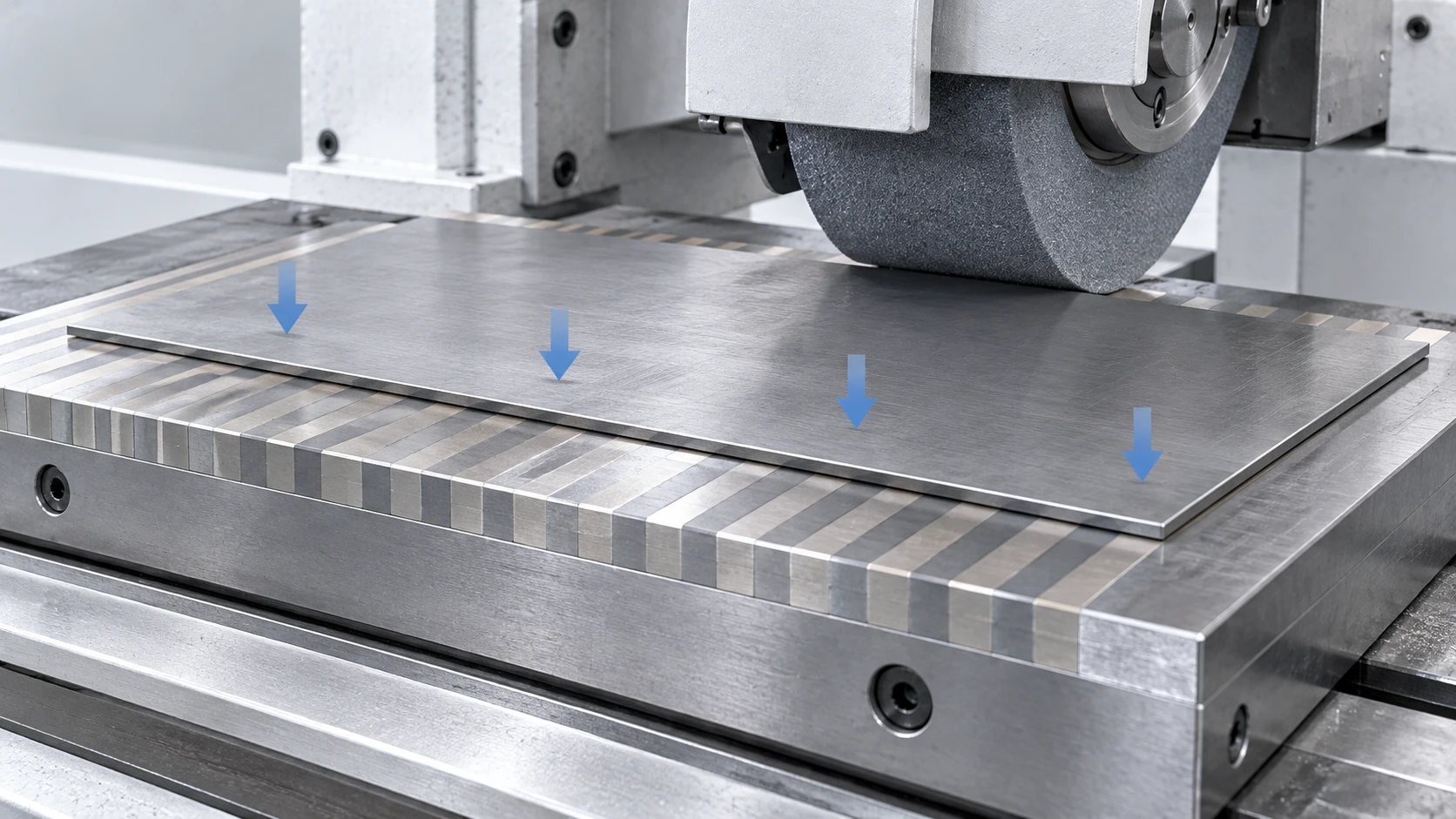
A surface grinding wheel has to produce the surface the drawing asks for, and it has to do that without moving the part. In most surface grinding the workpiece is not gripped — it is held on a magnetic chuck, a fixture or blocking, and located by force. Grinding force acts against that hold. A wheel that keeps cutting freely keeps the force low; a wheel that dulls raises it. The wheel is therefore chosen against two constraints at once, and only one of them is visible on the finished surface.
Why the second constraint is easy to miss
A part can come off the machine with an acceptable finish and still be out of flatness. The finish is what the wheel produced. The flatness is what happened to the part while it was held. These are different outcomes with different causes, and a selection made only against the finish requirement has answered half the question.
What this article covers
A review of how a surface grinding wheel is selected, built around those two constraints. It is not a specification table and it does not give wheel markings. The purpose is to establish what the wheel is being asked to guarantee before any specification is considered.