Through-feed: a continuous condition
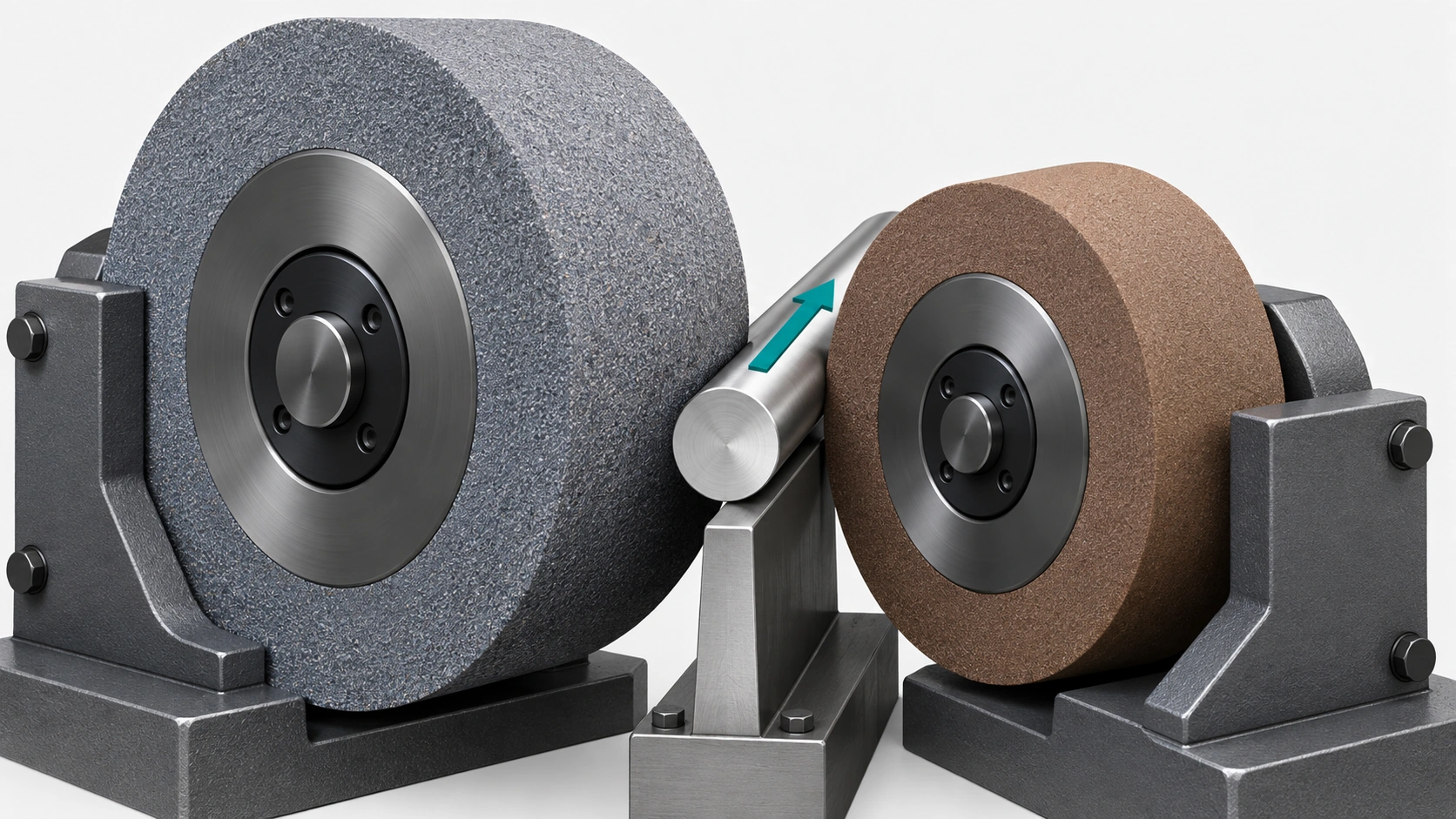
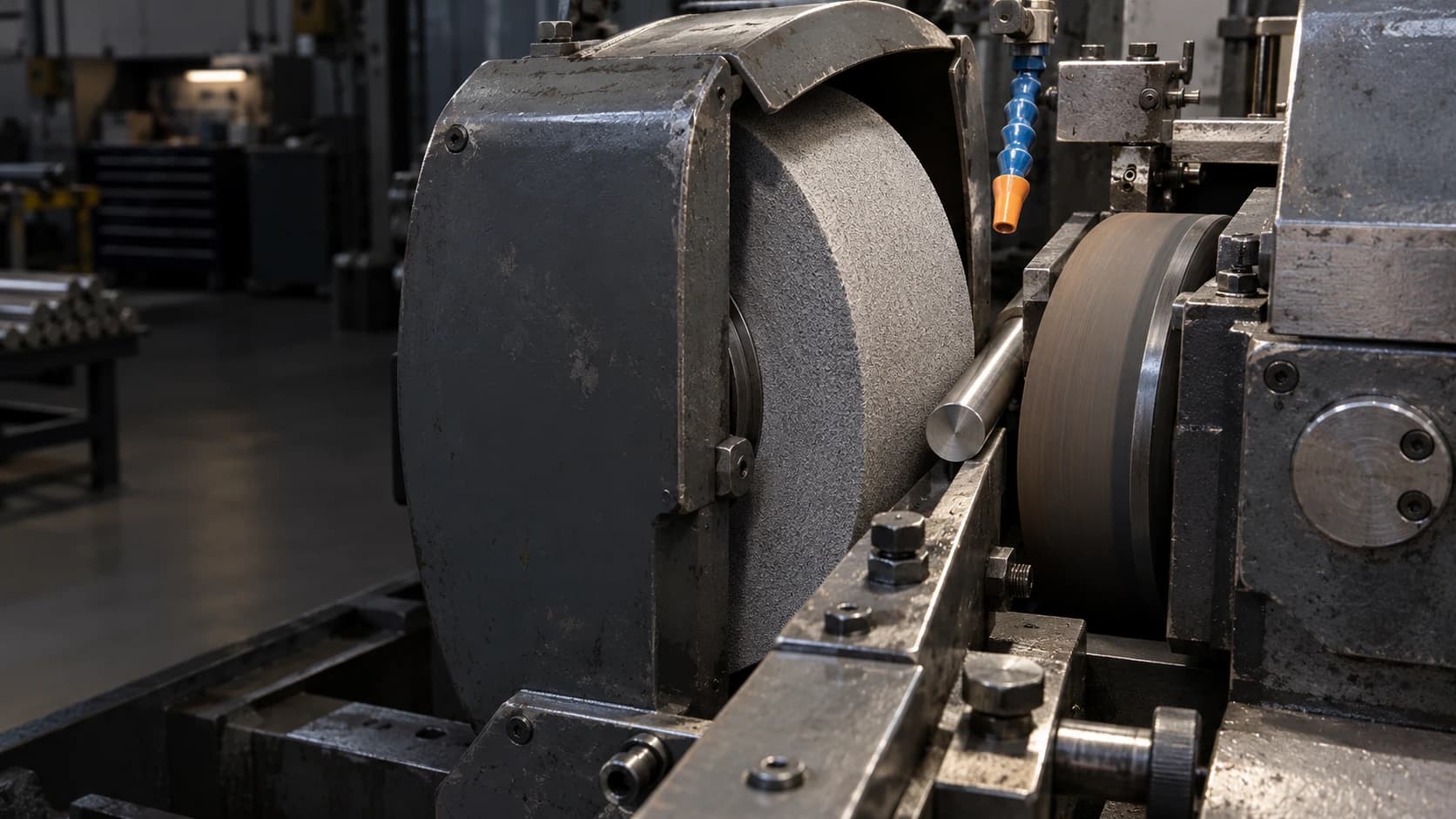
The workpiece is fed axially through the machine, with the regulating wheel tilted so that a component of its peripheral velocity drives the part along the axis. Parts are usually plain cylinders without shoulders, and the method suits longer production runs. From the wheel's side, the governing characteristic is continuity: the wheel face works steadily across its full width, and wear across the diameter develops gradually.
In-feed: a localised condition
The workpiece is held axially against a stop and the grinding wheel or regulating wheel is fed in radially. This suits formed, stepped or tapered features that axial feed cannot produce. The contact is concentrated at the feature that carries the form, and the wheel profile is where that form comes from.
What this genuinely changes for wheel selection
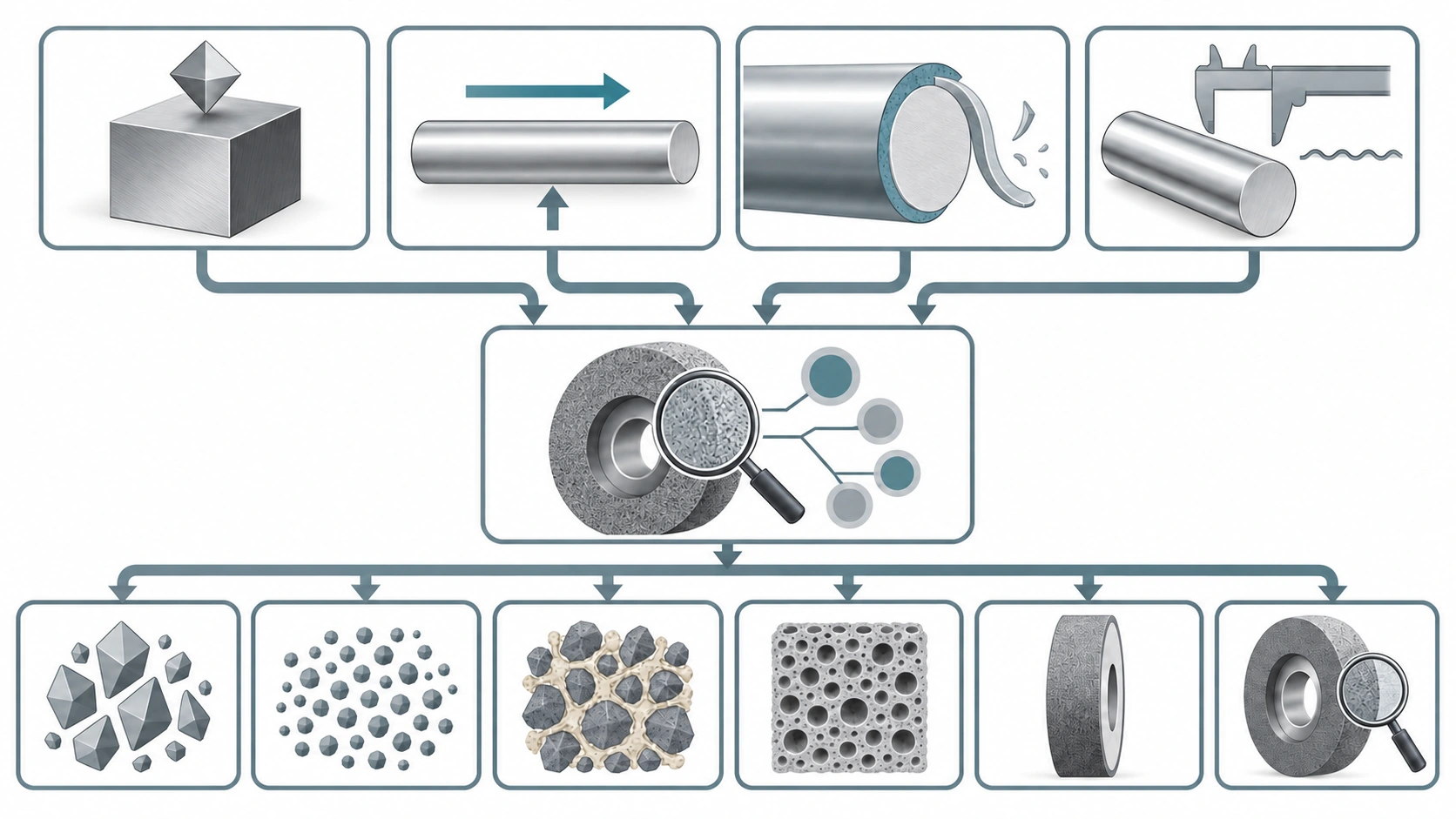
Contact conditions, how stock removal is distributed across the wheel width, and how much profile-retention accuracy matters. In in-feed work, a wheel that loses its profile during the cycle changes the workpiece shape with it. In through-feed work, profile accuracy matters far less to the finished form.
What it does not automatically change
The abrasive system. Through-feed and in-feed do not require wheels from different abrasive families. Both can run conventional abrasive, and both can be evaluated for a superabrasive option. What changes is the condition the wheel has to survive, and that changes which part of the full specification is worth checking first.