Austenitic grades work-harden as they deform
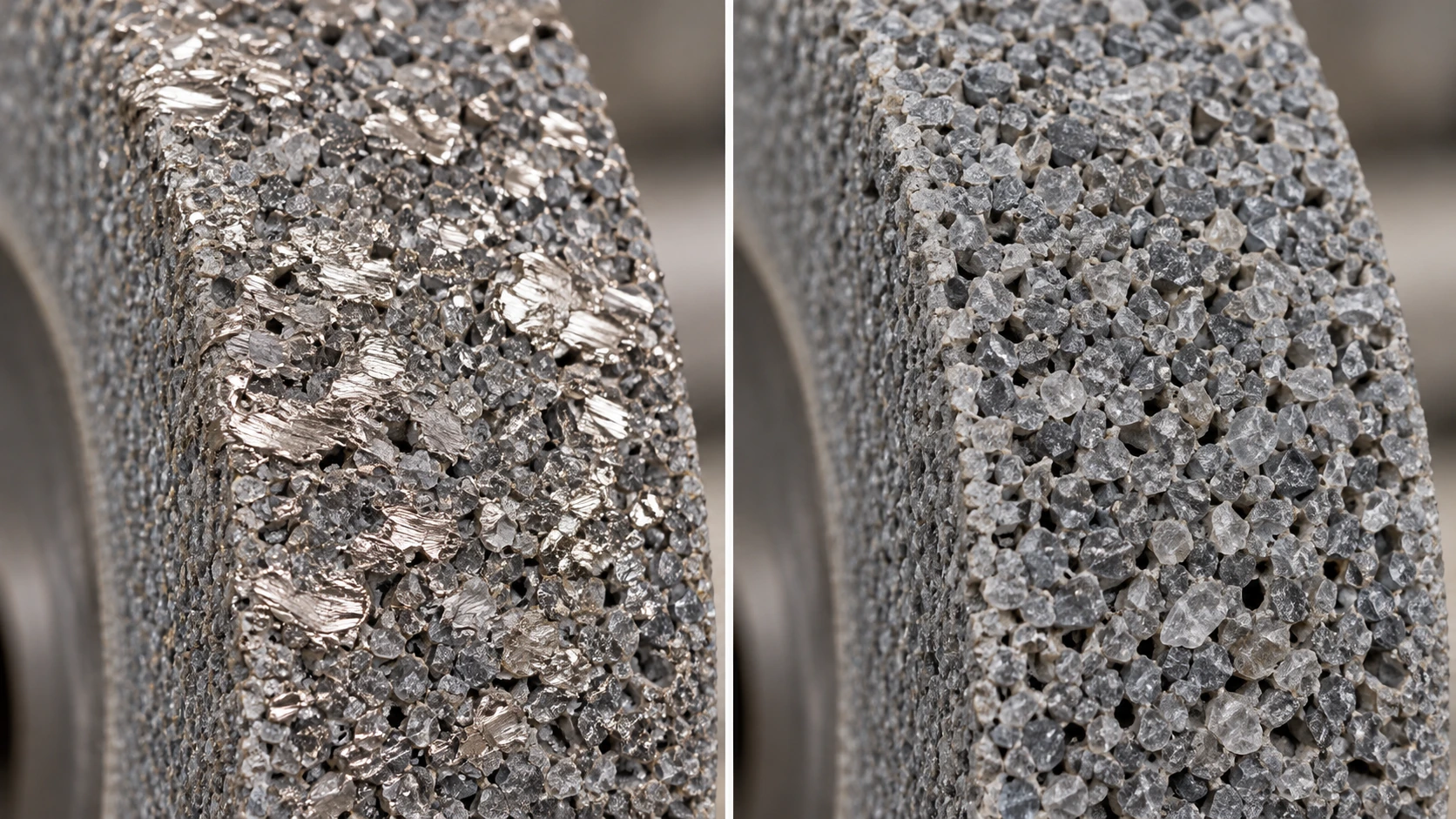
304 and 316 are the common examples, and they are the ones usually described as gummy. Soft in the annealed condition and strongly work-hardening, they punish a cutting edge that rubs instead of shearing: the deformation hardens the surface the wheel has to get through next, and grinding forces climb with it.
Martensitic grades respond to heat treatment
These sit at the other end of the family range. A hardened 440C or similar grade presents a hard, wear-resistant workpiece that behaves far more like a hardened tool steel at the contact than like an austenitic.
Precipitation-hardening grades change class mid-route
17-4 PH is the common example. Solution-treated, it cuts soft and sticky, much like an austenitic. Aged, it behaves like a hard martensitic. The same part number is two different grinding jobs at two different points in the process.
What a recommendation actually needs
The grade number is not the deciding input. 304 and 316 sit in one family and share a behaviour; 17-4 PH straddles two. What a wheel recommendation needs is the family and the condition the part is actually in when it reaches the machine.